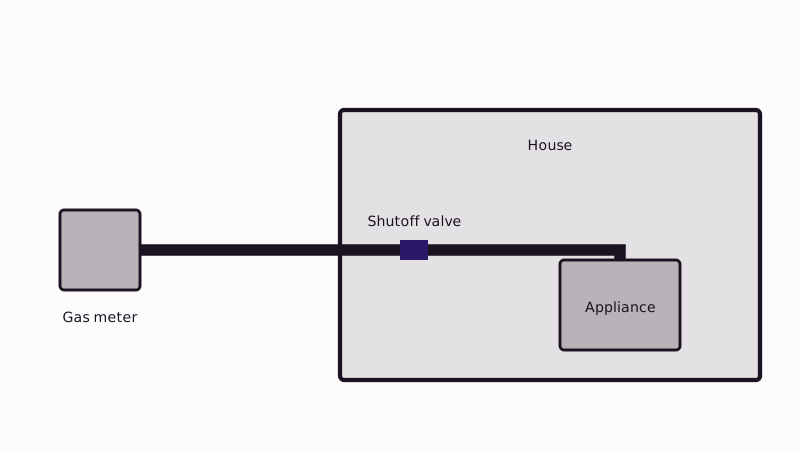
Gas pipe in a California house is work for the holder of the state's C-36 classification, a category the board defines to take in gas piping, appliance hookups and water heaters. Whoever quotes the job should hand over a license number that you can verify. We arrange local plumbers for visits; before you book through the home page or the quote form, here is what the rules say.
What does a C-36 contractor license cover?
Read the board's C-36 text and you find gas and water pipe starting at the customer side of the utility meter and running to the building, plus gas appliance connections, flues and equipment for heating water. One classification therefore spans the gas line, the heater hookup and most plumbing between them.
The wording says "includes but is not limited to", so edge cases exist, and the board suggests asking it directly about oddities. Forced warm air units, the furnace side, sit with other trades. A kitchen range, a dryer, a fireplace log set or an outdoor barbecue line is plumbing work on the gas side, and each connection is a spot where a bad joint can leak.
Handy owners are right to be cautious here. Water leaks stain a ceiling. Gas leaks explode. That is why the dividing line in this trade runs where it does.
How can you confirm a contractor has the right classification?
Get the license number in writing and type it into the board's online search before any tool comes out of a van. The search answers a practical question: does the number exist, and does it carry the classification for this job? A business card proves nothing.
The state sets a floor: since 2025 only jobs below a thousand dollars of labor and materials may be done without a contractor license, and almost any gas line costs more than that. A home improvement contract must also show who the contractor is (name, address, license number), a payment schedule, a finish date and who gets the permits. On down payments the ceiling is one tenth of the price, and never above a flat $1,000.
Treat online listings that boast about credentials without showing a number with suspicion. A claim with no number cannot be checked, and borrowing another company's number is a known trick. The name on the record has to match the name on your paperwork.
A gas odor in the house: what happens first?
Everybody walks out at once, pets included. Standing safely away, SoCalGas takes the report at 1-800-427-2200. Injuries, or a line that rings out, mean 911 comes next. Leave the light switches and the search for the source alone, because a spark is the danger.
A shutoff at the meter is an option, yet only if getting to it is safe. SoCalGas describes it on the riser between ground and meter, closed with a 12-inch or longer wrench until the handle sits crosswise. Once shut, it stays shut: the utility or another qualified professional inspects the system before gas returns and pilots are relit.
Even a faint whiff that comes and goes deserves the same call, since the utility's technicians can detect what your nose cannot. Repairs by a plumber come afterward.
Which gas work gets a permit and an inspector?
Plan on a city permit whenever gas piping is added, moved, capped or altered, since the inspection is the moment someone other than the installer examines the work. Santa Monica folds plumbing change-outs like water heaters into its Single Trade Construction Permit, which carries up to three inspector visits.
The city's page does not name every gas job, so check with the permit counter or the contractor about yours. Addresses in Brentwood, Westwood and Venice answer to the Los Angeles department that handles building, not Santa Monica's office, and Culver City, Beverly Hills and West Hollywood keep their own. Gas line work and the residential gas piping codes explainer go deeper on materials and sizing.
Settle who files the permit before signing, and write it into the contract. For the inspection and testing lines on a bill, see the inspection cost page.
What about a seismic gas shutoff?
A seismic valve lives on the house piping and trips by itself once shaking is strong enough. The excess flow valve is a different animal, fitted by the gas company on its own piping. SoCalGas states that it no longer installs earthquake valves for customers; a qualified professional does.
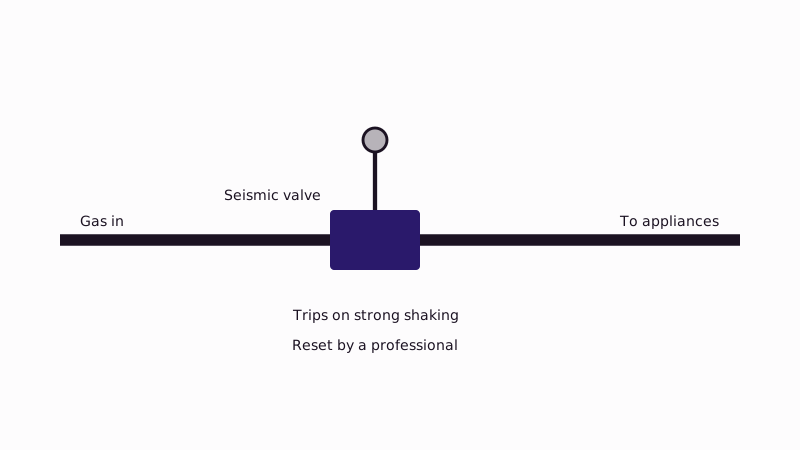
Owners forget the reset. SoCalGas suggests leaving the reset to a qualified professional or its own crew, together with an appliance safety check so no leak hides behind the restored flow. After a major event the wait can stretch to days or weeks. Details sit on the pages about the seismic shutoff valve and resetting one.
Whether your property needs one at all turns on city rules and on triggers such as a sale or a major remodel. Ask the building office, and do not assume an older valve meets today's standard.
Backflow testing: what is it and who must do it?
A backflow preventer exists to stop the drinking supply from being fouled when pressure drops and flow reverses. Sprinkler systems, pools, fire lines and many shops need one, and each device is checked on a schedule by an approved tester. Plenty of ordinary homes have no such device.
County Public Works puts the duty on the property owner: one test a year, performed only by someone on the county's tester list, with the owner hiring the tester and filing the form. That program covers the county's own waterworks districts, which reach parts of Malibu. Santa Monica, Culver City, Beverly Hills and West Hollywood have other suppliers, so request your supplier's form and due date.
More on the subject: backflow prevention testing, the test procedure, commercial properties and device testing prices. None of the sources we reviewed gives a figure we can stand behind, so the tester's written price is the one to rely on.
What should you have ready before a gas visit?
The quote form wants the job, the address and any smell or damage you have noticed. Next, a local plumber inspects the setup and puts a price on paper. A gas smell skips the form entirely: leave, then call the utility.
Gather three things: a list of gas appliances with a note on which have a local shutoff, the age of the building, and any permits from earlier work. Photos of the meter and appliance labels save time on the visit.
Common questions
Does a city business tax certificate cover gas work?
No, and the confusion is common. That certificate is a city tax document, not a state contractor license. Gas work calls for the C-36 classification or another one that covers it, and the number belongs on your written contract. Check the state board's records first.
Is a gas specialist a different trade from a plumber?
Not under California licensing, where C-36 spans water and gas piping alike. Experience is what varies: some plumbers spend their weeks on gas lines and appliances. Ask how often they handle your exact job, whether that is moving a range line or running a barbecue stub.
Is there a standard price for the annual test?
We found no usable figure in the sources we reviewed, so the tester's written price governs. It shifts with device count, device type and location. Ask whether filing the report with your supplier is included, and whether repair work after a failure costs extra.
Is a permit needed to swap a gas appliance?
Often, when piping changes. A like-for-like range swap may be treated differently from adding a line. Santa Monica lists water heater change-outs under its single trade permit, and the city counter can confirm gas items. Learn who applies, and file the permit number with your house papers.
What does a gas pressure or leak test involve?
In general the installer isolates the system, pressurizes it and watches a gauge for a drop, then an inspector reviews the work. We hold no sourced specifics for each city, so ask the building office what it requires. Never chase a suspected gas smell with soapy water yourself. Leave and call the utility.
Gas job waiting on a price? Leave the particulars on the quote page, then we schedule someone local.
More in this guide
- Backflow device testing cost
What a home backflow device test costs in Los Angeles in 2026, what is included, what a failed test adds, and how the yearly test works…
- Mobile home plumbing inspection
Buying or living in a mobile or manufactured home?
- Gas piping codes
How California's code treats home gas piping: permits, inspection stages, pressure testing, sizing and who may do the work.
- Permits, codes and inspections
Annual backflow assembly testing in Santa Monica and the Westside: who must test, what a test involves, typical cost, failed tests and who…
- Permits, codes and inspections
Searching backflow testing in Bend, OR? We serve Santa Monica and the Westside of LA.
- Backflow testing and permits
Backflow testing is done by a qualified tester with a gauge kit, not by the owner.
- Costs
Plumbing inspection prices from published guides: visual, camera and sewer checks, permit inspections and backflow tests, and what changes…
Sources used
- California Contractors State License Board, C-36 Plumbing Contractor
- California Contractors State License Board, hire a contractor
- California Contractors State License Board, home improvement contracts
- SoCalGas, emergency information
- SoCalGas, how to shut off your natural gas
- SoCalGas, earthquake and excess flow valves
- City of Santa Monica, Single Trade Construction Permit
- Los Angeles County Public Works, Backflow Prevention Program
Page updated