Plumber service means someone qualified shows up at your Santa Monica property, works out why water, a drain or a gas appliance is misbehaving, names a price, and fixes it after you say yes. In Bob Vila's national guide, plumbers charge between $45 and $200 an hour. Start at the home page or skip ahead to the quote form.
You call, we listen, and a local plumber gets booked to drive out to you. That covers Santa Monica itself plus Brentwood, Venice, Culver City and the rest of the Westside. What follows answers what people ask before they book: which jobs qualify, what a visit runs, and what helps the visit go quickly.
Which problems can a plumber visit solve?
Nearly everything involving pipes falls into one of five buckets: leaks and bursts, clogs, hot water trouble, fixtures such as faucets and disposals, and gas piping. Bigger projects (a repipe, a sewer lateral, a bathroom remodel) start with that same first visit, where the plumber looks and measures before pricing.
Each bucket has its own page here:
- Wet drywall, drips and bursts: leaks and burst pipes, plus what slab leaks cost.
- Slow or backed-up fixtures: drain and toilet clogs.
- Lukewarm showers or a tank that rumbles: water heater repair.
- Stoves, dryers, heaters and shutoffs: gas line work.
- A weak trickle from the tap: low water pressure.
Older Santa Monica streets bring surprises. A 1920s Craftsman or Spanish Revival duplex can still be running galvanized steel supply lines, narrowed inside by rust and mineral scale, and clay sewer pipe that tree roots have threaded through. A visit to such a house is partly detective work.
What does plumber service cost in Santa Monica?
Bob Vila's national guide puts service call fees at $100 to $350 and trip fees at $50 to $300, with labor around $45 to $200 per hour in regular hours. Parts, permit fees and evening or weekend premiums are extra. Consider all of this a rough guide only; the figure on your own estimate is the one that matters.
Four things push a bill up or down:
- Timing. Night, Sunday and holiday calls are priced at a premium, often charged at one and a half to three times the daytime rate.
- Reach. A heater sitting in a garage corner is an easy job. One wedged under a hillside house is not.
- Materials. A toilet flapper costs about what a coffee does. A pressure regulator or a new tank costs real money.
- City paperwork. A few jobs need a permit plus an inspection visit, and both carry fees.
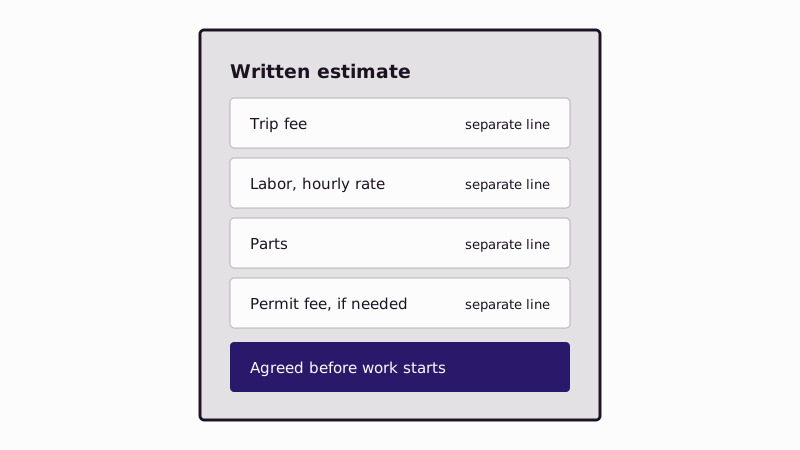
Ask for labor, parts and trip fee as separate lines. If the plumber turns up a different fault mid-job, the paper should change before the new work begins. For job-by-job numbers, read the plumber cost guide.
Which problems cannot wait until morning?
A pipe you cannot shut off, sewage welling up from a floor drain, a gas smell: none of these can wait. Everything else fits a normal appointment. Urgent calls cost more because the plumber drops other work, so the best money you can spend first is a minute spent cutting the water.
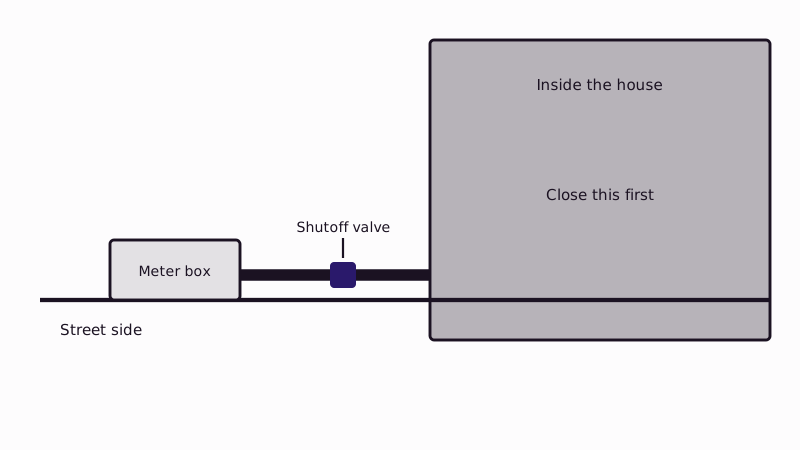
Find the shutoff before you need it. The valve hides in the meter box out front or next to the spot the pipe goes through the wall. Close the cold supply to a leaking water heater too. After that, read the emergency plumber page so the details you give on the phone get the right parts onto the truck.
We answer Mon-Fri, nine to five. After hours, leave your address and the problem, and the request is read when the line reopens. Gas works differently. Walk outside first, stand well away from the building, phone SoCalGas (1-800-427-2200) from there, and use 911 for injuries or danger.
Does this cover ADU plumbing or mobile home repairs?
Both do. An accessory dwelling unit counts as new construction, so it brings its own set of pipes, vents, a heater and a sewer tie-in, all under a city permit. Mobile homes use lighter pipe and smaller fixtures but break the same ways as any home, so repairs follow familiar rules.
For an ADU, hand over the plans and permit number at the start. The sewer connection is normally the biggest unknown, since how deep and in what shape the existing lateral sits drives the quote more than the inside of the new unit. Plumbing over the $1,000 mark needs a contractor holding a plumbing classification under state law.
For a mobile home, say so when you book. Supply is often flexible PEX tubing, and drain fittings may not match what a regular house uses. Telling the dispatcher saves a second trip for the right adapters.
How do you pick a plumbing company from a page of near-identical ads?
Check what is checkable. The state's contractor board lets anyone look up a license number and see complaints. Then confirm insurance, ask for the price on paper, and find out who pulls any permit. Star ratings alone cannot show whether a firm sticks to its estimate.
Run through these before agreeing:
- The license number on the estimate matches the name on the truck and the invoice.
- Labor, parts and permit costs appear as separate entries.
- The deposit asked for stays under the state cap for home improvement down payments: whichever is smaller, ten percent or $1,000.
- Someone is named as responsible for permits.
If a plumber will not put figures on paper, you have your answer.
What helps a plumber work faster when they arrive?
Have the address, what you see or hear, and when it began. A few phone photos of the drip, the data plate on the heater, or the fixture save a lot of guessing. Know where the shutoff is and move boxes away from the problem spot.
Three more things that matter:
- Brand and age of the water heater, which are printed on its label.
- Foundation type: concrete slab, raised floor, or hillside.
- If you rent, the owner's name and whether they have approved the work.
The steps from call to finished work are laid out under how a job runs, while the quote page gets a price moving.
Common questions
Is an estimate free?
Practice varies. Larger projects such as a remodel or a repipe are often priced free, sometimes from photos. For a diagnostic visit, a flat fee is common, and a few firms deduct that fee when you go ahead. Settle that before the appointment and have it in the written estimate.
What can I do if money is tight?
Cut the water at the shutoff to stop damage, then ask for the job split into urgent and deferrable parts. A leaking trap or fixture may be a cheap fix while a repipe waits. A tenant should put the problem in writing to the landlord, who has a legal duty to keep plumbing working.
How big is a typical trip charge?
In Bob Vila's national guide, service call fees run $100 to $350 and plain trip fees $50 to $300, and the call fee usually covers the first hour. Night and holiday calls cost more. Use that as a guide, then compare it with what your own estimate says.
What is a pipe clamp?
A pipe clamp is a metal sleeve lined with rubber that squeezes shut over a split or pinhole. It slows a leak. Think of it as a splint, since metal beside the hole has already thinned. Lasting repair means cutting out that stretch and fitting fresh pipe.
Does a plumber fix a burst water pipe?
Yes. The plumber removes the ruptured stretch, joins in new pipe, and checks the neighboring runs for the same weakness, since pipes of one age tend to fail alike. Close the shutoff first, before anyone arrives. The EPA puts household leak loss above 9,300 gallons yearly, so chase a drip early.
Sources used
Page updated