Picture 11pm, a ceiling stain spreading, or the unmistakable rotten-egg smell in the hallway. Moments like that call for a short sequence, not a search spree: protect people, cut off the water, document, then line up a visit. If nothing is actively flooding, browse the full list from the home page, or hand the job over on the quote page so a local plumber can head your way.
What counts as emergency plumbing?
Anything that threatens the structure, a person's safety, or your ability to live in the house qualifies. Think of no water anywhere, a heater flooding the garage, wastewater welling out of a floor drain, a line that refuses to close off, or gas in the air. Dripping and slow drains rank as urgent, not emergency.
A handy test: is the situation getting worse by the minute?
- Emergency: a stream that carries on after the angle stop is closed, a ceiling that bulges, effluent in the shower pan, a puddle spreading from a tank heater.
- Tomorrow is fine: a toilet that keeps cycling, a drip from the spout, thin flow at one sink, a single sluggish drain.
- Rotten-egg or gas odor: walk out. The gas company, SoCalGas, wants that report on 1-800-427-2200 from outside; somebody faint or nauseated is a 911 matter. Do not flip lights or unplug anything while you leave.
Where do I start when a pipe is already spraying?
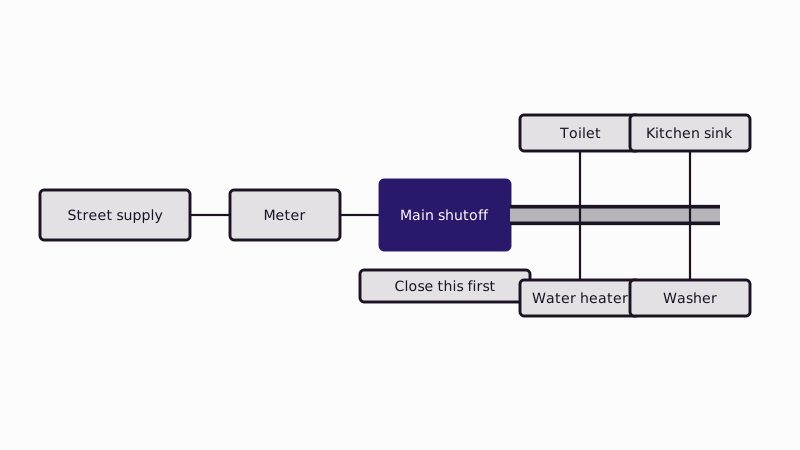
Begin at the closest shutoff, then move to the whole-house valve if the water keeps flowing. Around Santa Monica that valve often sits close to the meter in the front planter, or mounted on the front wall. Switch the water heater off, open a low faucet to release the pressure, and get belongings clear of the soaked area.
- Beneath a sink or behind the toilet is a small oval knob. Rotate the knob to the right, all the way.
- Water oozing through a wall or ceiling means the fixture stop will not help. Go straight to the whole-house valve. Old gate valves often stick, so give yours a gentle exercise sometime while nothing is wrong.
- Cut power at the panel to rooms with wet outlets. Should the path to the breaker box cross a wet floor, wait outside and phone for help.
- Snap pictures first and mop second, since claims adjusters ask for proof.
- Afterward, write everything up through the quote page, or use the header number in weekday office hours.
Is there a round-the-clock plumber near me?
Phone coverage runs Monday to Friday between 9am and 5pm, and overnight or weekends nobody is on the line. A promised arrival at 2am deserves skepticism. If the problem lands outside weekday hours, secure the house as above and send the details in so they wait for the morning.
Los Angeles County splits its water service among several agencies. Santa Monica runs its own Water Resources division, while other Westside addresses are served by LADWP, Beverly Hills, Golden State Water or another provider. Confirm with your water provider which one reads your meter. The utility's side normally ends at the meter, and the property side starts right there. A leak at the meter itself should go to the water department before a shovel comes out; Santa Monica lists its numbers on the Water Service page.
What will a rush plumbing visit set me back?
Bob Vila's national guide puts plumber rates at $45 to $200 an hour, with a service call fee of $100 to $350. For emergencies it describes time and a half or triple the usual hourly rate, or a flat fee of $100 to $350 on top. Consider that a rough guide only, because the written quote for your Westside home sets the real price.
| What moves the price | How it shows up |
|---|---|
| When the call happens: weekday, weekend, holiday | Holiday periods cost the most |
| Reaching the pipe: crawlspace, slab, finished wall | Opening and repairing surfaces adds labor |
| Parts: on the truck, or a trip to the supply house | A second trip adds hours |
| Material: copper, galvanized steel, PEX | Brittle galvanized often forces a longer section replacement |
Prior to any work, get the visit fee, the rate per hour and a firm ceiling in writing. Once a total reaches $1,000 the state expects the contractor to hold a state contractor license, and the law caps deposits. The state licensing board offers a free lookup tool on its website.
What holds a burst pipe until help arrives?
Shut off the supply, run the line empty, wipe the pipe dry, and then clamp or wrap the split. Rubber with a clamp, a sleeve coupling or fusing tape might last from an afternoon to a weekend across a hairline crack. None of these is a repair, since the damaged section still needs replacing. Gas lines are never a temporary-fix job.
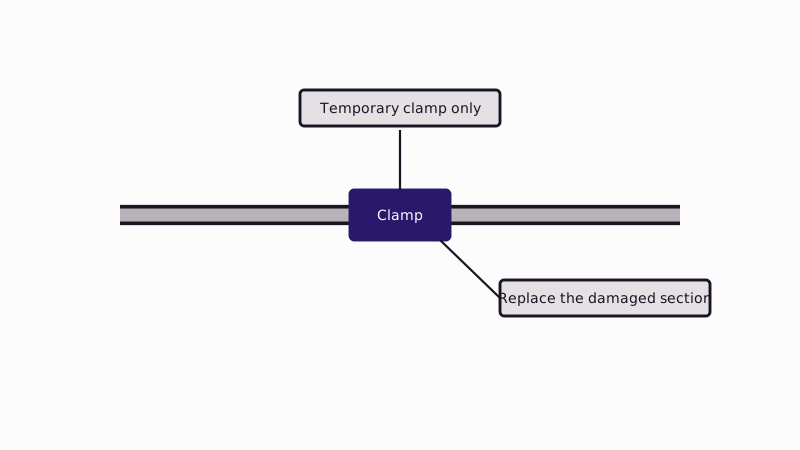
- Copper with pinholes or a split accepts a slip coupling or push-fit connector after you clean and dry the metal.
- PVC, CPVC and PEX that have cracked are better cut and rejoined; tape rarely holds.
- A split caused by pressure over 80 psi points to a worn regulator at the main, which will keep causing failures until it is replaced.
For plastic lines, see stopping leaks in plastic pipe, while recognizing a burst pipe helps with spotting one.
Will a plumber come out for a clogged toilet?
Certainly, and it is everyday work. The situation turns urgent when water spills over the rim, other fixtures start filling, or the only bathroom in the home is out of service. Try a flange plunger before anything else. Gurgling from nearby drains, or a plunger that does nothing, points to trouble deeper in the line.
If the tub, shower and floor drain all fill together, suspect the sewer lateral or main drain before the toilet itself. A camera inspection and a cable machine are the normal remedy, not store-bought liquids. Costs are laid out on the clogged toilet page and in the unclogging cost guide.
What is a maintenance plumber for?
A maintenance visit aims to catch problems while they are small: moving each shutoff, measuring water pressure, draining sediment from the heater, replacing aging supply hoses and opening up slow drains. In a Santa Monica home, a single annual inspection is cheap compared with any flood described above.
Keep the routine simple. Give every stop valve a quarter turn, look over the heater's relief line and its seismic straps, replace braided connectors older than about ten years, and make sure you know where the earthquake gas valve is. More on that is in water heater repair and in a guide to preventing burst pipes.
How can I tell a shady plumber from a straight one?
Red flags: a firm figure given by phone for a problem nobody has seen, insistence on cash, a large advance before work begins. A dependable contractor hands over a written estimate and a license number that can be checked, and explains the fix without jargon. Pushy timing and vague surcharges tell you plenty.
Run through these before signing anything:
- Enter the contractor's number into the state board's lookup.
- Measure any deposit request against the legal cap.
- Confirm every fee, plus the rate per hour, appears on paper.
- Ask who applies for the city permit that heater replacements and gas work generally need.
Common questions
Which method works best on a stubborn toilet clog?
Stay with mechanical tools: first a flange plunger, then a closet auger. Chemical openers burn skin and corrode aging pipe, and the bowl stays full of harsh liquid for whoever arrives with a cable machine. Give the plunger a solid minute of effort, then run the auger past the trap. When another fixture starts filling, quit and ask about the main line.
What should I budget to have a toilet cleared?
Fixr's national guide lists $100 to $250 for a standard snake and $200 to $550 when the toilet has to be removed to clear a clog. Unbolting the toilet, or sending a camera down to find the obstruction, pushes that number up. Have the quote split dispatch from labor so rival bids line up fairly, and check what is covered before saying yes.
Do plumbers handle water pipes?
Yes. Supply piping, shutoffs, water heater connections and the line from the meter all fall within plumbing. Gas pipe is regulated on its own terms and usually needs a permit. Replacing all of a home's supply lines is called a repipe, and the repipe page walks through it.
What does an urgent visit usually add up to?
Bob Vila's national guide shows a service call fee of $100 to $350, hourly rates of $45 to $200, and an emergency premium of time and a half to triple the rate or a flat $100 to $350. The written quote sets your total. Water hiding inside walls or beneath a slab costs more. Get the hourly rate and a cap written down before work begins.
Is there a "135 rule" in California plumbing?
No section carrying that label turned up when the California Plumbing Code was searched, and speculating would not help you. If a contractor brings it up, request the code section number. The building department in your city enforces the plumbing code and can explain which requirements apply to your job.
Sources used
Page updated