Home gas plumbing in California answers to Chapter 12 of the state plumbing code, a part of Title 24. Anything new, repaired or extended needs a permit, gets inspected before the pipe is covered and again at the finish, and is pressure tested. Local building departments enforce it and can add amendments, so the office for your address has the last word. Why the rules exist, and who should carry out the work, is covered on the gas plumber page. This is background reading, not instructions for doing gas work yourself.
What ground does the code actually cover?
Chapter 12 deals with materials, pipe sizing, installation, supports, shutoff valves, appliance connections, pressure testing and inspection, indoors and out. Appliance venting and electrical connections sit in other codes. Its sizing tables turn run length and total appliance load into a required pipe diameter.
Typical subjects it addresses:
- Approved pipe and tubing: black steel, certain corrugated stainless tubing with the right fittings, and listed connectors.
- Sizing: tables tying pipe diameter to run length and the Btu demand of every appliance downstream.
- Shutoffs: an accessible valve at each appliance.
- Supports and protection: spacing, and protection where pipe passes through framing or enters the ground.
- Testing: an air or inert gas pressure test before gas is turned on.
Local amendments and the edition in force vary, so confirm the version your city has adopted. A new state code cycle began on January 1, 2026 according to state sources, so confirm which edition your permit falls under.
Is a city permit needed before anyone touches the gas pipe?
Yes: new piping, and any repair, replacement or extension of existing piping. City handouts across California say so, and departments issue the permit alone or bundled with a plumbing permit. Relocating a range, adding a barbecue line, or changing the gas connection on a water heater typically qualifies.
Responsibility follows the address. A house in Brentwood, Westwood, Venice or Pacific Palisades falls inside the City of Los Angeles, and LADBS handles both its permit and its inspections. Santa Monica, Culver City, Beverly Hills, West Hollywood and Malibu each keep a separate city building office. Phone the right one, or read its website, before work is scheduled, and find out exactly what the fee covers.
What are the inspection stages?
Two stages are typical: a rough inspection before any piping is covered by walls, floors or ground, and a final inspection after appliances are connected. Where all the pipe stays exposed, some departments combine them into one visit. The inspector checks materials, support, sizing, valves and the pressure test.
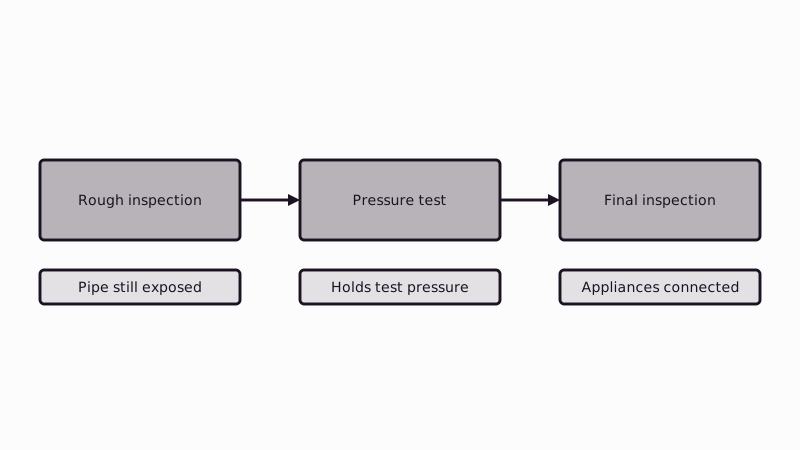
The pressure test is the core of the rough stage. Several city handouts built on the state code require test pressure of at least 1.5 times the intended working pressure, and never under 10 psi. One handout based on the 2022 code says the piping must hold at least 10 psi for 15 minutes with no drop, with appliances disconnected and a suitable gauge in place. Section numbers differ between sources, so ask your department for the version it enforces. Schedule the rough inspection before the pipe is hidden. Pipe that is buried first may have to be exposed again.
Who may legally do the work?
Treat gas piping as trade work. Once a job is priced at a thousand dollars or more, the state expects a contractor on its license rolls, and the number can be looked up online. Money up front is limited as well. What an owner may touch at their own house is something to ask the building department, not a video.
Mistakes in gas piping can cause leaks, fire and carbon monoxide hazards, which is why the law, the permit and the inspection all exist. A contractor should hold the permit, schedule both inspections and give you the final sign-off in writing. If someone proposes skipping the permit to save money, that is a reason to decline. The page on gas line work describes typical jobs, and gas line cost lists price ranges.
How do older and newer Westside houses differ?
Homes from roughly the 1920s through the 1960s may still carry black iron piping, an old meter set and few shutoffs, while newer remodels often use corrugated stainless tubing. When a permit is opened for one change, the inspector may look at what the new work connects to. Existing piping that is corroded, undersized for a new appliance or poorly supported can lead to more work.
Load is the usual trap. A tankless heater or a large range hung on a line sized decades ago can starve every appliance downstream, so the code sizes pipe by demand. Flexible tubing follows its own rules; the page on half-inch flexible gas tubing covers capacity. Quake shutoffs are another topic altogether, handled under earthquake gas shutoff valves.
Where does the gas utility fit in, and what if there is a leak?
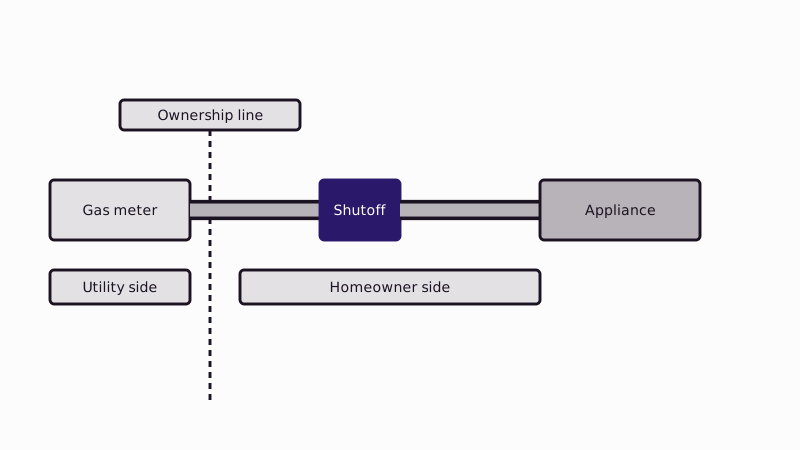
Ownership splits at the meter, in general: the utility takes the service line, and the homeowner takes whatever runs beyond it. A rotten-egg odor changes everything. Walk outside first. Once clear of the building, phone SoCalGas on 1-800-427-2200, or 911 if anybody is ill. Leave light switches alone, and let the utility look for the source.
After a gas line job, the utility may need to restore service, and the contractor can coordinate that. Never relight appliances or restore gas to a line that has not passed inspection.
Common questions
How soon can an inspection be booked?
It varies by department, and busy periods stretch the wait. Many offer next-day or few-day slots, while others are booked out longer. The permit counter can tell you the current wait, and a contractor can fit the rough and final visits around the other trades.
Is galvanized pipe allowed for gas?
Rules on pipe materials are set in the plumbing code and by the local department, and galvanized steel is commonly restricted for fuel gas piping. Ask the building office what it accepts rather than assuming. A contractor will choose approved material.
Could I plumb in a barbecue or fire pit line myself?
Start with a call to the building department. Permits and pressure testing apply to outdoor gas lines too, and errors can hurt people, so nearly everyone hires this work out. If you want numbers before making calls, the gas line cost page has ranges.
What does the final inspection check?
The inspector matches the installation against the permit drawing, checks appliance hookups and shutoffs, and reviews the test results. A pass releases the work for gas service. File the signed card somewhere safe; a buyer's inspector or an insurer can ask for it years later.
Planning a gas job? Put the details into the quote page, or begin again at the home page.
Sources used
- California Plumbing Code (Title 24, Part 5), Chapter 12 Fuel Gas Piping, published by the California Building Standards Commission
- Residential gas piping handouts from California city and county building departments (Milpitas, Contra Costa County, Moorpark, Agoura Hills), reviewed November 2026
- Los Angeles Department of Building and Safety, plumbing permits
- California Contractors State License Board, hire a contractor
Page updated