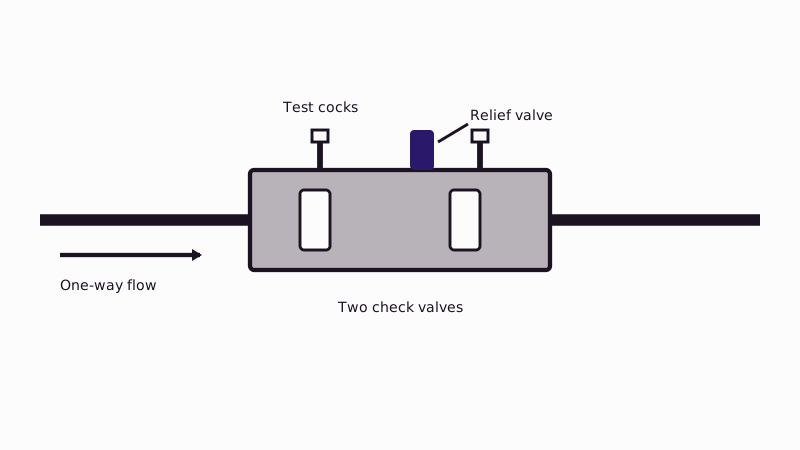
Once a year, a tester with a gauge kit confirms that the one-way valves in your backflow assembly still seal. California's cross-connection rules have each public water system see to field testing of the assemblies in its program at least annually. Notices come from your supplier. When a device fails, the handbook has the water system see that it is repaired or replaced within 30 days. This is one of several code-driven chores, along with gas line permits and contractors.
What is a backflow prevention assembly, and who has one?
It is a body of check valves, sometimes with a reduced-pressure relief section, that lets water move in one direction and keeps contaminated water from creeping back toward the street main. You mostly find them on lawn irrigation, fire sprinkler feeds, pool or spa fills, boilers, and businesses that handle chemicals.
Many homes have no assembly at all. You likely have one if landscape irrigation connects to the house line, if a brass or bronze device stands above ground by the sprinkler valves, or if your supplier tagged the property as a cross-connection hazard. On the Westside, irrigation devices in side yards, planter strips and hillside lots are the usual culprits. Santa Monica also runs a recycled water program for irrigation, and the city's guidelines call for an annual backflow inspection with a visual check that no cross-connection exists at those sites.
Do you have to test your backflow preventer every year?
Yes, when your supplier lists your device in its program. The state handbook makes annual field testing the baseline for public water systems, and the water system, the State Water Board or a local health agency may demand more frequent tests where the hazard is high. The notice and due date come from your utility.
Which utility is yours depends on the address, and several different water providers serve the Westside, so confirm with your water provider rather than assuming. Look at the water bill for the supplier's name and follow its instructions. Ignoring a notice can end in service being shut off until the device passes, so treat the date seriously.
What happens when the tester arrives?
First the water goes off. Then a differential gauge is fitted to the small test cocks on the assembly, and each check and the relief valve are pushed against backward pressure while the numbers are logged. A report to the supplier follows.
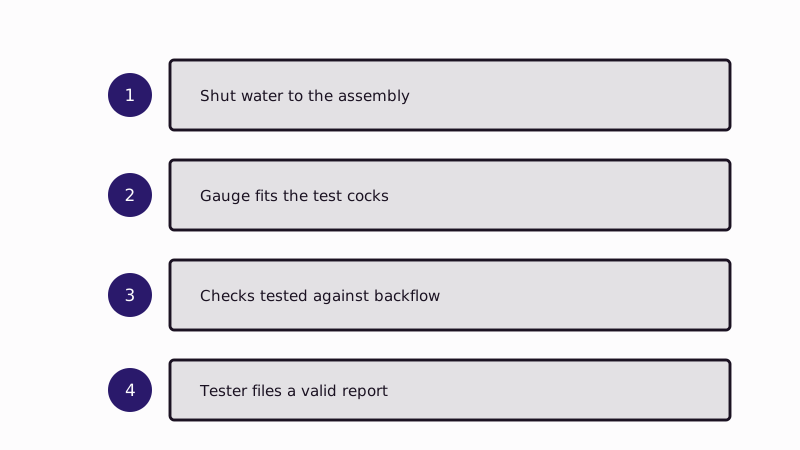
Water is off to the irrigation or sprinkler line during the work and briefly to the house if the assembly sits on the main. Clear access around the device helps: trimmed shrubs, no stacked pots, a visible cover. If the device passes, you are done for the year. If it fails, the tester cleans or replaces the check valves, seals or springs, retests and sends a pass report. For a walk-through of the procedure itself, read how backflow testing is done.
Which testers can file a valid report?
California's handbook calls for testers to meet state qualification rules, and the timing of the newer requirements has been reported inconsistently, so ask the tester to show a current credential and confirm with your supplier. Many suppliers keep a list of acceptable testers.
A general plumber or landscaper who doesn't hold that credential cannot file a valid test report, even if the repair work is within their trade. Before you book, ask whether the report will be submitted to your water supplier and whether a failed-device repair is included in the price or quoted on its own. To request a visit for testing or repair, use the quote page. California requires a contractor license for repair work of $1,000 or more, or any job needing a permit.
What should an annual test cost?
We have no verified Westside price for a residential test, so none is quoted here. A repair after a failure is billed apart from the test, followed by a retest. Ask for the test, any repair and the retest as separate lines, and wait for the written quote before you agree.
Your price shifts with how many assemblies you have, how reachable they are, and whether the report filing is built in. Commercial and fire line assemblies are larger and cost more, covered on commercial backflow testing. A separate article digs into backflow device testing cost, and the wider view of inspection fees sits in plumber inspection cost.
What follows a failed test or a bad installation?
Repair or replacement is due, generally within 30 days of the failed test, and then a retest. Typical culprits: grit lodged on a check seat, tired rubber seals and springs, or freeze and heat damage. A cracked body or an obsolete model means swapping the whole unit.
Installation matters as much as condition. An assembly mounted too low, buried in a valve box that floods, or lacking proper clearance can be a hazard on its own. Putting in a new one is usually permitted work, so plan on a permit and a test sign-off. On the Westside, hillside irrigation lines are often long and complex, so the assembly's location may be a short walk below the house. If your device was installed before the supplier's program started, ask whether it needs to be added to the list.
Does a mobile home or a small property need testing?
Mobile homes and small lots need it only if they have an assembly in the system, such as an irrigation setup or a fire line. Inspecting a mobile home's plumbing is a separate task that looks at supply lines, drains and the water heater; see mobile home plumbing inspection.
If you are unsure, check whether your supplier has sent a backflow notice, or whether your irrigation timer feeds a device with test cocks. A home without irrigation, a pool autofill or a sprinkler loop often has nothing to test. Properties on LADWP or the County waterworks district follow the same state rule but may use different forms and deadlines.
Common questions
How frequently should the device be tested?
At least once a year in California's public water systems, with more frequent checks possible for high-hazard sites. Newly installed assemblies are tested right after installation, then yearly. Your supplier controls the due date, so watch for its notice rather than counting from the last test.
What is the usual price of a preventer test?
The written quote sets the price, and we publish no figure we could not verify. Fixing a failed unit is its own charge, apart from the test. Several devices in one visit can change the per-device price, so list every device when you book.
Can I test my backflow assembly myself?
No, not for compliance. The test needs calibrated gauges and a recognized credential, and the report has to reach your supplier. You can and should keep the area clear, check that the cover is intact and watch for leaks from the device between tests, then call someone if anything looks wrong.
Is the test the same as a general plumbing inspection?
No. One looks only at a single device's seals and pressure readings. The other surveys pipes, fixtures, drains and the heater across the property. Home buyers may want both, and a general inspection report can reveal whether a device exists on the property at all.
Could a failed result cost me my water service?
It means you have a window, generally 30 days, to repair and retest. Ignore it and the supplier can escalate, up to shutting off service until the assembly passes. A prompt repair solves it for a modest fee, so book a retest before the deadline.
Sunset Coast Plumbing arranges backflow testing and repairs across the Westside.
Sources used
Page updated