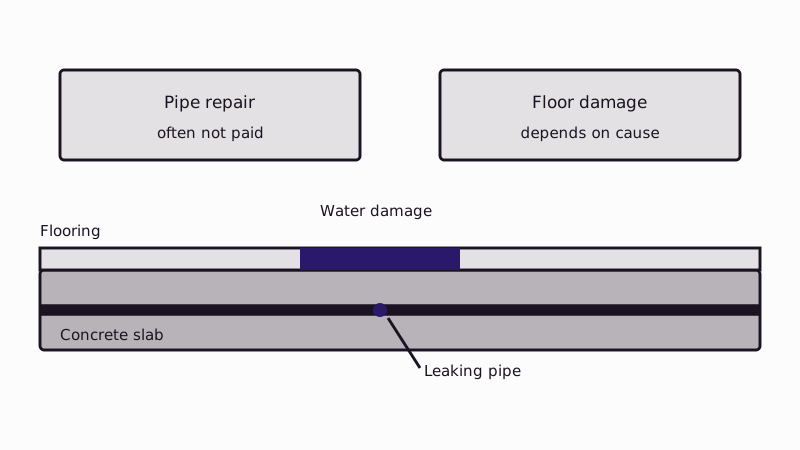
Nothing here is insurance or legal advice; your policy and your insurer decide. The common pattern, though, is that a homeowners policy responds to water damage from a sudden, accidental leak (ruined flooring, wet drywall) and does not respond to the pipe repair itself or to a slow seep. A slab leak or other leak is a plumbing job first and a claim second.
Will my policy pay to fix a slab leak?
Usually it will not pay to repair the failed pipe itself. Insuranceopedia's explainer says coverage generally excludes the cost of accessing and fixing the leaking pipe, though it may cover the water damage the leak caused. Whether anything is paid depends on the cause of the leak and on exact policy wording, so read yours.
In other words, the pipe repair is often treated as maintenance and the soaked floor as the insured loss. A few policies add equipment-breakdown or service-line endorsements that change this, and the explainer notes that tearing out and replacing a slab may be covered when a covered peril caused the leak. Only the insurer, looking at your facts, can settle it.
What decides whether the water damage is covered?
Whether the cause was sudden and accidental, or gradual. A pipe that gives way abruptly and floods a floor is the kind of event policies are written for. A slow leak that has been seeping for months looks like wear, and insurers may classify it as maintenance or neglect. Exclusions for earth movement and flood also matter here.
Insuranceopedia lists slow leaks causing gradual damage, routine wear and tear, damage that proper maintenance could have prevented, and earthquake and flood damage to the slab as common exclusions. It also lists a suddenly cracked water heater and a burst pipe as examples of covered causes. Wording varies from policy to policy, so a statement from a friend with a different insurer proves nothing.
What are my first steps if I think the slab is leaking?
Protect first, then record. Close the main if water is actively pouring out, film or photograph the damage before anything gets moved, jot down dates and what you noticed, and report the loss. Written findings from a plumber about where the line failed, and the reason, will help the adjuster.
Typical clues: a climbing bill, a warm patch underfoot, running-water sounds with every tap shut, a water meter still turning. The meter test EPA describes (note the reading, leave water unused for two hours, check again) is a simple check for a hidden leak. Leak detection cost explains what finding the leak involves, and the bill itself is the cheapest clue, explored in a high water bill.
How does a claim usually proceed?
Report the loss, let the adjuster inspect, then get contractor estimates once the claim is approved, and keep every receipt. Insuranceopedia lists the steps as contacting the insurer, documenting the damage with photos and notes, attending the adjuster's inspection, submitting estimates after approval, and paying the deductible before the claim is paid.
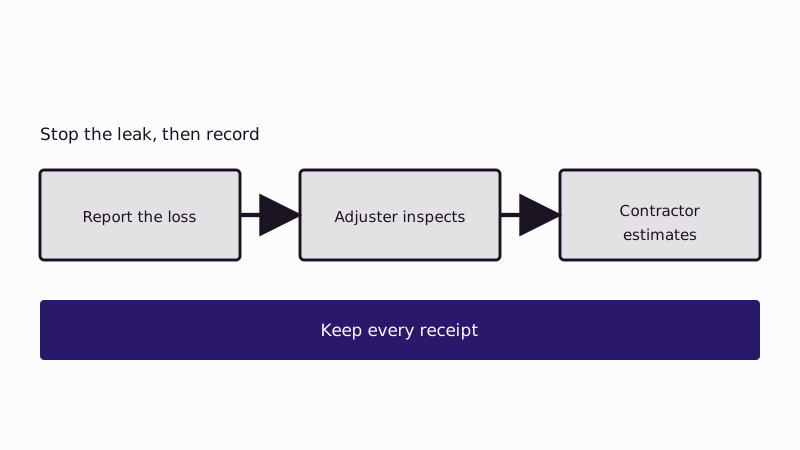
Do not start major repairs before the insurer has seen the damage, unless you need to stop ongoing harm. Emergency steps such as shutting off water and drying out are normally expected, and receipts for them should be saved. Ask the insurer in writing what it needs from the plumber and the repair contractor.
Is it worth filing when the repair is small?
Not always. If the covered damage is near or below your deductible, a claim may cost more than it returns, and one explainer says premiums can rise by as much as 21 percent after a claim, with the increase lasting for years. We cannot predict what your insurer will do, so call your agent and ask before deciding.
Put the numbers side by side: your deductible, the plumber's written estimate for the pipe, the estimate for flooring and drywall, and what the policy says about each. A plumber's quote helps, and you can request one on the quote page. Cost ranges for the job itself are on slab leak repair cost.
What if the claim is denied but the pipe still leaks?
No, the repair is a separate matter between you and the contractor, and a denied claim does not cancel the leak. You still owe for the work you authorize. Get the quote and scope on paper first; In California a contractor license becomes mandatory at $1,000 of work.
If a leak is chronic, the wider repair decision is whether to patch or replace. Two companion pages help with that choice: whether to fix the slab leak or repipe, and the notes on slab leak repair companies. A denial you cannot resolve can go to the state insurance regulator, 1-800-927-4357.
What can I do to avoid a denied claim next time?
Keep water pressure in a sensible range, fix small leaks early, keep yearly records of plumbing work, and watch the meter and the bill. Explainers stress that an ignored leak can look like negligence. Reading your policy once a year, and asking about water-backup and service-line endorsements, takes an hour.
Insuranceopedia suggests regular plumbing inspections and a leak detection system as part of keeping a claim clean. EPA's yearly leak loss for an average home exceeds 9,300 gallons, so small signs deserve a look. Our home page lists the leak and repair work we arrange.
Common questions
Is the cost of locating the leak reimbursed?
Sometimes, depending on the policy. Access and detection can count as part of the excluded pipe repair, or as part of a covered loss when a covered peril caused the leak. Before paying for detection, send the insurer a written question, and keep the report either way.
Is earthquake damage to a slab covered?
Insuranceopedia lists earthquake damage to the slab among common exclusions, and earthquake cover is generally bought separately in California. Look at your declarations page. If a quake-related pipe break is possible, mention it to your agent when you report the loss.
Where do I turn if the insurer and I disagree?
First ask the insurer for its decision in writing, with the policy wording it relied on. If you still disagree, the state Department of Insurance answers consumer calls on 1-800-927-4357 and has an online complaint form. A plumber cannot decide coverage, but a clear written report supports your case.
Sources used
Page updated