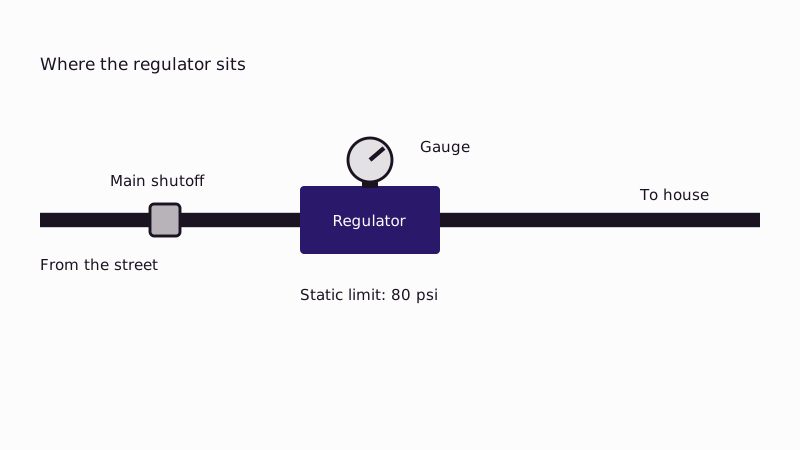
The two national price guides we read, Angi and HomeGuide, land in the same neighborhood: most homeowners pay somewhere between about $200 and $700 for a regulator swap, averaging $400 to $475. Those are national figures, and the written quote for your house sets the real price. The pressure problem itself is covered on the low water pressure page; this page deals with the bill. Start at the home page for the other services.
What do the published guides charge for a regulator swap?
Angi gives a national average near $400, with most homeowners paying roughly $200 to $700. HomeGuide shows about $300 to $650 installed, an average of $475, and puts labor alone around $225 to $450. The part is the smaller piece of the total, and labor and access make up most of it.
| Source | What it publishes |
|---|---|
| Angi | about $400 average, most homes $200 to $700 |
| HomeGuide | about $300 to $650, average around $475 |
| Labor only (HomeGuide) | about $225 to $450 |
| City permit, where one applies (Angi) | fee varies by city |
Read the table as a guide to the national market. Southern California labor rates, how the job is quoted and whether the valve sits in plain view can all move a local quote above or below it.
What makes one regulator job cost more than another?
Four things: access, the valve, whatever else turns out to be worn, and the permit. Where the regulator sits out in the open beside the shutoff, the job is short. One in a wall, below concrete or beside a corroded valve eats time, and a seized old fitting can turn the swap into a bigger repair.
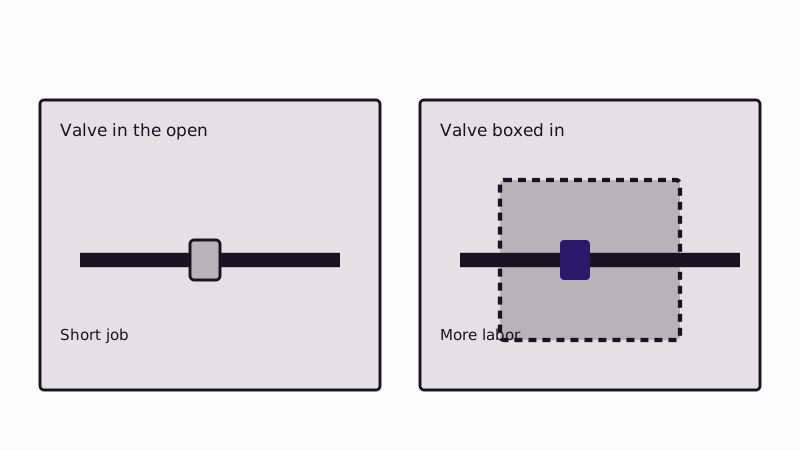
- Where the valve sits. A valve out in the open at the house entry is the easy case. Buried or boxed in costs more labor.
- Valve quality and size. Larger service lines and better valves cost more. Match the size to the incoming line.
- Old shutoff valves. If the main shutoff leaks or will not seal, expect it to be swapped in the same trip.
- Expansion tank. When a regulator makes the system a closed one, plumbers often add or check a thermal expansion tank. Ask whether it is included.
- Permit. Some cities charge a fee, and Angi lists one for a regulator swap where a permit applies. Ask your city's building office about your scope.
Do I even need a regulator, and what pressure is too high?
The rule plumbing references quote is California Plumbing Code 608.2: when static pressure passes 80 psi, a regulator must bring it back under that number. We have not read the code text itself, so check the section with the city's building office. Thread a cheap gauge onto an outdoor spigot and read the number in a minute.
Excess pressure wears out faucets, fill valves, washer hoses and water heaters early, and it can make pipes bang when a valve snaps shut. Homes on a slope below the street main can see higher numbers, since each 2.31 feet of drop adds about one psi of pressure. See why water pressure runs high or low and the water hammer sound for symptoms.
Which symptoms point at a failing regulator?
Watch for pressure that climbs overnight, a gauge past 80, a banging or whining supply, a leaking heater relief valve or sputtering taps. A tired regulator can also let pressure sag too low. Readings taken at different times of day beat guesses.
An adjustment is sometimes enough. Turning the adjusting screw is explained on our regulator adjustment page, and if you cannot even find the valve, try locating the regulator. If the diaphragm has failed, adjusting will not hold, and replacement is the fix.
What happens during the replacement visit?
First a gauge reading, then the main is closed, the old valve is lifted out and the replacement is joined in on unions. Many plumbers aim for 50 to 70 psi, a habit rather than a rule. Then comes a run test and a leak check. A simple swap can fit inside a morning.
Setting the new pressure is a judgment: too high wears fixtures, too low disappoints at the shower. If your house is two stories on a hill, ask for a figure that gives a good shower upstairs. Related equipment, such as a whole-house regulator, a hot water pressure regulator or an expansion tank, has its own page.
Can I replace a regulator myself to save money?
Mechanically some owners do, but the savings are modest: the valve is only a fraction of the bill, and a mistake means a flooded yard or a failed pressure test. Licensing for contractors begins at $1,000 in California. A lone regulator might come in under that, but the main water line is no place to experiment.
A weeping joint on the main wastes water quickly; EPA's figure for the average household tops 9,300 gallons a year. If you take it on anyway, close the main first, expect the line to drain, and finish with a gauge reading. For a straight price, ask for a written quote from the quote form.
Common questions
And if the real culprit is something other than the regulator?
The price follows the cause. The table covers a regulator swap, yet weak flow can also trace to a half-open valve, a dirty aerator, corroded pipe or a hidden leak. Diagnosis comes first, then the quote. For broader numbers, see the plumber cost guide.
When should a regulator be replaced?
No firm lifespan turned up in the guides, so no number appears here. Let the gauge decide: when pressure creeps above the 80 psi line, swings through the day or the valve starts to leak, it is time. Wear depends on water quality and how hard the house runs the system.
Is the permit or a recheck inside the price?
Only when the quote says so. Ask about the permit fee, the gauge test after the swap and the expansion tank check. A written line for each is easier to compare against another bid, and it prevents add-ons once work has started.
Sources used
Page updated