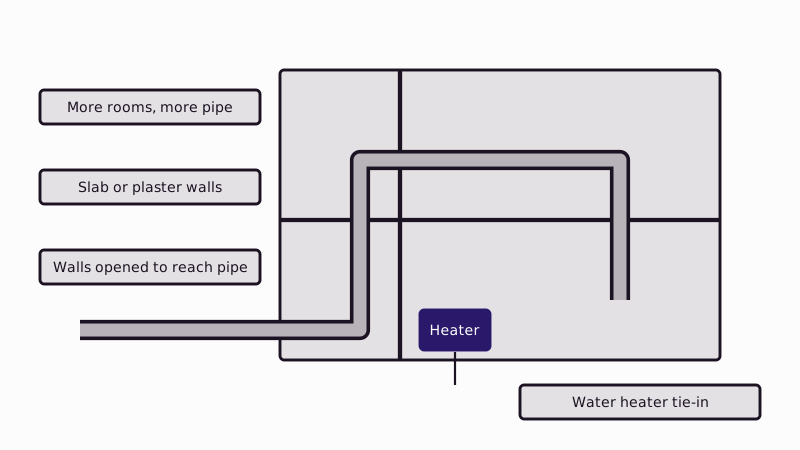
HomeGuide puts galvanized pipe replacement at $2,000 to $15,000 nationally, depending on whether PEX, copper or another material goes in, and lists copper at $8,000 to $16,000. Use that for orientation only; no source we could read gives a Westside figure, and the written quote is what sets the price. For the overall job, see repiping a house.
What is the full-house price for replacing galvanized pipe?
The national range above is wide, and large or awkward houses can fall outside it. Where the number lands for a single-family home depends mostly on the plumber's time, the material you pick, how easily the old pipes can be reached, and whether walls or floors must be opened and patched afterward.
Why so wide? Labor is a large part of the job, and labor hours hinge on how reachable the pipes are. A one-story house on a raised foundation with a crawl space is the cheap end. A multistory house with finished walls, or a slab where the lines must be rerouted overhead, is the high end. A few of the sources are contractors, so their figures may lean toward their own pricing, and that is one reason to gather more than one quote.
PEX or copper: which costs more?
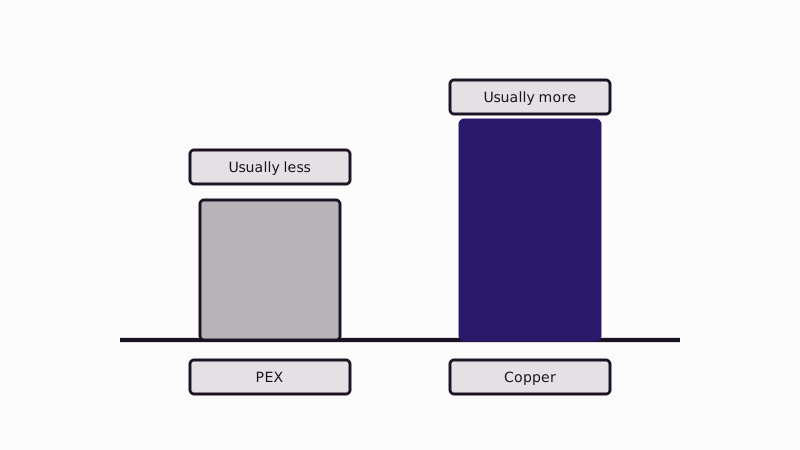
Copper costs more. HomeGuide lists copper at $8,000 to $16,000 for a whole house, and a PEX job is generally lower. Pipe itself is the smaller part either way, so much of the gap is labor: soldering takes longer than crimping.
Owners who pick copper like its long record and rigid, fire-resistant build. PEX installs quicker and bends around corners, so fewer walls open, which is why it dominates repipe work. Neither suits every house; ask the plumber why one is recommended. The material comparison, beyond cost, is in PEX versus copper.
How much does house size move the cost?
A bigger house needs more pipe and more wall openings, so the total rises with size. No size-based figure we could read comes from a source we can cite, so ask each bidder for a price at your square footage. The count of bathrooms, kitchens and laundries can matter even more than area, because every one adds fixtures, valves and wall openings to the job.
| House type | What moves the written quote |
|---|---|
| Small one-bath home | fewer fixtures and shorter runs |
| Most single-family homes | bathroom count and wall access |
| Larger or multistory home | longer runs and more openings |
| PEX whole house | quicker crimped joints |
| Copper whole house | soldered joints and more labor |
Westside housing tilts the totals. Plaster walls in Spanish Revival homes cost more to patch, two-story houses in Brentwood and Culver City add vertical runs, slab homes in Venice and Marina del Rey may have lines sent through the attic, and hillside lots in Malibu and the Palisades can make access hard. A small one-bath Santa Monica bungalow sits nearer the low end.
What belongs in the quote, and what usually does not?
Guides generally count new pipe, fittings, fixture shutoffs, labor, wall openings and drywall patching as included, with the permit fee passed along at cost. Paint, texture matching, tile, countertops and wallpaper are usually left out. Ask exactly which items are covered.
A solid written quote counts fixtures, names the material, lists the permit and inspection, covers patching and cleanup, and states when water will be shut off. Compare quotes line by line, not just by total. A low price that excludes patching is often higher in the end. Also ask about the water heater connections, the main shutoff and a pressure regulator if one is needed; these are sometimes extras. Water near 161 ppm hardness in Santa Monica's 2022 report is a fair reason to ask about material choice and treatment options.
Which extras raise the bill?
Slab foundations, plaster or tile walls, tight attics or crawl spaces, a second water heater, a main line that also needs work, and damage discovered once walls open. Ask the plumber how a surprise found behind a wall would be priced.
Older houses may hide asbestos or lead paint that needs special handling, and corroded shutoffs or a damaged main add cost too. Condo and townhouse repipes can require HOA approval and coordination with neighbors. If the house has polybutylene or mixed pipe, mention it when you collect quotes. More on older homes: plumbing upgrades in a house that is decades old.
What does the permit add?
The fee passes through at cost, and the plumber normally files it. Santa Monica's homeowner guide puts plumbing and re-piping under a single-trade permit. Fees vary by city and project size, and Los Angeles, Culver City, Beverly Hills, West Hollywood and the county each publish their own.
Ask that the permit fee appear alone on its own line, with inspection included. Any repipe is well past the dollar level where California demands a contractor license, so check whoever you hire. A bidder who wants a big deposit is a red flag.
Is replacing galvanized pipe worth the cost?
For a house with brown water, sagging pressure and repeat leaks, yes: serial repairs and water damage add up, and new supply lines help resale and insurance. If the pipes are symptom-free, there is room to save up and plan.
One way to frame it: a single wall or slab leak can cost thousands in damage and repair, and old galvanized tends to fail more than once. Splitting the job into stages rarely saves money because each visit carries its own minimum. Signs and process are in galvanized pipe replacement, and local cost factors are on the repipe cost page.
Common questions
How can the cost be kept down?
Usually with a PEX repipe of a one-story house that has good access, finished in a single visit so fixed costs are spread once. Piecemeal replacement looks cheaper but often totals more. Get a couple of written quotes and compare them carefully, line by line.
Does homeowners insurance cover galvanized pipe replacement?
Generally no, since replacing aging pipe counts as maintenance. Damage from a sudden burst can be covered even when the pipe is not. Some insurers ask about plumbing age or decline certain materials, so check the policy and ask your agent.
Is a copper repipe worth the extra money?
For some owners, yes: copper has a long record, resists fire and heat, and certain buyers like it. For many, PEX delivers the same practical result for less. It turns on your water chemistry, your budget and how long you plan to stay in the house.
Is a deposit expected?
Yes, within limits: Under California law, a deposit on home improvement work is capped, and the remainder is paid as the job moves along. Be wary of any request for a large payment before work begins, and make sure the written contract lists the schedule.
Can I save money by doing part of the work myself?
Painting or wall finishing is possible if the contractor agrees, but the piping on a whole-house repipe needs a plumber, a permit and an inspection. Ask before taking on any step; one plumbing mistake can outweigh the labor you saved.
See our service list on the Sunset Coast Plumbing home page.
Sources used
Page updated