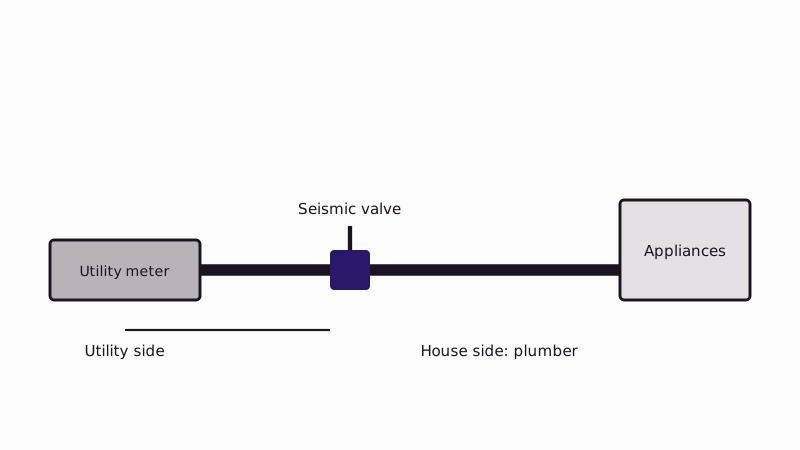
Your valve closed because it sensed shaking, and gas stopped at the house line. Before you reset anything, walk through the house and sniff. If you smell gas, you head outdoors, phone the utility and wait for instructions. A clean house means the valve maker's instruction sheet becomes your guide, though SoCalGas would rather a qualified person or the utility do the reset and check your appliances. Rules and prices for the pipe side are on the gas line page, and a written quote starts the search for a plumber who specializes in gas work.
What is the safe order for resetting a tripped valve?
Sniff first, switch every gas appliance off, then work through the maker's reset steps exactly as printed, since models differ. When gas flows again, relight pilots and test each appliance. A smell, a hiss or any doubt means stopping to phone the utility or a plumber.
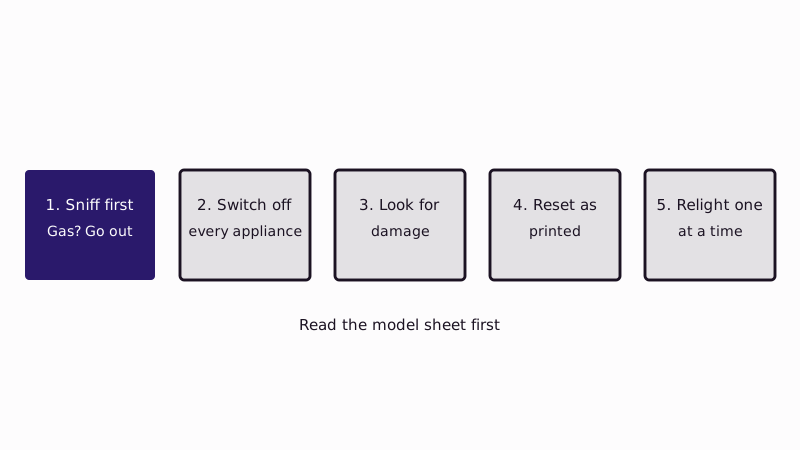
A sensible routine, before you touch the valve:
- Look and listen for damage, such as a pulled flex connector, a leaning water heater or a cracked fitting.
- Switch off every burner and appliance, so nothing receives gas the instant flow returns.
- Open windows, and avoid sparks, flames and light switches if you suspect a leak.
- Reset the valve as the instruction sheet describes. Do not improvise on a model you have not read about.
- Bring pilots back one appliance at a time, watching each for odd smells before moving to the next.
SoCalGas notes that it may take days or even weeks after a major emergency before anyone can visit, so knowing the steps matters.
Who is allowed to touch the gas at the meter?
Nobody except SoCalGas and its contractors may touch the valve at the meter. If you shut the meter because you smelled or heard a leak, leave it shut and ask the utility to restore service and relight pilots. A customer-owned earthquake valve, which sits downstream on your pipe, is the one you may reset.
That split is easy to blur, and it matters. The utility will not install an earthquake valve on its own equipment and removes unauthorized ones found on its facilities. It also will not allow customer-owned equipment to be bolted to its pipe or placed in a curb meter vault. So when you hear "the earthquake valve on my meter", the valve in question should be on your side, on the house line.
Why did my valve trip when I felt nothing?
A seismic valve is built to close on shaking at its own location, and a tremor you barely felt may be enough. Valves can also close for non-earthquake reasons, and SoCalGas bills a fee to reset the valve and relight pilots in that case.
Walk around the valve before you call. Look at how it is fastened, whether anything has bumped it, and whether the house is shaking from work nearby. Pass those notes to the plumber, who can judge the mounting as well as the valve itself.
Does Santa Monica require one, and who installs it?
Santa Monica's code requires a seismic gas shutoff on new buildings, on existing buildings when alterations are valued above $10,000, and when a building or condominium unit is sold. The owner pulls a permit and the valve goes on the customer's house line. SoCalGas will not install it for you.
The city's summary says the device must be approved by the State Architect. A plumber who handles gas piping measures the line, picks a matching size and model, installs it per the maker's instructions, and may need SoCalGas to close and restore service while the pipe is open. The utility suggests asking your building department about size and manufacturer, and your insurer if a policy requires one. For the bigger picture, read earthquake gas shutoff valves.
What should an earthquake valve installation cost?
SoCalGas says the cost depends on valve type, pipe size, difficulty and installer, and it publishes no price for the house-line valve. Ask each bidder for a written quote that names the model, the permit fee and the city inspection.
The excess flow valve is a different product. It reacts to a surge or a severed underground pipe, not to shaking, and SoCalGas quotes a range starting at $2,500 and reaching $5,000 or higher, depending on the site. Keep the two apart when comparing bids. For general pipe pricing and its drivers, see the gas line cost guide.
Which valve is best to buy?
We do not rank brands. What counts is that the valve is approved for California use, fits your pipe size and gas load, and is installed on your house line by a plumber and inspected by the city. Valves also differ in how they reset and how they are tested.
When you compare, ask three things. Is it approved by the State Architect? What is the exact reset method, and who is allowed to do it? Will the plumber leave a copy of the instructions with you? A model you can reset yourself matters during a long outage, when a service visit may be weeks away.
Do you need to reset it yourself after the shaking stops?
Not always. With no smell and no damage the maker's instructions let you reset it, yet SoCalGas still leans toward a qualified person confirming there are no leaks and relighting pilots. A water heater or furnace pilot is a sensible place to bring in a plumber.
After a big event, expect delays, since the utility must work through damaged areas first. That is the practical case for knowing your valve and keeping its instruction sheet nearby. Pilot trouble on the heater side is covered under water heater repair, and permit questions under permits, codes and inspections.
Common questions
What is the difference between an earthquake valve and an excess flow valve?
An earthquake valve shuts gas off when shaking reaches a set level. An excess flow valve closes when flow jumps, such as after a pipe is severed, and it does not protect against shaking or small leaks. Different jobs, different prices, and different people install them.
Can I fit one myself?
No, treat it as plumber work. Fitting one means cutting into gas piping, and Santa Monica requires a permit where its rule applies. A poor job can leak or fail to trip. Hire someone who specializes in gas line install work, and ask about the city inspection.
Is an earthquake gas valve essential?
It is essential where the law requires it, which in Santa Monica means new buildings, large remodels and sales. Elsewhere it is a safety choice, and some insurers ask for one. Ask your agent and the local building department before you decide.
Did the Northridge earthquake change gas valve rules?
We could not verify a direct link, so we make no claim about it. What the city checklist does say is that its rule applies from January 1, 2008, and that devices installed earlier count as compliant while they stay installed and maintained as originally approved.
For the wider picture, start with plumber in Santa Monica.
Sources used
Page updated