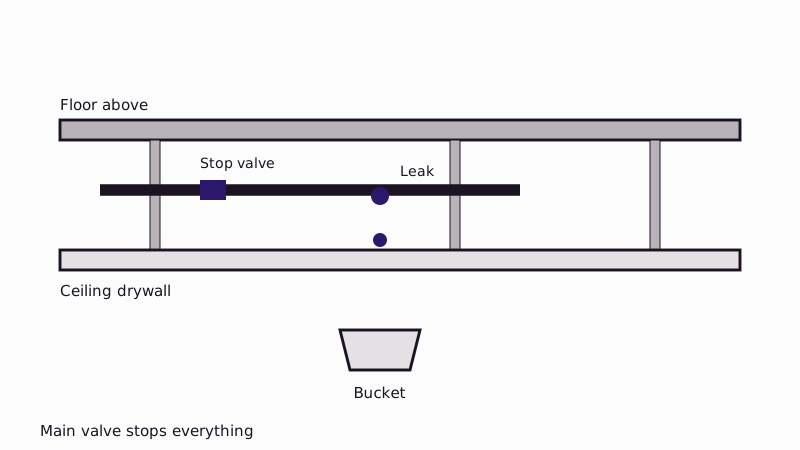
Drips on the floor are only the visible part. What matters in the first minute is the water supply, the electricity near the wet spot, and whether anyone is standing under drywall that has started to sag. Sort those three, and the question of pipe, roof or appliance can wait a few minutes. Background on the whole subject lives in water leaks and bursts, and what follows is the ceiling-specific order of operations.
What comes first when a ceiling starts to drip?
Close the main water valve, flip off the breaker serving that room, and clear the space below. Put a bucket beneath the drip, snap some photographs, and then phone for help: a plumber if the source looks like pipes or fixtures, a roofer if it appears only with rain.
In sequence:
- Water off. The main valve stops a pressurized supply line. For a lone drip, the stop valve under the fixture upstairs may be enough.
- Power off. Water that has reached a light fixture or recessed can is a shock hazard. Use the breaker, since a wall switch leaves wiring live.
- Space cleared. Soaked drywall weighs a lot and can drop. Keep everyone out from under a bulge or sag.
- Evidence gathered. Buckets and towels hold the water, and photos support an insurance claim.
- Help called.
A bulging ceiling is best opened by a plumber or contractor who can release the water in a controlled way, not by someone poking it from below.
Which is it: plumbing, roofing or an appliance?
Timing is the best clue. Water that arrives in dry weather suggests plumbing or an appliance, and water that shows up only during or after rain suggests the roof or a flashing. A stain below a bathroom often points to the tub, shower pan or toilet seal above it.
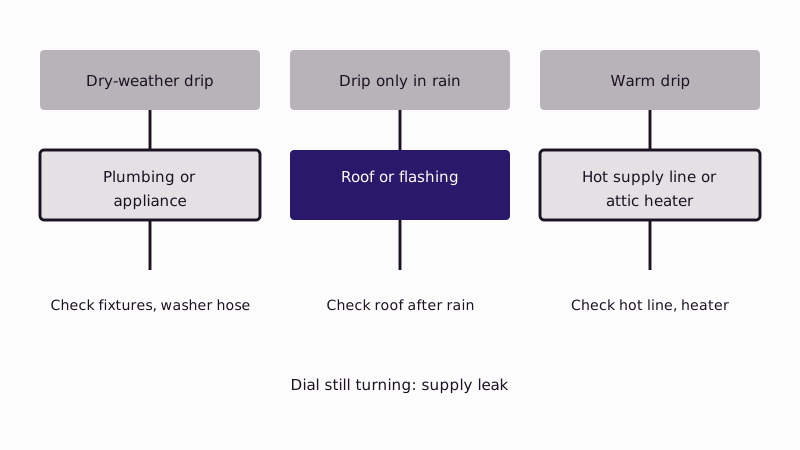
More clues:
- Where it sits. Under a bathroom, laundry or kitchen? Look at those fixtures and their drain lines first.
- Temperature. Warm drips hint at a hot supply line or an attic water heater.
- Stain shape. Brown rings that expand outward show repeated wetting.
- The meter. Shut off all use inside, and if the small dial on the meter still turns, a supply line is losing water.
Attic heaters, air-conditioner condensate drains and the supply hoses of an upstairs washer are repeat offenders. When the source is hidden, leak detection uses listening gear and moisture readings to find it without demolition.
Does a burst pipe above the ceiling count as an emergency?
Yes, because a pressurized pipe can empty many gallons into insulation and drywall in a short time. Close the main, let the lines drain through whichever faucet sits lowest, and arrange emergency service. Waiting to see whether the drip stops is the costly choice, since a pipe under pressure keeps pushing water into insulation, drywall and the room below until someone shuts the supply.
For scale, Fixr gives $200 to $1,000 as a normal national range for fixing a burst pipe, $150 to $500 for a wall or kitchen, and $150 to $800 for a bathroom, with cleanup and rebuilding extra. Those are guides; the quote on paper is the price. Patching the ceiling is a separate trade: drying, drywall, texture and paint. Ask the plumber what access they need and who closes it up. If water has already flooded rooms, what to do about a burst water pipe in the house takes it from there.
How long does the whole fix take?
Plumbing repair can finish within hours if the leak sits at a fitting you can reach. When it hides behind a ceiling, add an access hole and detection first, then days of drying before patching and paint. Rebuilding often runs longer than the plumbing itself.
A normal order of events: water stopped, source found, pipe or fixture fixed, pressure test, fans and dehumidifiers running, wet insulation and drywall removed, and then finishes. Closing a ceiling while the cavity is still damp invites mold, so the drying has to be confirmed first. A plumber can estimate only the plumbing portion; the drywall or restoration contractor sets their own schedule.
Should I worry about a small leak or a faint stain?
Yes, a little. Even a slow drip or a tan ring means water is getting somewhere it should not. A stain that grows, a drip that returns whenever the shower runs, or a bubble under the paint all point to live moisture. Draw a pencil line at the stain's edge and compare tomorrow.
Old stains from a fixed leak are common, and a dry, unchanging stain can wait for paint, with a plumber confirming it is dry using a moisture meter. For stains with no obvious leak, water spots on a ceiling but no leak covers other causes, such as condensation. Small leaks add up, and the EPA's household figure is already over 9,300 gallons a year.
Will the ceiling grow mold after a leak?
Wet drywall and insulation that stay damp are where mold takes hold, so dry them fast and stop the source. The EPA wants leaks fixed quickly, wet items dried fully, and fast action where mold already shows. Wet drywall and insulation that stay damp are where growth starts, so drying matters as much as the repair.
A small patch on a hard surface can be cleaned following EPA guidance, with gloves and a mask. Mold in porous material like ceiling tile, or across a big area, generally means that material has to come out. A musty smell with nothing visible hints at moisture inside the cavity. The plumber deals with the water; a restoration contractor handles drying and mold. Ask the plumber for a note stating the cause and repair date.
What if I rent, or the leak is below ground level?
Renters should tell the landlord or manager right away and put it in writing, since California Civil Code 1941.1 expects plumbing facilities to be kept in good working order. If the water drips from the unit above, the manager can reach that neighbor. Your belongings fall under renters insurance, not the landlord's policy.
In a basement or garage the ceiling is often bare joists, so supply lines and drains above are visible, and diagnosis goes faster. In a condo, shared plumbing may bring in the association, so check its rules before anyone enters a neighbor's unit. To book a visit, begin at Sunset Coast Plumbing; the how a job runs page lays out the steps.
Common questions
Whose insurance pays?
It turns on who owns what. A homeowner's policy often handles sudden water damage but may refuse a gradual leak, with wording that varies by policy. Landlords generally answer for the building's pipes, and renters insurance covers a tenant's belongings. Burst pipe insurance coverage goes deeper.
Can I do the repair on my own?
Stopping the water, catching drips and drying the area are fair game. Fixing the pipe depends on what is involved: a simple supply hose may be within reach, while gas, electrical and permitted work are not. California wants a contractor license above $1,000, and any deposit stays below the smaller of 10 percent or $1,000.
Is it smart to cut a hole in the ceiling myself?
Be cautious. A hole can relieve a bulge and expose the source, but it can also bring wet drywall down or reveal live wiring. With the power off and water pooled above, let a contractor or plumber open it. For a small stain, wait until the source is found.
What should I say when I request a visit?
Describe where the water appears, what sits above that spot, when it began, whether rain is involved, and whether you closed the main. Add photos on the quote page, plus the address and building type, so the right tools arrive.
Sources used
Page updated