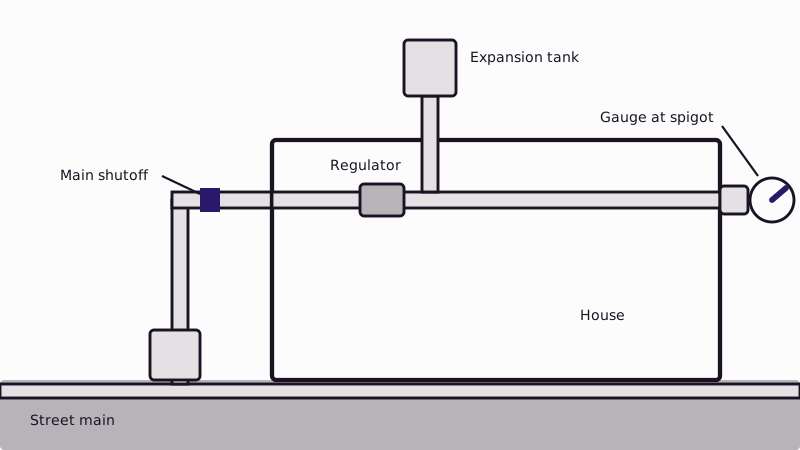
Pipes seldom fail without warning. They corrode, they take a beating from excess pressure, and they flex when the earth moves, and a house typically drops hints for months beforehand. Along this coast the culprit is usually one of those slow processes, not frost. Locate the main valve, measure the pressure, and retire worn lines when you choose rather than when they choose. The emergency side is covered in water leaks and bursts.
What actually makes a pipe burst around here?
Wear, corrosion and pressure account for most failures in coastal Southern California, with frost a minor player. Zinc-coated steel pipe corrodes from the inside out, copper may pit where water or soil is aggressive, and a dead regulator lets raw street pressure hammer every joint. Quakes and vehicles driving over buried lines add stress.
Cold snaps do happen in canyon and hillside spots, so exposed outdoor pipes and hose bibs can still be at risk on a clear winter night, and pipes in an unheated garage wall are the usual place. Still, the habits that save the most trouble are the ones aimed at pressure and age. A longer catalog of triggers sits in why pipes burst.
How do I check whether my water pressure is too high?
Attach an inexpensive gauge to a garden spigot, confirm nothing indoors is drawing water, and note where the needle rests. California's Plumbing Code treats static pressure over 80 psi as too much and wants an approved regulator that lowers it to 80 or below.
Take the reading in the early morning or late evening, when neighbors are not drawing water and street pressure is at its highest. A needle that sits above 80 means the regulator is missing or worn out. Symptoms beyond the dial: knocking pipes, a dripping relief line at the water heater, toilets that refill unprompted, spitting faucets. Many plumbers set regulators well under the cap; the exact setting is agreed between owner and installer. Replacement is explained under pressure regulator installation at the whole-house level. The code also places an expansion tank on the cold supply after a regulator; raise it with the plumber.
Where is my main shutoff and does it work?
Start by the curb meter, then try the spot where the pipe meets the house wall, then the garage. Once found, tie a bright tag to it, and turn it off and back on each year to prove it still seals.
Gate valves that sat untouched for decades tend to seize or weep at the stem, so never force one. A stuck valve can be swapped for a quarter-turn ball valve, a minor job next to a flood. Everyone in the household should know the location, because step one in any burst is closing it.
What should I do once a year to catch problems early?
Choose a date, put it on the calendar, and tour the house with a flashlight: cabinets under sinks, the wall behind each toilet, the heater closet, the garage and any crawlspace. Hunt for drips, rust, green crust on copper, soft wood and chalky mineral rings at joints. A phone photo of anything suspicious gives next year a comparison.
A short checklist makes it routine:
- Run the meter test: with all water use stopped, the leak indicator should stay still. The EPA household average of more than 9,300 gallons wasted yearly shows why a moving dial deserves a follow-up.
- Read the pressure gauge as described above.
- Operate the main valve and each angle stop under fixtures.
- Examine braided supply hoses for bulges, rusty nuts or cracks, and swap any that look worn.
- Check the water heater base and its relief line for stains.
- Walk the yard and look at sprinkler zones for soggy spots or low spray.
Which pipes should I replace before they fail?
Galvanized steel and any run that has pinholed more than once top the list. Polybutylene, the gray plastic piping used in some houses, deserves a question too. With a patchwork of old plumbing, request an assessment of actual condition instead of guessing from the build year.
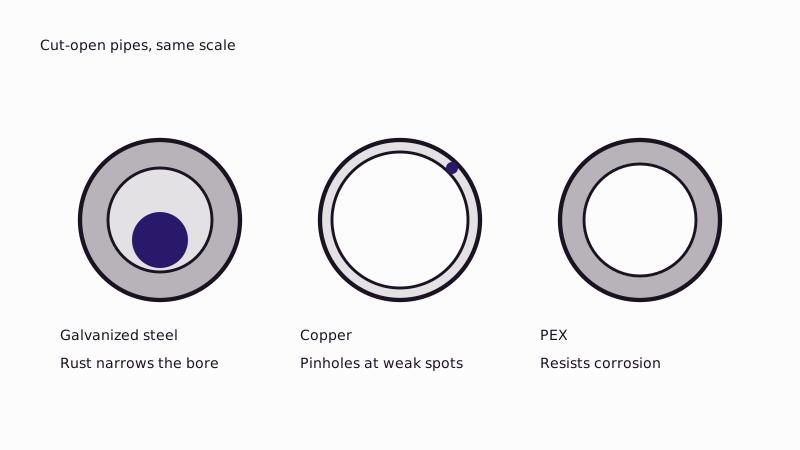
Accessible runs, rusty water when valves are opened and weak flow at fixtures all tell a plumber what is hidden in the walls. Worn but working lines can be replaced on your timetable, with quotes to compare. The price of waiting shows on Fixr's burst pipe page, which shows $200 to $1,000 as the usual repair range and more for awkward spots, before any drying out. Next reads: how often a house needs repiping and the repipe process.
What helps before a vacation or a freezing forecast?
Going away for more than a few days? Close the main. Heaters usually have a vacation setting or can be turned down, depending on type. Ahead of a frost, unhook and drain garden hoses, wrap exposed outdoor pipes and spigots, and open cabinet doors on exterior walls.
Small leak alarms sit on the floor by heaters, washers and sink cabinets and sound off, or message a phone, when they touch water. Automatic shutoff devices go further, shutting the main the moment a sensor trips; a plumber can fit one, which makes sense for frequent travelers or second homes. Make sure a neighbor or property manager knows the shutoff location.
Common questions
Do older Westside homes have a special risk?
Often yes: supply lines of galvanized steel or early copper, original shutoffs that have not turned in decades, and in some cases old clay or iron drains. The supply side is what bursts. Confirming the pipe material and pressure, then replacing the oldest runs, lowers the odds more than any gadget.
Will my policy pay if one bursts anyway?
Sudden bursts are frequently covered for the resulting damage, whereas gradual leaks and wear often are not, though wording differs by policy. Ask the insurer before you need to, and read the exclusions. Maintenance records, dated photos and a plumber's report make any claim easier to document later.
What does a plumbing checkup cost?
The written quote sets it, and scope decides. A pressure test with a visual survey is quick, while a camera inspection or leak detection takes more time and costs more. Ask exactly what is included in the visit, then compare the answer with inspection pricing before you agree.
Who should install a pressure regulator or main valve?
A plumber should do it, because jobs above $1,000 fall under California's contractor licensing rule. Verify the license through the state's online lookup, hold any deposit to 10 percent or $1,000 (the smaller), and get parts and labor itemized. Requests begin at Sunset Coast Plumbing or the quote page.
Sources used
Page updated