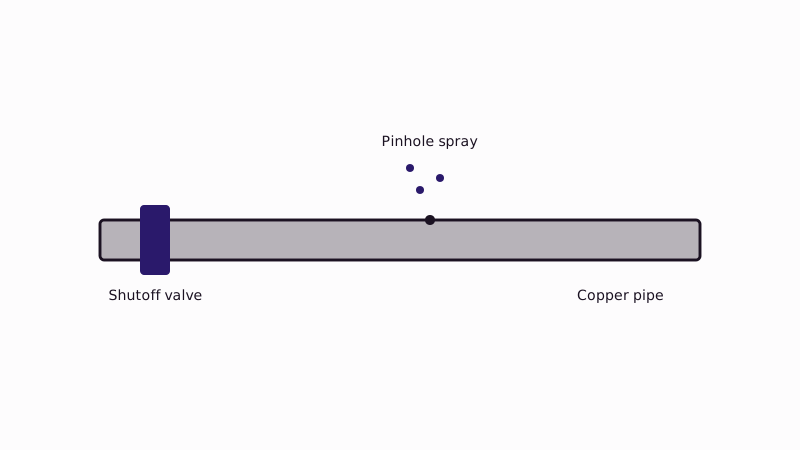
Water off, then think. Under line pressure a pinhole in copper hisses out a fine jet or beads along the pipe, so the first job is the main shutoff, and the second is relieving the line at a low tap. Only then pick between a quick clamp and a proper cut-and-splice. A second pinhole elsewhere says the whole run is thinning. The leaks overview gives the wider picture.
What comes first when copper starts to spray?
Close the main valve, found at the point where the service line meets the house or inside the meter box, then open the lowest faucet plus a hot tap so the pressure bleeds off. With an electric water heater, flip its breaker too, because a draining system can leave an element running dry. Pull rugs and electronics clear, and take photographs for the insurer before cleanup.
Hillside lots in Brentwood or Malibu can put the main valve a long way from the door, so find yours before you need it. If that valve is seized, or the leak hides behind a wall you cannot get at, send a request the same day.
Which stopgaps hold a pinhole until the real repair?
A repair clamp is the surest: dry the copper, center the rubber pad on the hole and cinch the stainless band. Two other options for a tiny hole are epoxy putty and silicone tape that fuses to itself, both needing bone-dry, clean metal. Count on hours or days from any of them, never months.
Rub the area with fine abrasive until bright copper shows. Knead the putty over the hole and a little beyond, then give it the curing period its label states. Tape must be stretched as you wind it, each turn overlapping half the last. Restore pressure only once cured, and if it seeps again, shut the valve rather than adding layers.
What is a lasting repair for a pinhole?
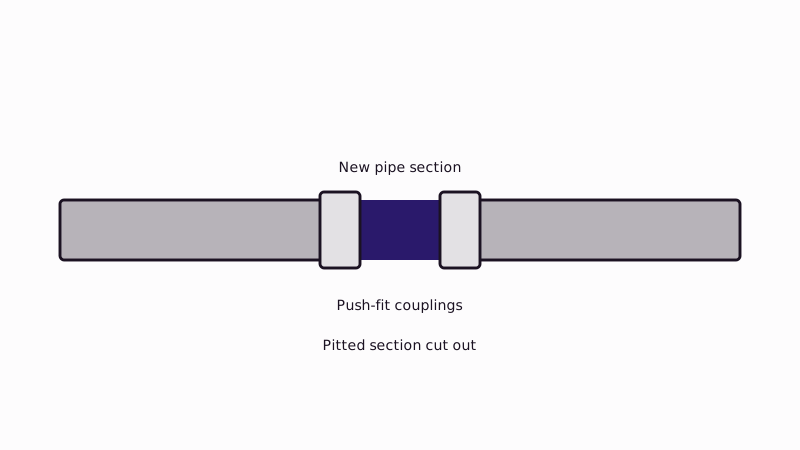
Remove the pitted stretch and splice new pipe in its place. Homeowners usually reach for push-fit couplings: dry the pipe, cut it square, deburr the edge, and push each fitting home to its depth mark. Sweat soldering is the old standard, but demands a torch, completely dry copper and care around anything flammable. In both cases, look at neighboring copper for thin patches.
A single repair fixes a single hole. Copper that pinholed once often thins along the same run, so inspect the length near the leak, and look for green crust, pits or blue-green stains. If a plumber replaces a longer section, the work should come with a test under pressure. A repair involving a water heater connection or a main line is not a casual weekend job.
What shows that a pipe has burst behind a wall?
Watch for a damp or blistered patch of drywall, a smell of damp, a faint trickle when the house is quiet, a meter that will not sit still, floors that feel warm, and stains that keep spreading. Close the main and read the meter again: a dial that now stands still places the leak on the house side. Finding the exact spot calls for a moisture meter or an infrared camera.
Resist cutting exploratory holes. Leak detection with acoustic gear or thermal imaging narrows the spot so only a small patch of wall opens. Cost and method are covered in the leak detection cost page, and the guide on a burst pipe in the house walks through the emergency steps.
What is the way to dry out a wet ceiling?
Stop the source first. A sagging bulge should be pricked at its lowest point, with a bucket underneath, so the trapped water drains. After that, aim fans and a dehumidifier at it and crack a window if the air is dry. Moisture guidance from the EPA is to dry materials inside 24 to 48 hours so mold does not take hold.
Soaked insulation and sagging drywall must come out, since they hold water for days. Hunt for the source in the attic or on the floor above. If staining is old, brown and dry, it may be a past leak, as discussed in ceiling stains with no active leak. If you see mold, keep disturbed areas to a minimum and ask a professional about testing before sanding or scraping.
What about a leaking PVC joint or a burst pipe outdoors?
A dripping PVC joint can be slowed with a dry-surface wrap or epoxy, yet the lasting answer is to cut the joint out and bond in a new coupling with primer and cement. For a burst pipe outdoors, close the main or the irrigation zone valve, clear the soil, and replace the broken section. Underground pressure mains may need a contractor.
Check irrigation lines in sunny yards, where plastic fittings crack with age. Always call utility marking before digging deep. Owners normally look after the pipe from meter to house; the meter itself and everything on the street side are the supplier's, so report leaks there.
Does a pinhole mean the pipe system needs replacing?
One pinhole in a house with good pipe is a repair. Several pinholes, in different runs, within a couple of years, suggest that water chemistry or age is eating the copper from the inside, and the remaining pipe will follow. By then repiping can come out cheaper than patch after patch plus wall repair.
Published guides start around $4,000 for PEX in a 1,500 square foot home and climb with size and copper; the repipe cost guide has the figures. The reasons to repipe page lists the other triggers. Ignoring a drip is no bargain: the EPA puts an average home's leak loss above 9,300 gallons yearly.
Common questions
How long can I rely on a patch?
Anywhere from a few hours to a few weeks, set by the product, the pressure and how clean the copper was. It buys time; it is not the answer. Keep checking it daily, keep a bucket ready, and book the permanent fix soon, because a patched pinhole can fail without warning.
Can I solder a pipe that still has water in it?
No. Water in the line turns to steam and blocks the solder from bonding, so the joint will not seal. Drain the pipe fully, or use a push-fit coupling that works on damp pipe, and keep a fire extinguisher near the torch. If gas lines or a water heater are close, leave it to a plumber.
What should a repair quote include?
Finding the leak, opening the wall, the pipe repair itself and closing the wall again, plus who does the paint and whether the work needs a permit. A California contractor license is mandatory at $1,000, so check the number on the state's lookup page.
Does someone need to stay for the work?
Yes: to show the shutoff, point out the damage and agree to opening the wall. Expect the supply to be off for some hours, so fill a few containers beforehand. List the symptoms and location on the quote page so the right parts arrive.
Does home insurance respond to a pinhole leak?
That turns on the policy. Many cover sudden water damage yet exclude the failed pipe or slow seepage, so phone the insurer before the repair, and keep photos, receipts and the removed pipe section as evidence. Report quickly and limit the damage as your policy asks.
The rest of our guides start from plumber santa monica.
Sources used
Page updated