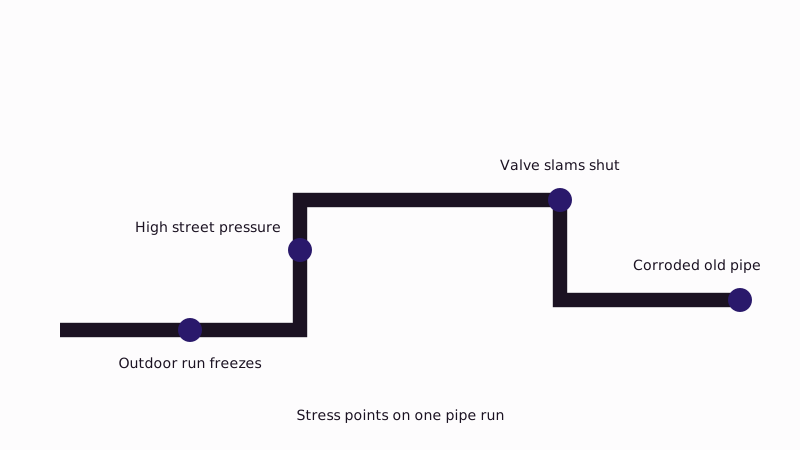
Five stresses account for nearly every split pipe: pressure that runs high or spikes, corrosion eating the wall, soil that shifts or settles, a material that has simply aged out, and, less often along the coast, ice. Two of them often team up, and thin old steel under ordinary pressure is the classic pairing. For the repair route, go to leaks and burst pipes; this page is about the why.
Which stresses split a pipe open?
Pressure, corrosion, movement and freezing, in that rough order for Southern California. A wall that has been thinned by years of corrosion can split under pressure that would not trouble a new pipe, so the cause is often a weak spot meeting an ordinary load. Patch one weak spot and the next may be waiting.
- Pressure. Constant high pressure and sudden spikes both punish pipe and joints. Wikipedia's water hammer entry says a shock wave from a fast-closing valve can break pipelines when pressure is high enough.
- Corrosion and age. Galvanized steel rusts inward, narrowing and thinning as it goes. Copper can pit. Some plastics give way at the fittings.
- Movement. Settling, slope creep and tree roots load pipes sideways. Hillside lots in Brentwood and Malibu are exposed to this.
- Heat and expansion. A water heater with no place for expanding water to go pushes system pressure up each time it fires.
- Freezing. Possible, but rare here.
Why did a pipe burst in summer when freezing was impossible?
Because ice is only one trigger. Warm months keep the others running: supply pressure that can be higher overnight, a regulator that quit, a heater that adds pressure as it warms, and walls thinned by corrosion. Ground movement and tree roots do not care about the season either. A burst in August nearly always points to pressure or age.
Water use also changes with the season. Irrigation, extra laundry and pool top-ups flip valves and pumps on and off more often, and each fast closure can send a pressure wave through the house. A night-time gauge reading at the hose spigot shows whether supply pressure is the culprit, and the regulator adjustment guide shows how a plumber reads that number.
Do pipes burst in winter here, too?
Occasionally, though it is not the usual story on the Westside. Freezing water expands, and trapped ice can split a pipe, typically one that is bare and outdoors or buried in a cold exterior wall. We have not checked local temperature records, so treat frost as a possible rather than a typical cause, mainly for exposed outdoor lines on cold clear nights.
Before a cold night, wrap exposed spigots and outdoor lines. Burst pipe prevention lists the steps in order.
What warning signs come before a pipe bursts?
Rising bills, damp patches, discolored water, a pressure drop, new stains on ceilings, and knocking or whistling in the walls are the common warnings. Pipes do not always announce themselves, but banging at valve closure suggests pressure shock, and a small drip at a joint suggests a failing fitting. Do not wait for the burst.
Start with the ceilings. A brown ring, a paint bubble or a soft patch under a bathroom can be the first visible sign of a leak above, so chase a ceiling water leak early. Meter test and other checks are described in spotting a burst pipe. Small leaks add up, and EPA puts the yearly loss for an average household past 9,300 gallons.
What are the first three moves once a pipe has split?
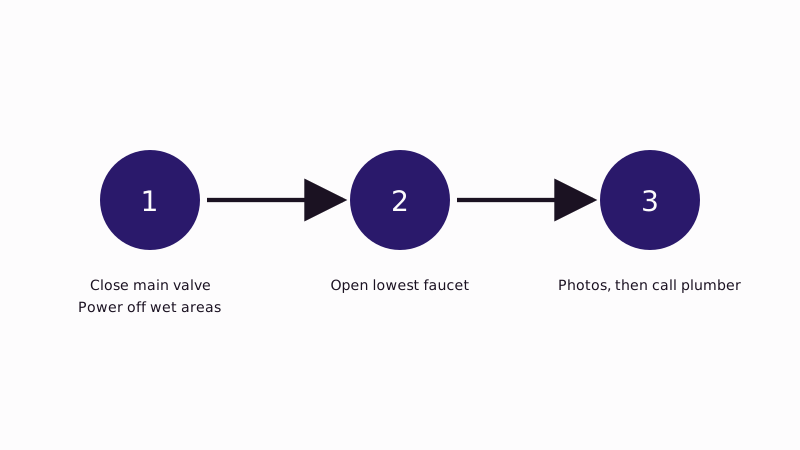
Close the main valve and cut power to anything wet. Next, bleed the pipes at the lowest faucet. After that, move belongings, take photos and phone a plumber. Stopping the water early limits damage more than any later step, so learn where your main valve is now.
Water near the panel or outlets means stay out of it and leave the power off. With the supply stopped, urgent burst pipe help describes the visit. Contractor rules in California begin at a $1,000 job of labor and parts, so once a repair bill gets there, get the scope written up through the quote form.
What if I smell gas along with water damage?
Walk out first. From outside, the gas utility, SoCalGas, takes calls on 1-800-427-2200. Dial 911 instead when someone is hurt or threatened. The utility asks for that call whether you smell gas, merely suspect a leak or see damage. Water can wait a little, gas cannot.
The same earth movement that splits a water pipe can strain a gas line. Once the utility clears the property, deal with the water.
Which old pipe types fail first in Westside houses?
Galvanized steel and polybutylene have the worst reputations. Galvanized rusts through from within; polybutylene, a plastic that went into some houses decades back, has a record of letting go at fittings. Older copper can grow pinholes. The house's construction decade hints at what you have.
Leaks in different rooms, one after another, make replacement cheaper than endless patching. See galvanized pipe replacement, polybutylene pipe replacement and what follows a burst water pipe in a house. Claims have their own page: burst pipe insurance.
Common questions
Can a pipe burst without any warning?
It can happen. A weakened stretch may fail in an instant under a spike, with no drip beforehand. More often something shows first: pressure sags, damp spots, stains or a bill that climbs. Any unexplained one deserves a meter check and, if it persists, a plumber visit before the failure.
Is there a sound that gives a burst away beforehand?
Sometimes. Banging as a valve shuts points to pressure shock, and hissing or whistling can mean a small leak or squeezed flow. Neither proves a burst is near, but both justify checking pressure and fittings. More in the water hammer sound.
Who do I phone once a pipe has gone?
Close the main first, then phone a plumber for the repair and, where there is damage, your insurer. A gas smell changes the order: you go outside, and then you call the gas utility. Ordinary repairs start from the home page; the plumber drives out to you.
Sources used
Page updated