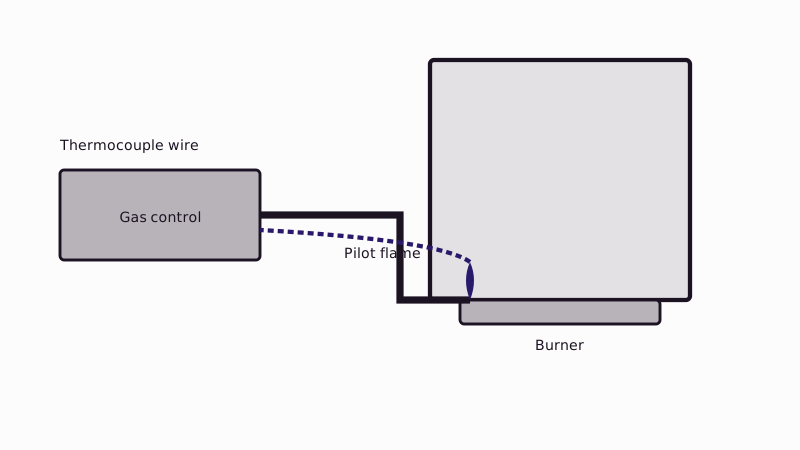
Cold shower, gas heater, no flame glowing low on the tank: the pilot has probably gone out. Before anything else, sniff. A gas odor ends the troubleshooting, and everyone leaves the building. If there is no smell and the gas was never shut off at the meter, the next steps depend on what the heater's own label says. What follows covers causes, safe checks, the repair prices in Fixr's guide, and the limits set by law and by SoCalGas. The broader topic sits under water heater repair.
May an owner relight the pilot?
Only when nobody smells gas, the supply was never closed at the meter, and the steps you follow are the ones printed on the heater's label. Once gas has been closed at the meter, after an earthquake or for any reason, SoCalGas says restoring service and relighting pilots is for SoCalGas or another qualified professional.
The utility's own shutoff page puts it plainly: after you close the meter valve, leave it closed and have the system inspected before pilots are relit. A strong quake may have tripped the earthquake valve, and SoCalGas recommends an appliance safety check first. The earthquake valve reset guide covers that scenario.
On the Westside the heater often lives in a garage corner or a hall closet, where a small leak is easy to miss. If the pilot area smells at all, or the flame looks yellow, ragged or lifted, stop right there.
What if the first thing you notice is gas?
A rotten-egg odor, a hiss or sudden dizziness means out of the house at once. SoCalGas tells people to evacuate and phone from somewhere safe (1-800-427-2200), with 911 added when damage has opened a leak that threatens life or no one at the utility picks up.
Skip the switches, the lighter and the search for the source. The smell is added to gas deliberately so leaks announce themselves, and a faint trace deserves the same call as a strong one.
An out pilot with no odor is a different situation. It is an annoyance, not an emergency, though it may be a symptom: something made the flame go out, and you want to know what.
What keeps killing the flame?
Typically a part has aged, or the air around the heater has changed. The usual suspects: a tired thermocouple (the sensor that reports a flame to the gas valve), a dirty pilot assembly, a draft or a blocked vent, or a failing gas control. A flame that lasts a day and then fails points at a component.
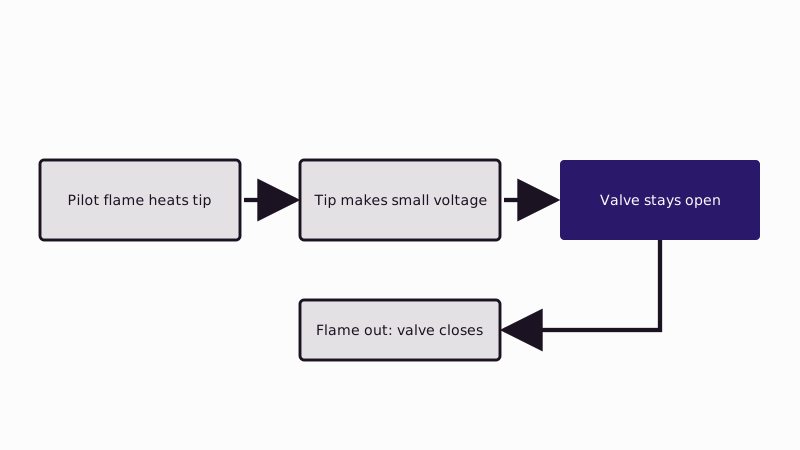
Here is a practical way to sort it:
| What happens | Likely direction |
|---|---|
| Lights, then dies the moment the knob is let go | Thermocouple or its connection |
| Stays on for days, then goes out | Draft, a dirty pilot, or a weak part |
| Goes out when a door slams or a fan runs | Air movement near the heater |
| Will not light at all | Gas control valve or an interrupted gas supply |
| Burner roars then pops | Stop. This is a combustion or venting problem for a plumber |
Fixr lists a thermocouple swap at $150 to $325, so it is a routine repair. Diagnosis happens on site, and guessing at parts tends to cost more than a service call.
Coastal air can corrode burner parts, and older Westside garages are often drafty. Neither is a reason to improvise. Mention wind, exhaust fans and recent renovations to the plumber, since airflow changes matter.
What does pilot light repair cost?
Fixr's national guide: pilot repair $75 to $175, a replacement pilot $75 to $150, $150 to $325 for a new thermocouple, plumber labor of $50 to $150 hourly, and $100 to $200 extra for urgent repairs. Your real price comes from the quote written after the visit.
Keep it in proportion. A heater that fails again and again, leaks, rusts or is old may deserve replacement rather than repair. Across every kind of heater repair Fixr reports $150 through $750, with $450 typical, so an estimate creeping toward half of a new unit is the moment to compare; new heater pricing shows the other side.
Bob Vila notes that a $100 to $350 call-out normally covers the first hour, which is why a small repair can feel pricey: the visit costs more than the part.
Ask which part is failing, whether venting was inspected, what the visit includes and what happens if the pilot dies again.
Which contractors are allowed to touch gas?
Water heater and gas piping work falls under California's C-36 contractor classification, and California requires a license for work of $1,000 or more, or any job needing a permit. Price aside, gas equipment is no place to experiment. The label and the smell test are yours; the gas control is not.
Owners can look at the label, move anything flammable away from the heater, check that stored boxes are not blocking the vent and note when the pilot dies. Replacing the thermocouple, swapping the gas control, adjusting the burner and touching gas connections stay with the contractor.
Santa Monica lists hot water heater change-outs under its Single Trade Construction Permit. A pilot repair is not a change-out, but ask whether the work touches anything permit-bound, and file whatever paper results.
Wider repair questions are handled in the guides to gas water heater repair and tankless gas heater repair, with piping under gas line work.
Could something other than the pilot be to blame?
Start with basics: is the heater's own gas valve open, was the thermostat bumped, is the whole house without gas? If the flame is out and nothing smells, follow the label or wait for the plumber. The no hot water checklist covers other causes.
The pilot may not be the only fault. A heater that leaks, rumbles, shows scorching on top or trips a safety device needs a visit. The emergency heater page separates urgent signs from those that can wait for a working morning.
If you need warm water tonight, heat a pot on the stove and leave the heater's controls alone.
Common questions
How often should a pilot go out?
Never, in normal operation: it should burn continuously. One that keeps dying signals a worn thermocouple, a draft, a dirty pilot or a failing control. Relighting it repeatedly without finding the cause is a poor plan, so after a second outage ask a plumber to diagnose it.
Is relighting after a quake a DIY step?
Not without care. SoCalGas says a quake valve reset should include an appliance safety check and advises relighting pilots only after that check, by SoCalGas or a qualified professional. If gas was closed at the meter, leave it closed and contact SoCalGas.
What does a pilot repair set you back?
In Fixr's national guide, pilot repair is $75 to $175 and a thermocouple $150 to $325, with labor at $50 to $150 hourly. Your own quote, written after the visit, is the real figure; ask what it bundles, since a call-out often includes hour one.
Should a yellow flame worry me?
It can. A yellow or lazy flame may indicate poor combustion, which is risky because of carbon monoxide. We hold no sourced detail on it, so treat it seriously: switch the heater off and phone a plumber. Anyone feeling sick, headachy or dizzy leaves the house and calls 911.
What if my heater has no standing flame?
Some gas water heaters light electronically and keep no standing pilot, so there is nothing to relight by hand. They have their own weak points, such as sensors and igniters. Read the label or manual, or ask the plumber which type you own before attempting anything.
A gas heater needing attention can be put on the list through the quote page. Other jobs are shown on the Sunset Coast Plumbing home page.
Sources used
Page updated