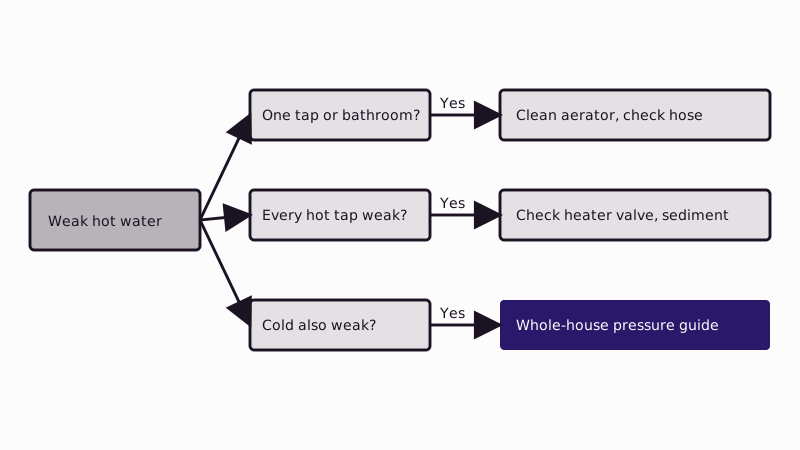
If the cold tap runs strong and the hot tap does not, the problem sits on the hot side only: the water heater, a valve on its outlet, or the hot pipe run. Cold pressure is fine, so the city supply is not the cause. That narrows things fast, and it is why this page is separate from general water heater repair.
Run the three tests below before you call anyone. They take ten minutes and tell the plumber where to look.
Is it one faucet, one bathroom, or the whole house?
Open hot and cold in turn at a few different taps. A single weak hot tap has a local cause, such as a clogged aerator, worn cartridge or kinked supply hose. Weak hot everywhere with healthy cold puts the blame on or near the heater. If both sides are weak, jump to the low water pressure material instead.
Work it out this way:
- One fixture. Spin off the aerator and rinse the screen; flakes of mineral scale from the heater tend to collect there. Check the flexible supply line under the sink for a kink.
- One bathroom. Compare the shower with the sink. A single-handle shower with a worn mixing cartridge can starve the hot side.
- Every hot tap. Go to the heater. A partly closed valve, sediment, or corroded pipe is likely.
- Cold and hot both weak. Treat that as a whole-house pressure problem, which has its own causes.
Why does hot water pressure drop when cold is fine?
Usual suspects: tank sediment, a shutoff opened only part way, mineral buildup in hot pipes, or a tired tempering valve. Hot water carries minerals out of solution and leaves them behind, so the hot side clogs earlier than the cold side does.
What each one looks like:
- Sediment in the tank. Rumbling or popping noises when the burner runs, and rusty or gritty hot water. Over years the tank bottom fills with scale and flakes that can clog the outlet.
- A half-closed valve. After a repair, a gate valve on the heater outlet can be left partly shut. Open it fully.
- Scale in the pipes. Inside old galvanized steel pipe the bore closes up gradually, hot lines first. That job is covered in galvanized pipe replacement. Westside houses built before the 1960s can still have some.
- A failing tempering valve on the heater outlet, which limits scalding but can restrict flow when worn.
Water hardness matters. One recent city water quality report puts Santa Monica's average tap hardness near 160 ppm, in the hard range, so scale plausibly builds up in tanks and hot lines here. Other cities on the Westside use different water systems, and numbers vary by neighborhood.
Can you flush a water heater to restore flow?
Yes, flushing a tank water heater clears loose sediment, and it often restores hot flow when sediment was the cause. Shut off the fuel or electricity, close the cold inlet, thread a hose onto the drain valve, then let it run until the water clears. Scalding is possible, so give the tank time to cool.
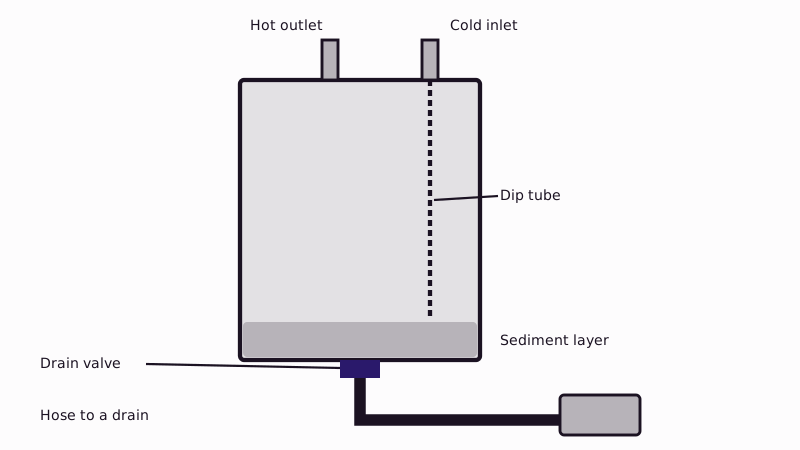
Steps in plain order:
- Gas heater: turn the control dial to pilot or off. Electric heater: throw its breaker.
- Close the cold inlet, then open one hot tap high in the house to admit air.
- Run the hose end to a drain or a planter bed, and then open the drain valve on the tank.
- Once the stream runs clear, shut the drain, reopen the inlet, and refill until the open hot tap flows steadily.
- Relight the pilot or restore power only after the tank is full.
A brittle plastic drain valve, or one that refuses to open, is your cue to stop. Forcing it can crack the valve and flood the garage. A plumber also checks the anode rod while the tank is open to service; read the anode rod guide. If the heater is old, how often water heaters need replacement helps you weigh repair against a new one.
What if it is a tankless heater?
Tankless heaters lose flow when mineral scale builds up in the heat exchanger or the inlet screen. Descaling with a vinegar or manufacturer-approved solution, usually done by a plumber, restores flow. Check the filter screen at the cold inlet first, because debris collects there after nearby plumbing work or street repairs.
Hard water shortens the interval between descaling visits. Ask the plumber what interval suits your water and household. Do not run a tankless unit with a closed valve or a blocked inlet, because it will overheat and shut down.
Where should DIY end and a plumber begin?
Book a visit if you smell gas, find soot on the heater, face a stuck drain valve, see rusty water, still have poor flow after flushing, or spot any leak. A replacement usually needs a permit and, by state law, earthquake strapping.
Gas first: with any odor present, get outside and ring SoCalGas's emergency number, 1-800-427-2200. Strike no flame. California also has an earthquake bracing rule for water heaters (Health and Safety Code 19211), which the plumber fitting a new heater should satisfy. Also agree on who files the permit.
If you are weighing a swap, water heater replacement cost has the numbers. The quote page is where a visit begins.
Common questions
Why is only my shower weak?
A shower has a mixing valve plus a showerhead that restricts flow, so any partial clog shows up there first. Take the head off and inspect it for scale. Sink hot also weak? Look upstream. Shower alone? Suspect its cartridge or valve. Read the shower no hot water guide for related causes.
Could a regulator be starving just the hot side?
Not normally. A whole-house regulator sits ahead of the water heater on the main supply, so it governs hot and cold alike. When it fails, everything weakens. A hot-only complaint leads to the tank, nearby valves or hot piping. More at hot water pressure regulators.
Might the heater drag down the whole house?
Seldom. Heaters supply just the hot half of the plumbing. When both sides sag, the main shutoff, regulator or supply line is the likelier cause. A leak at the heater can shave off a little pressure, yet the main valve or the utility's supply deserves the first look.
The rest of our guides start from Santa Monica plumber.
Sources used
Page updated