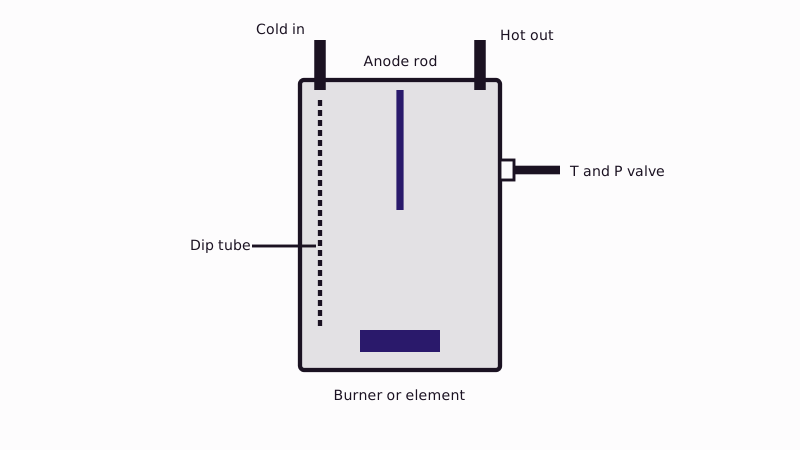
A leaking tank body ends the argument, and so does a heater that is past ten years and eating parts. Bob Vila cites 8 to 12 years of life for a basic tank and a national swap range of $874 to $1,765. Santa Monica layers a permit and bracing on top. A heater that only misbehaves belongs under water heater repair first.
What is a realistic service life?
Bob Vila says basic tank heaters last 8 to 12 years, an expert it quotes says 10 to 15, and tankless units last about 20. Hard water, a skipped flush and a worn anode rod shorten the figure, and a gentle supply stretches it.
The better guide is the heater's own condition. Read the manufacture date on the data sticker, check the foot of the tank for rust or a damp halo, inspect the fittings for weeping, and note whether the water runs brown. An older tank that leaks from the shell is finished. A younger one with a bad element or valve is a repair.
The calendar matters less than the failure mode. The warning signs are listed under when a heater is due, and the anode rod page covers the cheap maintenance that stretches a good tank.
How much does replacing a hot water heater cost?
Bob Vila reports a national replacement range of $874 to $1,765, averaging $1,293, with a tank unit itself costing about $1,000 and tankless around $2,500. These are guides, not Santa Monica prices. The written quote for your house sets the figure.
Several things shift the total: tank size, fuel, any venting or gas pipe changes, how reachable the heater is, the permit fee, and carting off the old unit. A tight closet or an attic install takes longer than a garage. A change of fuel, or a move to tankless, tends to cost more than a straight swap of the same kind.
Get the quote itemized: unit, labor, permit, small parts (relief valve, flex connectors, expansion tank) and disposal of the retired unit. That lets you compare bids on the same footing. For the cost breakdown in more detail, see the replacement cost guide.
Should you repair it instead?
Fix it when a part has failed and the tank is sound. Swap it out if the tank leaks, if an old heater needs an expensive part, or when repair visits keep recurring. Many plumbers weigh the repair bill against a new unit and lean toward replacing once it climbs past roughly half.
Thermostats, elements, igniters and valves can be replaced, and so can a leaking fitting. Moisture weeping from the tank wall cannot be patched. When hot water has merely disappeared, run through pilot, breaker and thermostat before writing the tank off, with help from why the hot water stopped.
Gas models raise a safety question. A pilot flame that dies repeatedly, a yellow flame or soot near the burner should go to a plumber, not a weekend project; the gas heater repair page covers that side.
Which suits a Westside house, tank or on-demand?
A tank is cheaper to buy and install and fits where the plumbing and venting already exist. Tankless saves floor space, does not run out mid-shower and lasts longer, but it carries a higher price tag and can demand a larger gas line and fresh venting. The deciding factors are budget, household size and the gas supply.
Westside homes bring their own constraints. A 1920s Spanish Revival bungalow with a closet heater may have no room for a tankless unit's vent, while a newer condo with a balcony wall may suit it well. A tankless unit on a long hillside run can still deliver cold-water sandwiches if the pipe is poor.
For the full comparison read tank versus tankless, and for the install side see tankless installation service and its cost page.
What does a replacement day look like?
Water and fuel go off, the old tank is drained and taken out, the new one is positioned, then hooked to supply, gas or power and vent. A pressure valve and its drain pipe go on, seismic straps are fitted, and the tank is filled, tested and lit. An inspector signs it off afterward. Budget the larger part of a day.
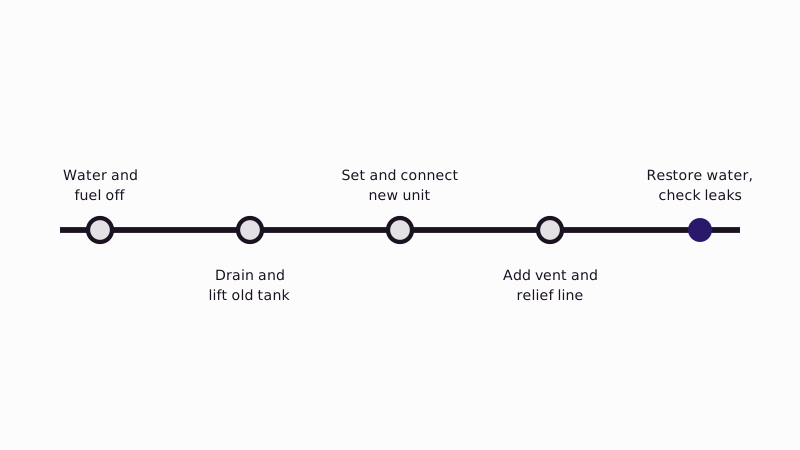
Expect no hot water until the job finishes. On a gas unit the plumber also checks the draft and the connector. Some jobs add an expansion tank, which absorbs pressure when water heats, and the expansion tank page explains when that is needed.
Ahead of the visit, shift stored items off the heater wall, and have an adult at home. Ask where the old tank is going, since haul-away is often part of the quote.
Which city rules govern the swap?
Under Chapter 8.08 of Santa Monica's administrative code, altering, repairing or removing building service equipment needs a permit from the city, and California law (Health and Safety Code 19211) requires water heaters to be braced. In Brentwood and other Los Angeles areas, LADBS applies. The plumber normally files, and an inspection follows.
Few replacements stay beneath $1,000, and California requires a contractor license at $1,000 or more, or for any job needing a permit. A deposit stays under ten percent or $1,000, the lower amount. Look the license up before agreeing. The inspection itself is explained in the permit walkthrough.
Rules on equipment are not shifting under you either, since the regional air board decided in June 2025 against amending its water heater rules. What is sold now is the working guide, and the plumber knows which models are available.
What should be settled with the plumber before work?
Request a written quote that includes the permit, plus the unit's make and capacity, bracing and relief line coverage, the warranty paperwork and who takes the old tank away. The state's website confirms the contractor's license, which takes a minute and costs nothing, so do it before any deposit changes hands.
Timing is worth raising as well. A heater leaking today needs its cold inlet and fuel shut, and the emergency page covers the wait. How a visit unfolds is in the job outline, and the quote page is the way to start.
Common questions
What age can a heater reach?
Bob Vila lists 8 to 12 years for basic tanks, with tankless close to 20, while an expert it quotes says tanks generally reach 10 to 15. Mineral-heavy water, silt in the tank and a worn anode rod cut it short. The sticker shows the age; the tank foot shows the rust.
What should you budget for a new heater?
A national guide from Bob Vila is $874 to $1,765, with an average of $1,293. Tank units cost about $1,000 on average and tankless about $2,500. Your quote depends on size, fuel, access, permit and any venting or gas changes, so ask for it itemized.
Can I replace it myself?
A skilled owner might manage the water and electrical connections, though a permit and inspection still apply in Santa Monica, and gas piping and venting are contractor work. Errors cause leaks, carbon monoxide or fire, which is why most owners hire it out.
When will showers come back?
A straightforward tank swap usually runs most of a working day, depending on access and on whether venting or piping needs work. Tankless conversions run longer. The written quote should carry the plumber's own estimate, so schedule showers around it.
This guide is one of many on Sunset Coast Plumbing.
Sources used
Page updated