A tankless installation means removing the old tank, mounting a wall unit, connecting water, gas or power, running a vent, and pulling a permit. The work is usually quoted as one package, and the quote rises when the gas pipe is too small or the vent run is long. Tell us where you are and a local plumber visits your Santa Monica or Westside home, looks at the setup and writes up a price. For heaters generally, start at water heater service, and the quote form opens the file.
What is actually in a tankless installation?
The scope runs from unhooking the old tank to proving the new unit works. The plumber mounts it, ties in the cold and hot lines, connects gas or an electric circuit, adds a drain for condensate if the model condenses, runs the vent, fits any relief arrangement the manual calls for, then commissions it. A proper quote also carries the permit and haul-away.
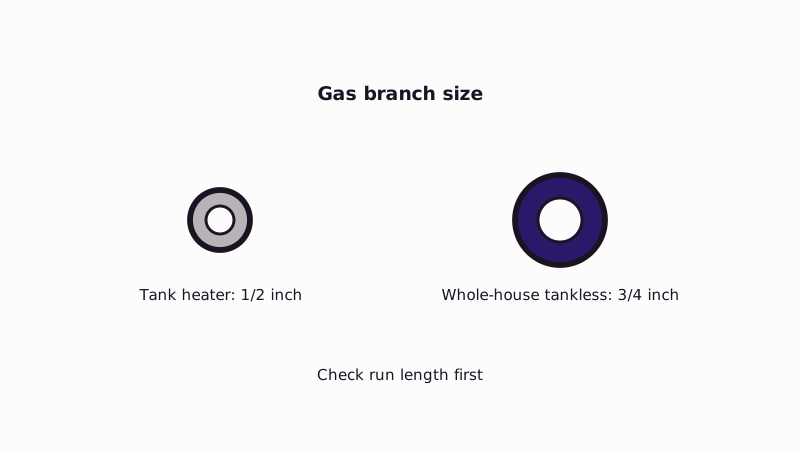
On a gas tankless the long pole is usually the gas line. Tank heaters typically run on a half-inch branch, while most whole-house tankless models need three-quarter inch or larger, so the plumber may run a larger pipe back toward the meter. Venting is the second item. A condensing tankless usually vents through PVC and drains acidic condensate, while a non-condensing one needs a stainless vent. The manufacturer's manual sets the rules, and an installer must follow it.
Why is tankless installation more expensive than a tank?
Because the unit costs more and the job is bigger. HomeGuide's national guide puts a gas tankless water heater at $2,100 to $5,600 for the unit, labor and required modifications, and lists a gas line upgrade at $350 to $2,000 when one is needed. That is a national guide, so treat it as a rough yardstick and let the written quote set your price.
What moves the number: the gas line upsize, which HomeGuide lists at $350 to $2,000 when needed; the vent path, which depends on the run; the permit; and electrical work for controls or for an electric model's heavy circuit. Moving the heater from a closet to an outside wall is a larger project. Itemized figures are in installation tankless water heater cost, with the wider picture in water heater replacement cost.
Is a city permit needed for a tankless install?
Yes, plan on one. Santa Monica's Building and Safety Division lists hot water heater change-outs under its single trade permit, which includes up to three inspection visits. Water heater work is on that list by name. The plumber ordinarily pulls it, and the city looks at the finished job.
California's energy and plumbing codes cover tankless units too, and they change with each code cycle, so have the plumber state the code path before you sign. Permit specifics are covered under permits for water heater work. If your gas supply was shut after a quake, resetting the earthquake valve comes before the visit.
Does the energy code affect a gas tankless water heater?
It can. California's 2025 Energy Code, per the Energy Commission's summary of what is new, removes an exception for gas tankless water heaters in Climate Zones 3, 4, 13 and 14 in buildings with heat pump space conditioning, and drops gas tankless from the prescriptive options for single-family additions. Replacements in existing houses follow their own path, so ask the permit counter which rules apply to yours.
Headlines can mislead. You may hear that gas heaters are being banned, but in June 2025 the regional air board voted against amending Rules 1111 and 1121, so no such change is under way. A plumber who installs these units regularly knows which code version the Santa Monica counter uses. Get the answer on paper alongside the permit number.
Gas or electric, which one should you choose?
Gas tankless suits a home with an existing gas line and a place to vent. Electric tankless avoids venting and the gas smell question, but it draws a large electrical load and may need a new circuit or panel work. A heat pump water heater is a third option the energy code increasingly favors.
Have the plumber compare all three for your house, since the answer turns on gas meter size, the electrical panel, where the heater sits and how your household uses hot water. The tank versus tankless piece lays out trade-offs, including the delay at far-off taps that many owners notice.
What should you ask a tankless installer?
Put these to the installer: has the gas pipe been checked against the unit's load, how does it vent, where does condensate go, does the price cover the permit, and who pays if the inspector wants changes? Get the contractor license number from the installer and run it through the state board's online lookup.
A job this size is far above the $1,000 mark where California insists on a contractor license, and anything over $500 needs a written contract. Compare two written quotes item by item, because a very cheap one tends to omit the gas upsizing, vent or permit. Water quality counts too: hard water leaves scale in the heat exchanger, so ask about a flush valve and your supplier's water report.
What happens on installation day?
The plumber arranges to shut off gas, drains the old tank, removes it, and mounts the new unit and vent. If the gas pipe is being upsized, the line is pressure tested. Then the water is turned on, air is purged, and the unit is fired and checked. The city inspection follows.
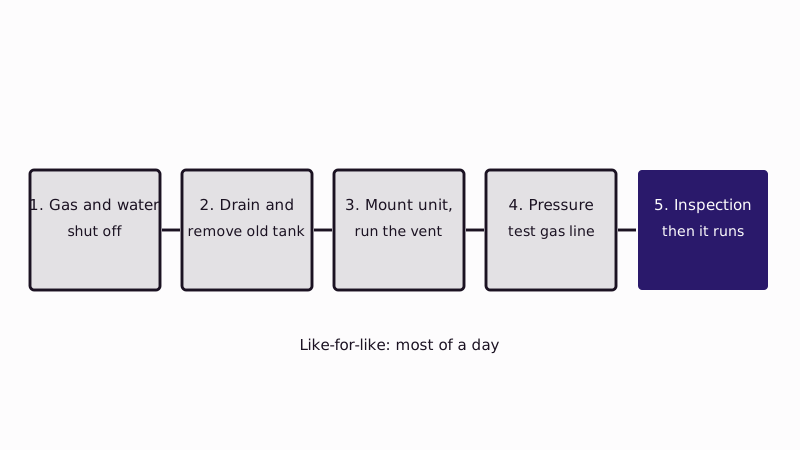
Water will be off for several hours, and gas may be too. When SoCalGas has to close or restore service at the meter, the plumber schedules it, because only the utility works that valve. A plain swap fills a day, and new gas pipe or a vent through a wall stretches it.
Common questions
Will it take more than a day?
A like-for-like swap takes most of a day. New gas pipe, a long vent run, electrical work or a moved heater can spill into a second day. The inspection follows, and the plumber should test the unit before you rely on it.
Which kind of installer suits a tankless heater?
Pick an installer who holds a contractor license from the state, handles these units regularly and pulls the permit. Ask how gas pipe size and venting are decided and how the unit is commissioned, and request the manufacturer's installation requirements for your model.
Is upkeep needed on a tankless unit?
Yes. Scale gathers in the heat exchanger where water is hard, and the maker's manual says how often to flush it. Inlet filters need cleaning as well. Error codes or lukewarm water are often a request for that work, as explained in tankless gas water heater repair.
May a homeowner do the install alone?
Not in most homes. Gas piping and venting come under regulation, a permit applies, and errors can leak gas or exhaust into the house. Even a handy owner should hire a plumber for the connections and for the inspection that follows.
The rest of our guides start from Sunset Coast Plumbing.
Sources used
- City of Santa Monica, Single Trade Construction Permit, water heater change-outs
- California Energy Commission, What's New for 2025, Single-Family
- SoCalGas, How to Shut Off your Natural Gas
- HomeGuide, tankless water heater installation cost
- California Contractors State License Board, home improvement contracts
Page updated