Repairing a leaking water pipe takes four moves: shut the water, drain the line, identify the pipe material, and cut out the damaged spot to bridge it with a coupling that matches that material. Copper takes a soldered or push-fit coupling, PEX a crimp or clamp fitting, PVC or CPVC a glued coupling, and galvanized steel a threaded union. For the emergency side, see our overview of plumbing for leaks; this page is the repair manual.
What is the most reliable way to repair a leaking pipe?
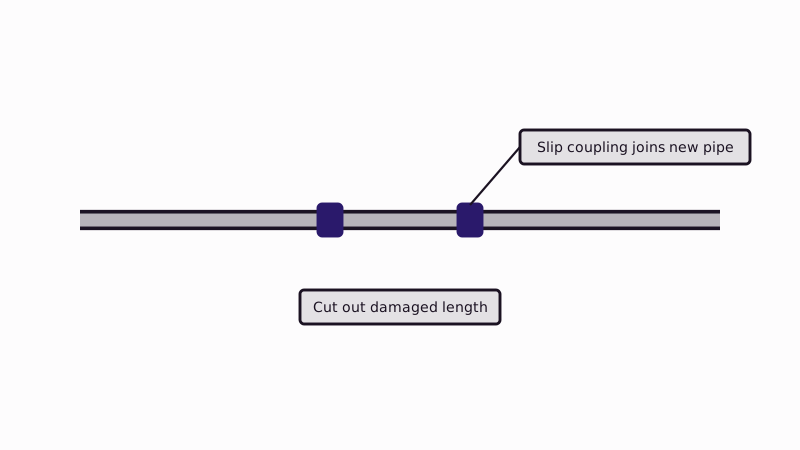
Remove the damaged stretch and join a new piece in with couplings of the same material. Patches, sleeves and sealants only buy time. Replacing the section brings back the pipe's full pressure rating, which is why it is the usual answer for pinholes, splits and corroded stretches.
The length removed follows the damage. Pinholes cost an inch or two of pipe, a freeze split maybe a foot, and corrosion takes everything that has thinned. After the cut, the plumber deburrs the ends, fits the coupling or solders new pipe, restores water slowly and checks under pressure. A leak is a small steady loss; a burst releases a flood. If yours is the second kind, close the main, then see burst or just leaking: how to tell.
How do you identify the pipe before choosing a fix?
Copper is orange-brown or green with age and rings when tapped. PEX is flexible plastic in red, blue or white. CPVC is rigid, cream or pale yellow; PVC is white or gray and mostly used for drains. Galvanized steel is dull gray with threaded joints and sticks to a magnet. A soft gray metal that scratches shiny silver and dents easily may be lead.
Lead needs special handling. If you suspect lead, do not cut, sand or scrape it. Contact your water supplier and a plumber, since the material has health and legal implications and the repair may involve the supplier's side of the line. Older Westside houses typically show a mix of copper and galvanized, plus occasional plastic from remodels. Knowing which two materials meet at the leak matters, since joining dissimilar metals without the right fitting causes corrosion that will leak again.
How is a leaking copper pipe repaired?
Pinholes and splits in copper are cut out and bridged. The plumber uses a slip coupling soldered on, or a push-fit or compression coupling when soldering near wood is risky. A compression sleeve clamped over a pinhole can hold temporarily. Soldering needs a dry pipe, which means draining the line and sometimes plugging it with bread to absorb residual water.
Copper in coastal air and in hard water can develop pinholes from the outside or the inside, and a repair that holds beside a second pinhole is a warning. The long version is in repairing a copper pinhole step by step. Push-fit couplings are popular because they need no flame, and they work on copper, PEX and CPVC when rated for the material. Make sure the pipe end is clean, square and fully inserted. Don't use them in a spot you can't reach for inspection unless the manufacturer permits it.
What about PEX, CPVC, PVC and galvanized steel?
PEX leaks are repaired with a crimp, clamp or expansion coupling after cutting out the damage. CPVC and PVC are cut, cleaned, primed and joined with solvent cement, which needs time to cure before pressure returns. Galvanized steel requires a threaded repair: cut, then a union and short nipples. Often galvanized is better replaced run by run.
Rules for plastic: match the cement to the pipe, because PVC and CPVC products differ, and honor the cure time on the can. Joints in cold weather cure slower. A weeping glued joint usually was under-primed or never fully seated, so the joint gets redone, never caulked. For galvanized, rust inside the pipe means new fittings may not hold the neighboring threads. If more than one spot is weeping, consult galvanized pipe replacement before spending money on one more union.
Can you stop a leak temporarily with clamps, tape or putty?
Yes, for hours or days. A clamp with a rubber sleeve, silicone wrap that fuses to itself, or epoxy putty on dry pipe may slow a pinhole until the plumber gets there. They do not restore pressure rating, and a joint hidden in a wall can fail unseen. Never apply them to gas piping.
Turn the water off before attempting any of these, since adhesives won't bond to a wet surface. Mark the spot, set a bowl or towel under it, and check it every few hours. If it is inside a wall, don't plug it and forget it. Overview of products: water pipe leak sealants. When a quick patch is still weeping after an hour, shut the water and call.
Which repairs need a permit or a contractor?
Santa Monica's municipal code excuses stoppage clearing and leak repair from the permit rule provided nothing like a valve, pipe or fixture is swapped out or moved. Splicing in a short section is a gray area; a long run, a valve or a fixture clearly needs a permit. If unsure, ask Building and Safety first.
Other Westside addresses use their own offices: Los Angeles city for Brentwood, Venice, Westwood and Pacific Palisades, Culver City, Beverly Hills, West Hollywood and Los Angeles County for Malibu. California requires a contractor license for work of $1,000 or more in labor and materials, or any job needing a permit, and the law also limits how much can be asked up front. Quotes should split parts from labor. Gas lines are never a homeowner repair: on a gas smell, leave and SoCalGas takes those calls on 1-800-427-2200.
Where exactly is the leak, and how can you confirm before cutting?
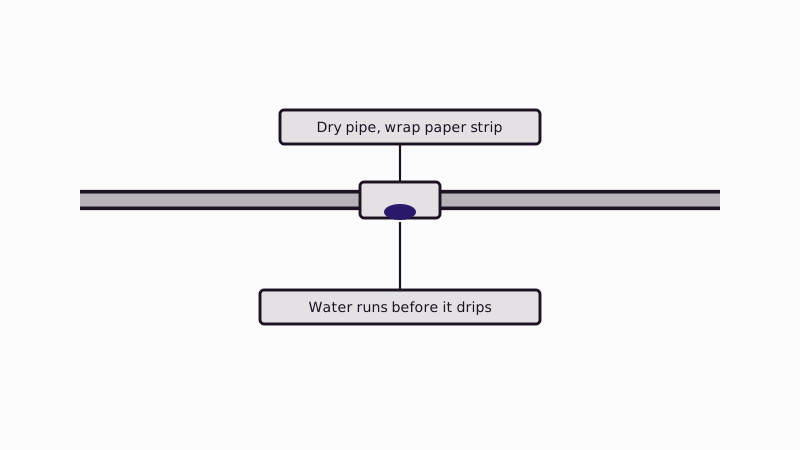
Wipe the pipe dry, wrap it in a strip of paper towel and see where it darkens first. Water runs along pipes, so drips usually appear below the true source. Inside walls, plumbers rely on acoustic gear and a pressure hold. The EPA's meter test, run over two hours, settles whether there is a leak at all.
Because a leak may not be where the stain is, cutting open the wall in the wrong spot is a common and costly mistake. A small inspection hole is better than a large opening. Leaks in a slab or underground are beyond DIY; read leak detection cost for what finding it involves, and slab leak repair cost for the repair side.
Common questions
Can the water stay on during a repair?
Not properly. Solder, glue and tape fail on wet surfaces, and fittings won't seat against moving water. Turn off the local stop valve or the main, drain the pipes at a low faucet, then towel the pipe dry. A clamp or putty is the exception, and only as a temporary stopgap.
How long does a pipe repair last?
A properly made section replacement should last as long as the surrounding pipe. A temporary patch may last days or months, and nobody can predict it. Repairs on old, thin pipe often fail next to the fix, so if one leak has appeared, inspect the neighboring runs.
Is it expensive to repair a leaking water pipe?
An exposed fitting is small work, while a wall or slab leak adds access and patching. The repair often costs less than the water damage, so speed counts. Get a written quote that splits repair from wall opening and finishing.
Should I use a leak sealant product inside the pipe?
Not as a lasting fix. Sealants pumped into the line to plug leaks from within can clog fixtures and valves, and a plumber generally favors cut-and-replace. Check with the plumber before putting any product inside the line, and ask to see the damaged section first.
How do I decide between repair and replacement?
Replace when pipe is corroded or pitted along its length, when leaks keep returning, or when the material has a record of failing, like old galvanized. A single failure in healthy pipe is a repair; repeated failures call for replacement. The plumber will say which one you have after looking at the cut end.
Browse the full set of services on the Sunset Coast Plumbing home page.
Sources used
Page updated