When the bill climbs and nobody changed their routine, the culprit is nearly always one of four: a leak (a toilet, most often), sprinklers, more people or laundry under the roof, or a stretched billing cycle or meter fault. A two-hour meter check separates leaks from everything else. If it flags one and you want it traced, the home page lists what a local plumber comes out for. Every cause has its own section below.
Is a leak behind the jump? A two-hour test answers it
Shut off every tap, washer and sprinkler zone. Record the meter number, then stay away from every fixture for 120 minutes and look at the dial again. A changed number means water got through. The EPA suggests precisely this check, and it takes a minute of effort plus the wait.
Look for the little flow indicator on the meter, a triangle or wheel that turns whenever water moves. Motion in a quiet house points to a leak. Santa Monica has rolled out advanced meters, and the city's EyeOnWater dashboard shows consumption and leak alerts for signed-up accounts. Billing there is every two months, meaning a slow drip may go unseen for most of a billing period.
What pushes a water bill up in the first place?
Roughly in order of likelihood: a toilet stuck in a refill loop, a leak in a concealed line, sprinklers that run long or break, a dripping fixture, excess pressure, a larger household, and a billing period with extra days. A faulty meter is rare, and the city can test it on request.
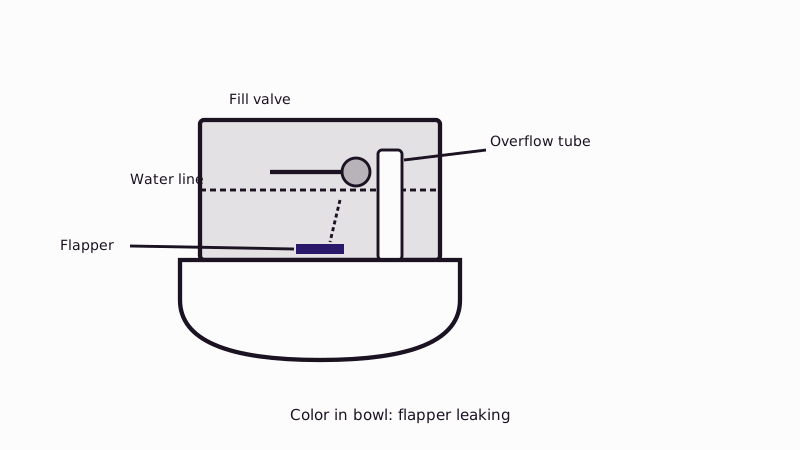
- Toilets: a tired flapper can lose gallons daily in silence. Stain the tank water with food dye. Tinted bowl water ten minutes later, with no flush in between, means the flapper seal is leaking.
- Irrigation: a single stuck valve or snapped head can run for hours on a schedule.
- Concealed lines: pinhole corrosion in copper under concrete or behind plaster.
- Pressure: above 80 psi, fixtures drip and age faster. The pressure regulator guide shows where to check.
- Occupants and laundry: visitors, a newborn or a larger washer produce a steady rise with an obvious explanation.
By the EPA's estimate, household leaks add up to over 9,300 gallons yearly in the average home, and the worst ones waste much more.
Why does my water bill spike in winter?
Cold months should bring lower bills because sprinklers go quiet, so a spike points elsewhere: a leak, a toilet fault or a longer cycle. According to the EPA, a household of four running past 12,000 gallons during a winter month could have serious leaks. Lay this statement beside the one from the same period last year.
Further winter suspects include a water heater weeping into a slab or closet, a faucet left to drip on a freezing night, and a recirculation pump that never stops. If the heater burns gas, tank trouble can lift both utility bills, so inspect the floor beneath it.
What if the bill is extremely high, far beyond anything normal?
Do the meter test right away. If the dial is spinning, close the main, then request a meter re-read or a meter accuracy test from the utility. Santa Monica's Billing and Collections line is 310-458-8224, extension 1. Under the city code, a meter that tests outside a three percent tolerance earns a refunded test fee and a corrected current bill.
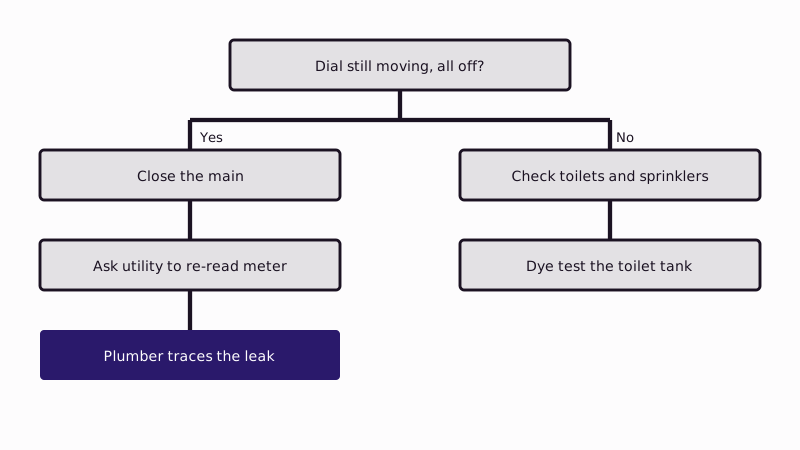
A racing dial suggests a burst. Watch for pooling water in a yard or garage, a damp wall, a hiss or rush behind the drywall, or sagging pressure. The warning signs sit in spotting a burst pipe. Ask whether the utility adjusts a bill after a repair, and keep the repair invoice, because proof is often required. Verify office hours before calling.
What sound does a pipe make when it bursts?
Listen for a continuous hiss or the rush of water inside a wall or ceiling, occasionally a sharp pop at the instant of failure. A thud right when a faucet shuts is a different thing, called water hammer. A broken pipe keeps running even after every fixture is off.
Water hammer is the thud of flow stopping abruptly. The cause is pressure or a drained air chamber, not a leak, although repeated slams can loosen joints. The water hammer page covers cause and cure. What matters here is a hiss paired with a moving meter.
Why is there no water in my house today?
Usual reasons: an outage or scheduled shutoff by the utility, a closed main valve, a failed or frozen line, or a pressure fault inside the house. Ask the neighbors, find the main valve, and see whether the utility posted an outage. If just your house is dry, the main valve and pressure regulator deserve a plumber's inspection.
Santa Monica customers can phone the city, whereas LADWP, Beverly Hills and other customers need their own provider. No water paired with a huge bill suggests a broken main and calls for a plumber soon. After recent work, a main valve left half closed is easy to overlook.
What should I do once I find the cause?
Fix the source, then document it. Replace the flapper, mend the sprinkler line, or have a plumber trace what you cannot see. Keep photos and invoices, ask the utility about an adjustment, and read the meter again to confirm the dial holds still. Need a hand? Describe the problem on the quote page.
Tracing can use acoustic listening and thermal imaging, with prices covered under leak detection cost. For a leak beneath a concrete floor, see slab leak repair costs. A fixed leak should show up as savings on the following bill.
Common questions
How much time does tracking a leak take?
Allow two hours of waiting and a few minutes of effort for the meter test. A plumber's detection visit often runs from one hour to several, depending on the property. In-wall and slab leaks can take longer, and the repair is its own step.
Is a running toilet enough to explain a big bill?
Easily. A toilet that never shuts off can send several hundred gallons down the drain daily, and because it is nearly silent, it goes unnoticed. Dye settles the question in ten minutes, and fixing it with a fresh flapper or fill kit is a small expense.
Does a high bill always mean a leak?
Not at all. Sprinklers, guests, a longer cycle or the season can each cause it. Set several months of bills side by side, look for a rate increase, and do the meter check. A meter that sits still with everything off tells you the extra water is being used on purpose.
Will the utility reduce the charge once the leak is repaired?
Policies differ, and some utilities offer an adjustment while others do not. Ask yours, and bring the repair invoice plus meter readings from before and after the fix. Santa Monica's billing office can say what it offers, who qualifies and how to apply.
Sources used
Page updated