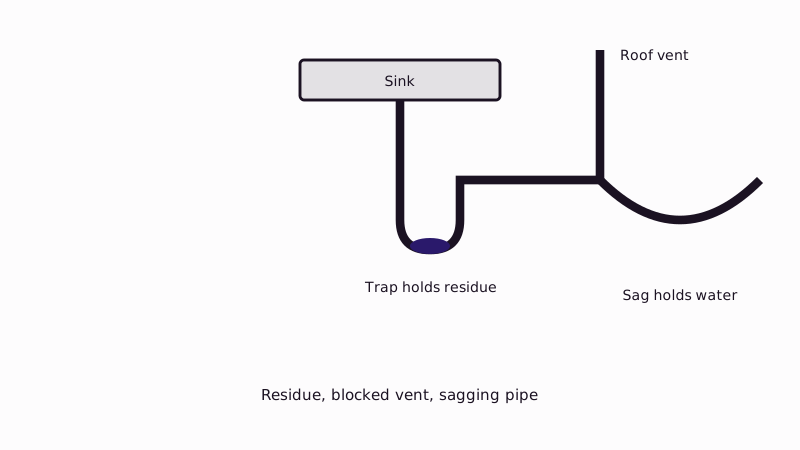
Slow drainage nearly always means the bore of the pipe has shrunk. Bathroom basins collect hair glued with soap scum; kitchen ones collect cooled fat and scraps; either can have a trap silted up with sludge. Water that does leave, only slowly, is a partial clog, and that is the cheapest stage to deal with. Below you will find causes, safe fixes, and the line where a drain cleaning visit beats more tinkering. A quote request is always open.
What actually slows a sink drain?
Residue lining the pipe wall. Upstairs in the bath it is hair felted into soap scum and toothpaste. Downstairs at the kitchen sink it is fat that cooled into a coating and then grabbed coffee grounds and scraps. The opening narrows, and water queues behind it.
Other causes sit outside the sink. A vent pipe on the roof that is blocked makes a drain gurgle and sluggish, since nothing lets air in behind the departing water. A sagging pipe run holds a pool of water, and a branch drain clogged downstream slows several fixtures at once.
The pattern gives it away. When only one basin lags, suspect the trap beneath it or its short branch. A slow sink plus a slow shower in the same bathroom suggests the shared branch. Slow drains everywhere, with gurgling toilets, point to the main line, which is plumber territory.
Why is a slow kitchen sink different from a slow bathroom sink?
The materials differ. Kitchen drains clog with fat, starch and food that hardens as it cools, while bathroom drains clog with hair, soap and skin. Kitchen blockages are slick and sticky; bathroom ones are tangled and fibrous. That changes the tool: heat and degreasing for one, a hair puller for the other.
A double kitchen sink adds a quirk. Two basins share one trap arm, and a blockage past the join slows both. If one side drains faster than the other, the clog is usually in the tailpiece or the junction before the join. A dishwasher or disposal tied into the same line makes it harder to isolate. See clearing a kitchen sink for the sequence.
Bathroom basins carry a lift stopper on a pivot rod, and hair snags there. Pulling it is the single most useful first step, and the bathroom sink walkthrough shows how to remove the stopper without breaking it.
Which fixes are worth a try at home?
Begin with what you can see. Pull the strainer and stopper, and wipe away the slime. Next comes a cup plunger sitting in a few inches of water, with a damp cloth stuffed in the overflow slot. Still slow? Unscrew the trap beneath the basin over a bucket and rinse it out.
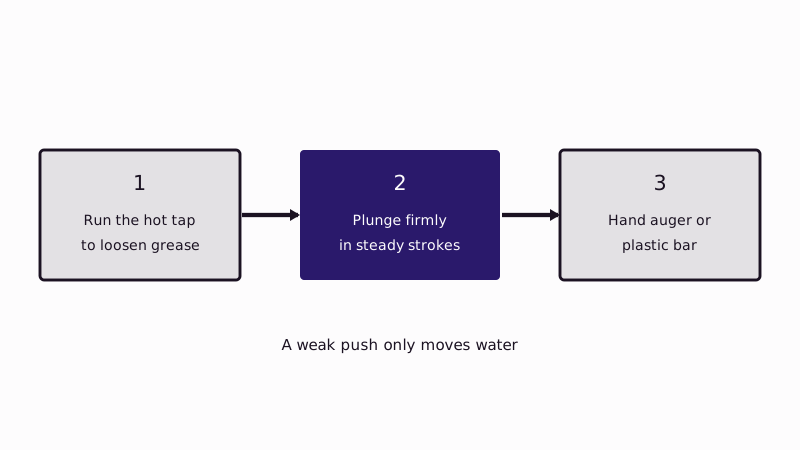
Work in this order. One: let the hot tap run to loosen grease. Second, plunge with firm, steady strokes, since a weak push just moves water around. Third, a small hand auger or a plastic barbed strip pulled through the drain, which catches hair. Fourth, the trap.
Leave the kettle alone. A kettle's worth of boiling water may warp plastic fittings or loosen a joint; tap-hot is enough. Baking soda and vinegar fizz, but they rarely clear a real clog; more on that in remedies for a clogged sink drain. Pour grease into a can, not down the drain.
Do chemical drain cleaners work, and are they safe?
They can clear a soft clog, but they are harsh, they do not reach every kind of blockage, and a clog left sitting in strong chemicals makes a later repair dangerous. Gel and liquid cleaners generate heat, which can damage old pipe, and a plumber who finds standing chemicals has to work with gloves and eye protection.
Do not mix two products, and do not plunge a drain that has cleaner standing in it, since splashback burns skin and eyes. If a product already went down, name it to the plumber. The label's safety instructions and poison control information apply, not a casual rule of thumb.
For old Westside homes the risk is real. Cast iron drains and early galvanized branch lines from the 1920s to 1950s are rough inside and scale-prone, so repeated chemicals eat at them while leaving the actual obstruction. A mechanical clean is gentler and more complete.
Why is the sink slow when nothing seems blocked?
Because the blockage can be partial, or the problem can be venting or a pipe that has lost its slope. Water that drains with a gurgle, or that fills slowly then drops with a rush, suggests air trouble. A sink that is fine for an hour after cleaning then slows again suggests a deeper clog.
Check the shower too. If a shower drain is backing up with no clog of its own, the branch line that serves both is the likely cause, and the guide on clearing a shower drain is a useful comparison. Run the dishwasher or washing machine and watch whether the sink gurgles or rises.
Septic homes add another possibility. Malibu and some canyon neighborhoods rely on septic systems rather than city sewers, so a full tank or clogged leach line can slow every drain in the house. There, a drain product is the wrong first move; a septic specialist is the better one.
When does it stop being a DIY job?
Hand it over once plunging and trap cleaning fail, as soon as a second fixture slows, if sewage odor appears, or if water rises through a floor drain or toilet. Those signs place the blockage in the branch or main, where a cable machine or camera does the work.
Persistent gurgling, a bad odor from drains, or a blockage that is back within the week all say the same thing: the first clearing missed something. A camera pushed down the line shows roots, a bellied stretch or a collapsed section. Odors have their own explainer under sewer smell.
Pricing varies by access and method. Bob Vila's national guide for clearing a clog is $150 to $350; your own written quote carries the real figure. For the line items, see sink unclogging costs.
California's contractor license rule begins at $1,000. A simple clearing sits far below that, though a long drain replacement can cross it. Deposits stop at a tenth of the price, with a hard ceiling of $1,000.
How can you keep the drain from slowing again?
Catch what causes the clog. A hair catcher in a bathroom sink and a strainer in the kitchen stop most of it, and a monthly flush with hot tap water keeps grease moving. Wipe greasy pans before washing, and keep coffee grounds out of the sink entirely.
Do not ignore small leaks while you are under the sink. EPA's WaterSense program reminds homeowners that leaks waste water in large quantities, and a seeping trap joint that you tighten today avoids a bigger repair later. The overlooked part is the trap's rubber washers, which crack with age.
A slow drain that returns is information. If the same sink slows every few weeks, the pipe has a rough spot, a low spot or a partial blockage that cleaning only reaches halfway, and a camera look is cheaper than repeating the cycle. The job outline describes what a visit involves.
Common questions
What about a slow twin-basin kitchen sink?
Clear the strainers and remove the tailpiece and trap first, because that is where the shared blockage usually sits. Clean the trap arm that joins the two basins, then run hot tap water through both sides. A basin that stays sluggish means the clog sits beyond the join and wants a cable.
Does plunging help?
Yes, with the overflow blocked and enough water to cover the rubber. Give it 15 to 20 firm strokes. Soft clogs close to the drain respond best. It will not remove roots, a collapsed pipe, or something solid lodged in the trap.
Can hair alone slow a bathroom sink?
Absolutely. Hair knots around the pivot rod and the sides of the drain pipe, then catches soap and toothpaste until it forms a plug. A hair puller or pop-up stopper removal clears the first few inches, where most hair clogs sit, and takes only a few minutes.
Why does the sink drain slowly even after Drano?
Chemical cleaners dissolve some organic matter but not hair mats, grease deeper in the line, roots or a sagging pipe. They also leave the obstruction in place if the water cannot reach it. After a failed cleaner, tell the plumber, who will use a cable or camera.
The rest of our guides start from Sunset Coast Plumbing plumber.
Sources used
Page updated