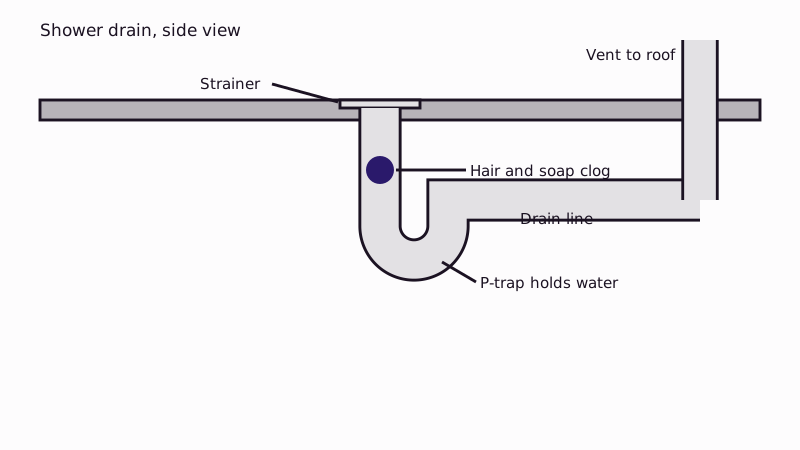
When shower water refuses to leave, the usual suspect is a clot of hair and soap wedged right under the strainer. Lift the strainer, fish the wad out, and plunge with the overflow sealed. When the water still lingers, you are dealing with something further down, which is drain cleaning and clogs work for a local plumber.
Below: what works, what only feels like it works, and the neighbouring drains people ask about in the same search (laundry, disposal, vents, the air-conditioner line).
What should I try first when the tub-shower backs up?
Start with your fingers and a cheap plastic strip. Pop off the strainer, hook the hair out, rinse the strainer under the tap, and run the shower hot for a minute. This cures most slow showers, because the clump lives within arm's length of the opening. Budget fifteen minutes.
Gloves help. A flat screwdriver lifts a stubborn cover. Slide a barbed strip down beside the crossbar, twist it a half turn, and draw it up slowly so the clump arrives in one piece. Several passes are normal. Stop when the strip comes up clean.
Older Westside bathrooms, particularly the 1920s to 1950s ones in Santa Monica, Venice and Culver City, may have rough iron or galvanized stubs behind the trap. Their pitted walls grab lather sooner than smooth plastic, so those showers clog again and again even when you keep the strainer clean.
What if water is still standing around my feet?
Pooled water after the hair is out means the blockage sits below the trap, or the trap itself is packed with scum. Block the overflow slot with a soaked rag, then add about an inch of standing water, press the cup plunger flat on the drain and pump, fifteen to twenty times. Next comes a hand auger, never a bottle.
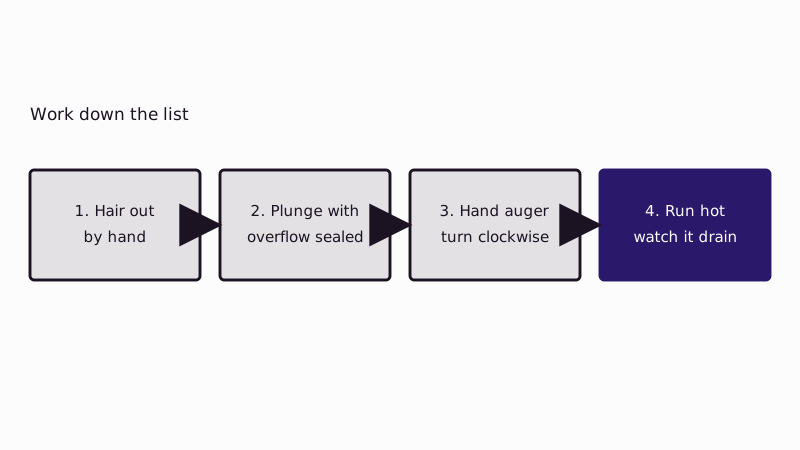
A tidy order of attack:
- Hair out by hand.
- Plunge, overflow sealed (a tub-shower has an overflow plate to stuff).
- Hand auger, cranked clockwise until the resistance gives way.
- Run hot water and watch a full bucket drain.
One rule overrides that list: watch the neighbours. If a floor drain gurgles or the toilet bubbles while you plunge, the shower is innocent. The trouble sits further along the house drain, out of reach of any shower snake.
Why do plumbers warn against baking soda and vinegar?
Because the fizz is theatre. It releases carbon dioxide and leaves a weak salty liquid, with hardly any push behind it, and hair is not something it dissolves. Plumbing firms rate the combination as a fresh-smelling rinse at best. A drain may run freely for several days and then jam again.
Caustic openers carry a bigger risk. Lye-type products run hot, can soften plastic joints, splash back onto skin when a shower is the thing that is blocked, and release fumes if they meet bleach or vinegar. If one has been poured already, mention it on arrival, since the liquid sitting in the trap can still burn.
Which chemical-free fixes actually work?
Four tools do the job: hair catcher, barbed strip, plunger, and a compact snake. Enzyme cleaners help too, but slowly: they digest the oily soap film holding hair together over several hours and cannot shift a solid plug. Use enzymes to keep a drain open between jobs, and the tools to open one that has closed.
Leave the kettle alone. Boiling water barely touches hair, and very hot water can loosen PVC cement and tire old seals. Rinse from the hot tap.
Do laundry, disposal, vent and AC drains need a different method?
Each clogs from a different material, so the shower method does not carry over. Washing-machine standpipes choke on lint, disposals on grease and fibrous scraps, condensate lines on algae, and vents on debris. Match the clearing method to the stuff.
- Laundry standpipe: pull the discharge hose, run a hand auger down the pipe, and inspect the trap. A fuller walk-through is on the washing machine drain guide.
- Disposal drain: unplug it first. Turn the blades with the hex slot below the motor, then clear the trap arm. Details sit on the garbage disposal drain page.
- Air-conditioner condensate line: turn the system off, uncap the line and clear the algae with a wet vacuum on the outside end.
- Drain vent: gurgling at several fixtures at once suggests a blocked vent stack. Wet roofs are not a place for a homeowner. A plumber can feed a line down from the top.
And a toilet that is properly stuck?
Use a flange plunger (it has an extra rubber sleeve that sits in the outlet) and push slowly about a dozen times. A bowl that is nearly full should be bailed down first. A closet auger handles the trap bend beyond. Waste surfacing in the shower or tub as you flush means the main is blocked.
On the Westside that sign deserves respect. Many older homes still send waste out through clay or cast iron laterals where roots find the joints. When a flush upstairs lifts the water in a ground-floor drain, quit running taps and read why a sink drains slowly before a backup makes the choice for you.
At what point is this no longer a home fix?
The plunger and the snake both lost. Two fixtures slow at once. A floor drain rising. The same clog returning inside a week. Any of those suggests a deeper blockage, and a camera run shows what it is. A hand tool only reaches as far as its cable.
Opening a cleanout or touching the main is contractor territory. Anything past a fixture trap is contractor work, and Past that line it becomes contractor work. California's contractor rule applies once the whole job tops $1,000, and the scope should be written down before a cleanout cap comes off. Use the quote form for that; the rest of the service list starts at the home page.
Common questions
Is a shower clog a short job?
Often, yes: a plain hair clog can be done inside an hour from the moment the plumber reaches the bathroom. A camera look or a second blocked fixture stretches that. Access changes the clock more than the clog does, and a tub with no cleanout nearby can double it.
What belongs in the price before I say yes?
Find out if it is flat or hourly, whether a camera pass is inside it, and whether another blocked drain changes it. Ask how a repeat clog is handled, since that belongs in the written quote and cannot be settled by a phone chat.
Must I be home for the whole visit?
A person has to unlock the door and show which shower is the problem. Standing over the plumber is optional, and a quiet spot to take calls from the office is fine. Clear the floor around the tub, lift the mats, and mention any chemical already poured so hands are protected when the trap opens.
Sources used
Page updated