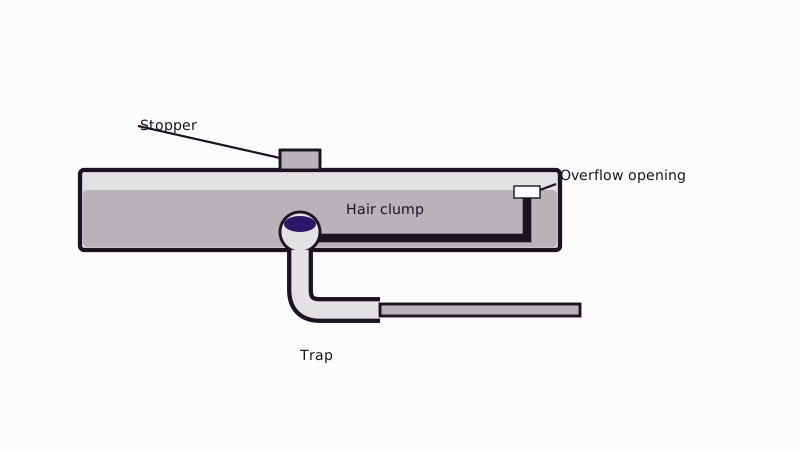
Standing water around your ankles by the end of a shower usually traces back to a clump of hair and soap lodged right under the stopper. A hooked length of wire often reaches it within twenty minutes, with no chemicals involved. When the blockage sits deeper, or other fixtures are sluggish as well, the trouble has left the tub and a plumber's cable is the better tool. Other blocked drains are covered in clogged drain and toilet help.
Why is my bathtub draining so slowly?
Hair does most of the damage, knotted with soap scum and parked around the stopper or strainer. Lower in the line, residue from soaps and lotions can coat the pipe and shrink the opening. A slow tub with everything else normal means a local plug; gurgling elsewhere hints at the shared line.
Try a quick test: run the sink and flush a toilet while watching the tub. A gurgle, or water rising in the tub, says the shared line is blocked, which belongs to a plumber. Old Westside houses can have rough cast iron or clay drain walls that snag hair and scale, so a tub that keeps clogging merits a camera inspection before another bottle of liquid cleaner.
What is the first move on a blocked tub?
Take the stopper out and pull the hair, because that is where most of it hides. Bob Vila's method uses a six-inch length of 12-gauge wire or a coat hanger bent into a small hook, rubber gloves and a trash bag. Remove the stopper, fish out the hair, and run water.
How you remove the stopper depends on type:
- Drop stopper: raise it all the way, loosen the small screw on the shaft below it, and slide the top off.
- Push or lock stopper: unscrew it, then loosen the screw on the shaft so the shaft slides out.
Cut tangled hair with a utility knife if it will not come free, and lift the rest by hand. Put the stopper back and test the flow. A cheap plastic hair catcher over the drain afterward prevents most repeats.
What if the tub stays slow after the hair is gone?
Add as much as a quarter cup of liquid dish soap, then pour a bucket of hot water in slowly behind it. The soap loosens greasy buildup so it can flush through. Still slow afterward? A drain snake or a plumber is next.
Watch the water temperature. Bob Vila advises hot tap water only for plastic pipes, because anything hotter may loosen joints, with boiling water reserved for metal. Not sure what your pipes are? Stay with the tap. A plunger works on a tub only if the overflow opening is plugged with a wet rag, since otherwise the pressure escapes there. When one method fails, do not stack products: a chemical cleaner sitting in a blocked drain can splash whoever opens the pipe next, and mixing products is dangerous, so read each label.
How do I clear a slow kitchen sink?
Loosen grease first with a squirt of soap and hot tap water, then work a flat-bottomed plunger, blocking the second basin or dishwasher line if there is one. If water still crawls, park a bucket below the bend, back off the slip nuts and clean the U-bend by hand.
Expect the kitchen trap to hold congealed grease, coffee grounds and bits of food. Empty it into the bucket, rinse it, and reassemble with the washers seated, then run water and watch each joint. If the sink stays slow even with a clean trap, the blockage lies further along, and a hand auger or the plumber's cable machine comes next. A disposal that jams causes its own slowdowns; see unclogging a kitchen sink.
How do I clean out the bathroom sink trap?
Bucket under the sink first. Loosen the two slip nuts on the bend, lower the trap, and tip out its contents. Gloved fingers remove the hair and sludge; rinse, then refit with the washers seated. Hand-tight plus a small extra turn with pliers is enough, and a test run confirms nothing leaks.
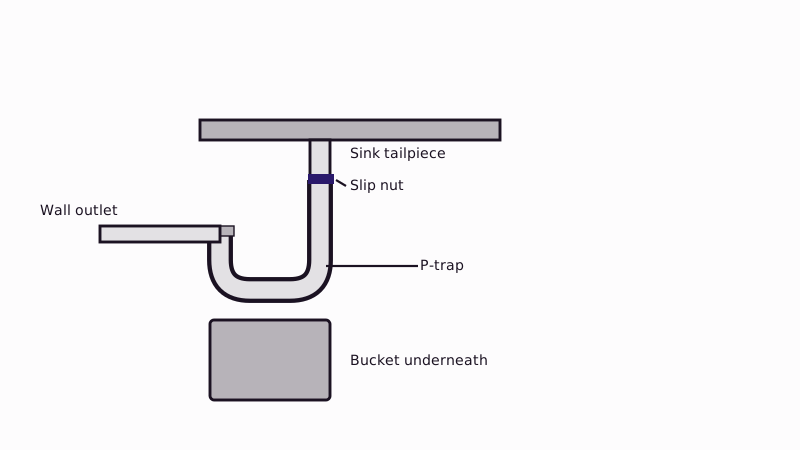
Bathroom sink clogs are usually hair and toothpaste mixed with soap. The same hooked wire used on the tub can reach down the sink drain after the stopper is removed. Our bathroom sink page shows the steps with the pop-up assembly. Do not use a metal tool roughly in a plastic trap, since it can scratch and crack it.
What do home remedies actually do, and when do they fail?
Soap and hot water, a plunger, and a hair hook are what actually works. Baking soda and vinegar fizz for a moment but seldom shift a solid hair plug. Think of any remedy as a grease loosener, not a clog dissolver, and give up after a try or two.
Anything lodged far down the pipe is out of reach for kitchen-cabinet remedies. Which ones are worth trying is spelled out in home remedies for clogged sink drains, and why a sink drains slowly lists causes other than hair. A drain that clears and re-clogs within days is hiding something deeper than a trap can reach.
When does calling a plumber pay off?
Make the call when more than one drain runs slow or gurgles, a sewage smell shows up, water backs into the tub from another drain, or your own attempts have failed. Thumbtack's national averages are $150 to $225 for a bathroom basin, shower or tub, $100 to $225 for a kitchen sink, and roughly $195 for snaking.
The same guide lists hydro jetting at $350 to $600, up to $1,000 on complex jobs, and says after-hours emergency calls can double or triple the usual rate. Those are national averages; your written quote sets the real figure, so ask what it includes and if a visit fee gets credited. More detail is in the cost of unclogging a sink. A contractor license is required above $1,000 in California, and the deposit limit is 10 percent of the job or $1,000, taking the smaller number. To book, use Sunset Coast Plumbing or the quote page.
If the clog is in the shower instead, the clogged shower drain guide covers it.
Common questions
Can boiling water go down the tub drain?
Only if the drain pipes are metal. Bob Vila says to use hot tap water with plastic pipes, because anything hotter could loosen the joints, and that boiling water is acceptable for metal. When you cannot tell, stay with the hottest tap water. Never pour boiling water into a cracked or very old fixture.
Why does my tub clog again so quickly?
Typically the cause was never fully removed. Hair knots up again at the same spot, soap film thickens inside the pipe, or a deeper blockage was only partly cleared. A drain cover and a monthly hook-and-flush help. Frequent repeats in an older house justify a camera inspection.
Is a clogged tub a sign of a blocked sewer main?
Not necessarily; a tub-only clog is local. A sewer main problem looks different: several drains slow together, gurgling, water rising in the lowest fixture, or a sewer smell. Seeing those, stop using water and call, rather than running the shower in hopes it clears.
Should I use a store-bought drain cleaner?
Mechanical methods come first because they pull the plug out instead of dissolving part of it. If you do use a product, follow the label, never combine two, and tell the plumber what went down the drain so they can protect themselves. A hook or snake often costs less than buying cleaner again and again.
Sources used
Page updated