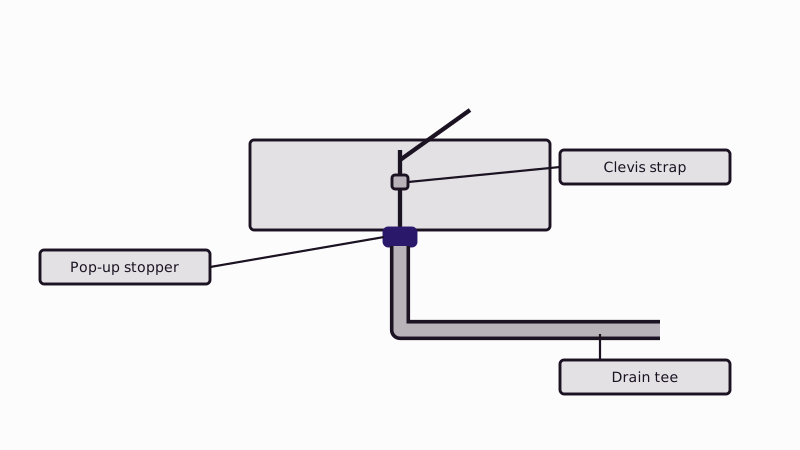
Start with the stopper, because hair wraps around it more often than anything lodges deeper. Lift or unscrew it, pull out the slimy tangle, and run hot water. If the sink still drains slowly, plunge with the overflow hole blocked, then open the trap under the basin. Reaching for a bottle of drain cleaner is the move to avoid. The same kit works on tub drains and, with a bigger plunger, on a toilet: see clogged toilet help. Keep a few basics together under the sink.
What do I try first on a clogged bathroom sink?
Clear the stopper. Most bathroom sinks hide a lift rod behind the faucet that works the pop-up stopper, and hair and soap gather on it. Pull it out, rinse off the gunk, and test the drain by running the tap. This step alone fixes a large share of slow sinks and costs nothing.
Getting it out: beneath the basin, a horizontal rod is clamped to the drain pipe by a small nut. Undo the nut, slip the rod free, and raise the stopper vertically. Newer stoppers simply twist or pull free. Photograph the assembly first so you remember the order. Wash the parts elsewhere, and cover the opening with a cloth so little screws cannot drop through.
Does a plunger or hair tool work on a sink?
Yes. A cup plunger works if the overflow hole near the rim is blocked with a wet rag, so pressure goes down the drain rather than out the overflow. Cover the cup with water and work it in steady strokes. A thin plastic hair tool with barbs pulls out a clump that a plunger leaves behind.
Use a plunger that is kept for sinks, not the toilet one. Ten firm strokes is a fair attempt. If the water gurgles into a neighboring fixture, stop. That sign points further along the drain line. Those barbed strips are cheap and work well on shallow hair clogs.
Can baking soda and vinegar clear it?
Mild buildup, maybe. Shake a generous layer of baking soda over the drain opening, pour white vinegar on top, and give the fizz a quarter of an hour before rinsing with the hot tap. That loosens soap film, but it cannot dissolve a hairball, so call it upkeep rather than rescue.
Avoid boiling water poured into a porcelain sink with plastic pipe, because it can soften fittings. Hot tap water is enough. Skip chemical drain cleaners if you can. They burn skin and eyes, eat at old pipe, and leave a caustic pool that makes the next repair hazardous. Never combine two cleaners.
What is involved in cleaning the trap beneath the basin?
Slide a bucket beneath the curved bend, spin off its slip nuts, lower the bend and dump out the gray sludge. A bottle brush clears the walls. Refit the pipe with its washers lying flat, snug each nut with fingers plus a nudge from pliers, then open the faucet and inspect every joint for weeping.
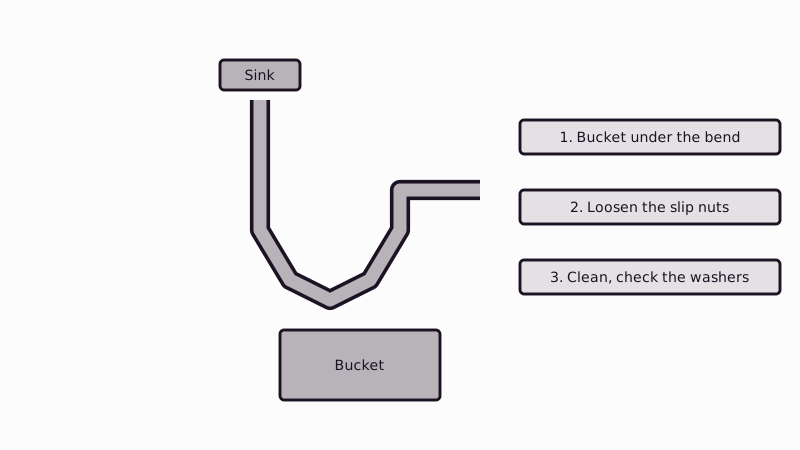
Check the washers for cracks, since a failed one leaks after you reassemble. A dropped wedding ring is often in that trap, which is another reason to look before running water. If a pipe stub or a thin tail runs into the wall behind the trap, a hand-turned drain snake will reach it. Feed it gently and withdraw it slowly, because a hair mass tends to come out wrapped around the cable.
Why does my bathroom sink keep clogging?
Hair, toothpaste, soap and mineral scale build up in a narrow pipe. Soap binds with hard water minerals into a gray film that narrows the drain a little more each week. Over time even a clean stopper cannot keep up, and the pipe itself may need a cleaning.
Westside water carries enough minerals to leave a film, so a regular routine helps: a hair catcher, a hot rinse after use, and a monthly baking soda flush. Older drains in Craftsman and mid-century houses can also be rough inside, which grabs debris. Recurring clogs in one sink that clear fast are normal. Clogs that return within days point to a damaged section or a partial blockage deeper in the line.
What signs say it is more than a sink problem?
Stop the home attempts if more than one fixture runs slowly, the toilet or tub fills with backed-up water, a sewer smell drifts up, or two tries have failed. Those signs implicate the shared drain downstream, which needs a cable machine or camera, equipment no bathroom tool kit includes.
For what a professional charges, read sink unclogging cost. Main line work and other services are summarized on the home page. One legal note: California makes a contractor license mandatory for jobs of $1,000 and over. If you would rather have someone sent out, the quote page takes the request.
Common questions
How long do I give each method?
Plan on roughly ten minutes for the stopper, ten more for plunging, and about thirty for the trap with cleanup. When an hour goes by and the water level has not budged, step up to the next method, or bring in a plumber.
Are bottled drain cleaners worth trying?
It can work on a soft clog, but caustic cleaners are risky for skin, eyes and old pipe, and they make later repairs more dangerous. If you have used one and still need a plumber, tell them what was poured down the drain.
What if the blockage is deeper than the trap?
A hand auger gets past the trap, but anything deeper wants longer cable or a camera. Slow drains in several fixtures suggest the shared branch, and that is beyond what a bathroom tool kit can handle. Sending a camera down the line shows what is actually in the way.
Does a slow sink cost money on the water bill?
Not directly. But a slow drain often travels with a weeping trap or a dripping faucet, and any leak wastes water. EPA figures show the average household losing more than 9,300 gallons each year to leaks, so fix the small ones.
Sources used
- Fixture and drain manufacturers' published maintenance guidance, reviewed November 2026
- EPA WaterSense, Fix a Leak Week
- California Contractors State License Board, hire a contractor
Page updated