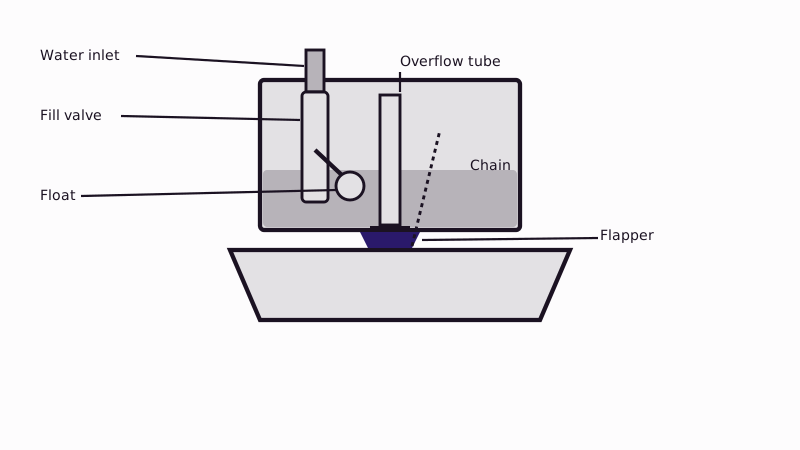
Hissing at midnight, a refill every few minutes, a trickle you can hear from the hallway: all of it means the tank cannot keep what you gave it. Typically a rubber stopper has hardened, the float sits high, or the inlet valve is spent. Every one of those is a minutes-long swap with pocket-change parts. If the hardware aisle does not appeal, the toilet repair service page is where you can ask a local plumber to visit.
What keeps the water running in the tank?
Water slips out of the tank, and the inlet valve keeps making up the difference. Three faults explain almost every case: the rubber flapper stopped sealing, the level sits so high that it drains down the center standpipe, or the inlet valve never quite shuts.
Bob Vila lists two more suspects. A flapper chain that is kinked or too short holds the stopper slightly open. A damaged or stubby overflow tube needs the whole flush valve assembly replaced. Rarer: a hairline fracture in the porcelain, or a worn gasket joining tank to bowl. Whatever the cause, one question narrows everything down. Where does the water go when nobody has touched the handle?
Can a few drops of food coloring find the leak?
Yes. Tint the tank water with food dye and do not touch the handle for ten minutes. A tinted bowl means the flapper is letting water through. A bowl that stays clear while the sound continues points to the inlet valve or the level setting.
The EPA recommends this exact test and adds a warning: flush when you finish, or the tank may stain. Now study the water.
- Water spilling into the tall center tube: the float sits too high.
- Color in the bowl, level fine: the flapper is the culprit.
- Nonstop hiss, tank already full: the inlet valve is suspect.
How do I put a new flapper in?
Close the oval handle low on the wall, then flush until the tank is nearly empty. Pop the old flapper off its two pegs, press the replacement on, leave the chain a touch slack, restore the water and watch one entire refill.
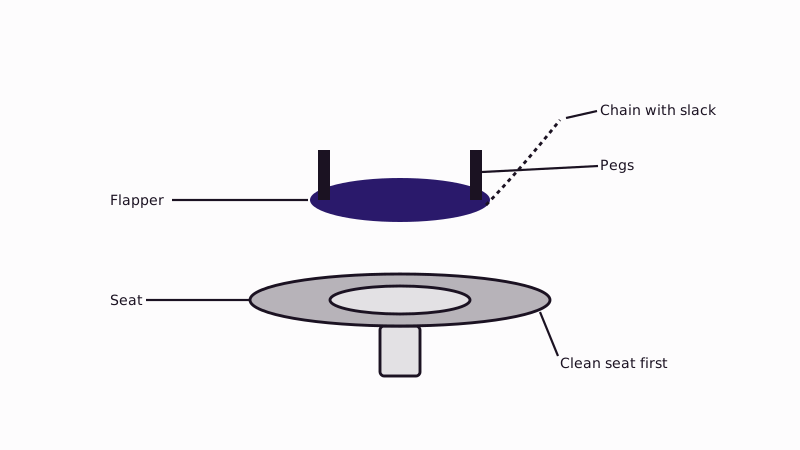
Matching matters. A model number is usually molded inside the tank or stamped under the lid, so snap a photo of it before shopping, which saves a trip whether the toilet is a Kohler or any other label. Wipe the seat the flapper lands on, because film and mineral crust there defeat even a brand-new seal. Odd-shaped stoppers are covered under toilet flapper repair. Because older Westside buildings often have mineral-heavy water, expect rubber to harden sooner and replace it when it feels stiff, not after it fails.
What if the water just sits too high or the valve will not shut?
With the lid off, watch whether water is draining into the center tube. Bob Vila's advice is a quarter turn of the float screw counterclockwise, repeated until the spilling ends. If the level looks right and it still runs, the inlet valve itself is finished.
Test by hand: lift the float to the proper height and see whether water stops. If not, replace the valve. Order of work: wall valve closed, flush, supply hose off underneath, big locknut loosened, old valve out, new one dropped through the same opening. Fill valve replacement is spelled out in more detail elsewhere on the site.
Why does it run only at odd moments?
A toilet that wakes itself every ten or twenty minutes is losing water through a weak flapper seal. The level sinks slowly, the valve kicks in for a few seconds, then everything goes quiet. The name for this is a phantom flush, and the silence in between is why it hides for weeks.
Four clues give it away:
- A faint trickling noise during quiet hours.
- A bowl whose water level seems to wobble.
- Mineral streaks running down the porcelain.
- A bill that edges upward for no visible reason.
On that last clue: the EPA puts an average home at upward of 9,300 gallons a year lost, and a quiet toilet is a textbook source. Why a water bill climbs lists other suspects. Use the dye test on anything intermittent. A slow leak is quieter than a gusher and, over twelve months, just as expensive.
When should I stop and call someone?
Pause when the parts are not the problem: a cracked tank, a bowl that rocks, a stop valve stuck open, or two fixes that did not hold. Thumbtack pegs parts at $5 to $20, a basic toilet repair at $100 to $250, and plumbers at $45 to $150 hourly.
Those are national figures; the written quote for your visit sets the price. Weekend and emergency calls can double the hourly rate, per the same page. Related services, like swapping a supply line or replacing the whole unit, can be quoted at the same visit, and toilet replacement pricing helps you decide whether an old bowl is worth keeping.
Sometimes a slow flush and gurgling join the running. Then the trouble sits below the tank. A plunger handles a simple bowl clog, and a drain machine, the cable a rooter service runs, deals with the rest. For stubborn repeats, the toilet keeps running page digs further, and Sunset Coast Plumbing is where a request starts.
Common questions
Does a running toilet change the water bill?
It can, noticeably. Every leaked refill vanishes down the drain, and the EPA treats household leaks as a major waste source. Set this bill beside the one from a year back. A jump plus colored bowl water after the dye test is a strong lead, and the repair costs less than a few months of that waste.
Can I wait until Monday to fix it?
Generally yes, provided the water stays inside the bowl. Close the wall valve when you leave or head to bed and reopen it to flush. Water climbing toward the rim or onto the tiles changes that: shut the valve and ask for same-day help.
Is a Kohler toilet repaired differently from other brands?
Not in principle. A gravity toilet of any make has a bottom seal, a float and an inlet valve. Only the replacement part varies. Read the model number printed in the tank or beneath the lid and buy to match. Universal parts fit many models, though not every one.
How do I silence it this minute?
Twist the little oval handle at the wall, clockwise, until it firmly stops; only this toilet loses water. Next, lift the lid, free the chain if it snagged beneath the flapper, and nudge the float. Still noisy? Send a request and describe what you saw.
Sources used
Page updated