A house gets repiped when the supply lines behind the walls have become the problem: copper riddled with pinholes, galvanized steel choked with rust, or plastic of a type with a bad record. One failed pipe can be fixed, but a pattern means the whole system is aging. The full process and cost sit on the repipe house page; this page helps you decide whether it is time.
What are the clearest signs a house needs repiping?
Repeated leaks in different places are the strongest sign, followed by brown or orange water when you first open a tap, falling pressure at several fixtures, metallic taste, and green crust at copper joints. One of these alone can have a small cause. Two or three together point at the pipes themselves.
Check the quiet clues too: damp drywall that dries and returns, a water bill creeping upward with no change in habits, a meter that spins when everything is off, and hammering that was not there before. EPA WaterSense data say the typical home leaks away above 9,300 gallons yearly, which makes a rising bill worth chasing before any stain shows.
Why do copper pipes in Southern California develop pinholes?
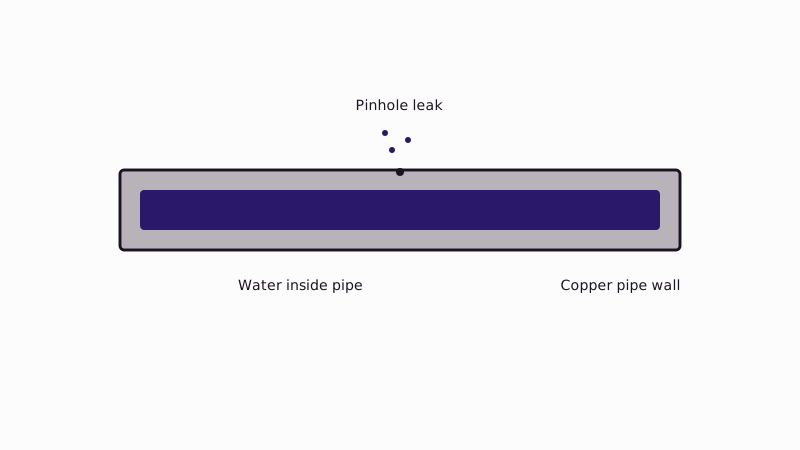
Pinholes are tiny leaks that start from the inside of the pipe wall, where fast or chemically aggressive water slowly erodes the copper. Hard water, high flow near elbows, and old solder flux all contribute. Once pinholes appear in one section, the rest of the run usually has similar thinning and more leaks follow.
Plumbers often describe it as a calendar of repairs: patch one, wait six months, patch the next. Each repair opens a wall, so the combined cost of patches, drywall and paint can pass a full repipe. If your leaks are in the walls of a bathroom or kitchen that you were planning to remodel anyway, pairing the work saves demolition twice.
Is galvanized or polybutylene pipe a reason to repipe?
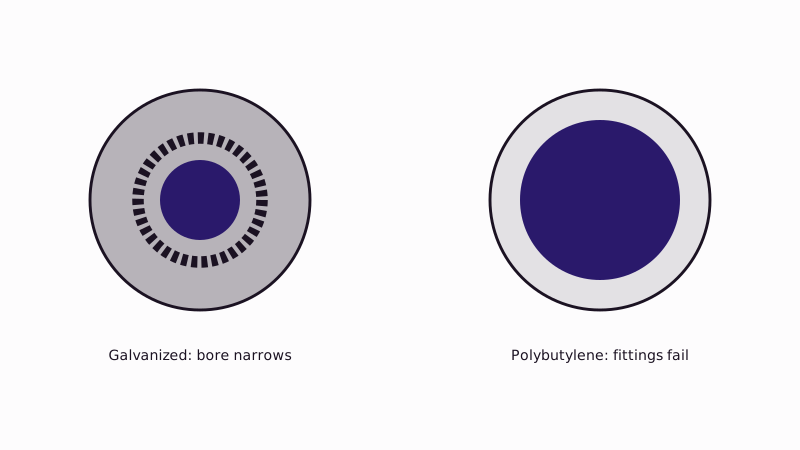
Yes, for both. Galvanized steel, standard in houses put up before the 1960s, corrodes inside and slowly closes down, so flow drops at faucets farthest from the main. Polybutylene, a gray flexible plastic laid between roughly 1978 and 1995, has earned a poor reputation at its fittings. Neither improves with age.
Plenty of Westside bungalows and Spanish Revivals still hide galvanized lines after partial updates, because earlier owners replaced only the branch that leaked. Exposed pipe by the heater or under a sink tells the story, and a magnet sticks to steel but not to copper. Details on cost are in galvanized pipe replacement cost.
Does a repipe improve water quality and pressure?
Often yes. New PEX or copper removes rust flakes, scale and the metallic taste of corroded steel. Pressure improves when narrowed galvanized lines are replaced, though street pressure and the regulator still set the ceiling. Pressure that was always weak calls for a regulator and service line check first; low water pressure causes lists them.
A repipe does not fix problems from the street or inside a water heater, and it does not change hardness. Flush the new lines at every tap before drinking from them, and expect a mild plastic taste for a few weeks if PEX goes in. The PEX vs copper page discusses material choice.
Does repiping matter to insurers and home buyers?
It can help with insurance and sale conversations, because some insurers surcharge or decline houses with polybutylene or galvanized plumbing, and buyers often ask about it. Policies and terms differ, so ask your insurer directly rather than assume. A repipe also ends the cycle of surprise leaks while the walls are open anyway.
Keep the permit and final inspection sign-off, which show the work was inspected by the city. Those papers matter at resale. A home with unpermitted plumbing can complicate a sale. Any quote's license number deserves a check on the state board lookup, as California requires a contractor license from $1,000 of work.
What does the disruption look like for a family?
Count on a few days, with the water off for part of each. Small access holes go in along the wall runs, new lines follow, test them under pressure, then patch drywall. Plan for cooking and showering elsewhere on the busiest day. The plumber describes the sequence before work starts, and the city inspection is scheduled afterward.
Furniture and floors near the work get covered, though valuables and wall art should be moved. Finish work like paint is sometimes a separate trade, which is why the quote should say whether it is included. The job sequence is laid out step by step.
Common questions
How disruptive is it, day by day?
Most single-family repipes run two to five days, shaped by size, stories and wall access, and the supply is off for only part of that. Bigger or multi-story houses stretch it. Request a day-by-day schedule so you know which days the kitchen and bathrooms are unusable.
What should the quote spell out?
Ask which material is proposed and why, what the permit and inspection include, who patches and paints the drywall, and when payments fall due. The deposit cannot exceed ten percent or $1,000, whichever is smaller, under California law. Keep every answer in writing and verify the contractor number with the state board.
Does an adult need to be on site?
Someone should be reachable, and on site at the start and close of each day, to open doors and sign off choices. Hovering is optional, and many owners leave for the loud hours. Mention pets, alarms and locked rooms before day one.
Is a partial repipe enough?
Sometimes. If only one branch has failed, for example the kitchen and a hall bath, a partial repipe is cheaper now. If the remaining pipes are the same age and material, they are likely to fail too. Ask for an option for both, priced separately, so you can compare the long-term cost.
How do I begin?
Put the leak history, house age and any known pipe material into the quote page form. The plumber looks the house over first, then sends a price on paper. Requests are read on weekdays, 9am to 5pm; a few photos of the heater and exposed pipe save time.
This guide is one of many on Sunset Coast Plumbing.
Sources used
Page updated