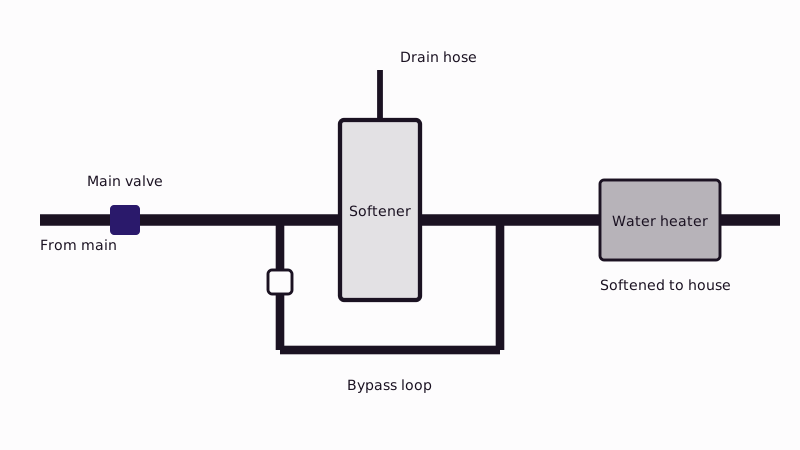
Block out about four to six hours. The order of operations is shutoff, splice, set the tank on a level pad before the water heater, bypass, waste hose to an allowed drain, leaving an air break, power, hardness entry, salt, first regeneration. Handy with pipe fittings? This is within reach. Limits and a plumber-installed option are below.
Do I need a softener at all in Santa Monica?
Not necessarily, whatever the sales pitch says. The city blends its own treated groundwater with imported supply and publishes hardness in its annual water quality report. Convert parts per million to grains per gallon by dividing by 17.1. Pull up that report and test a tap in the kitchen before spending money.
Hardness changes across the Westside because different water providers serve different neighborhoods, so a friend a few streets away may report something different. Confirm your own provider and read its report. Chalky film on shower doors and clogged aerators hint at hard water. If the number is middling, a cartridge filter or periodic descaling might be enough. Compare options in the guide to hard water scale prevention.
What do I buy and what do I check first?
The shopping list: a softener rated for your household, two flexible connectors (or copper or PEX adapters), a bypass valve, drain tubing, fittings and salt. To size it, follow the maker's sizing chart, which uses household size and your grains of hardness. Check local restrictions before paying.
Questions worth answering before the box opens:
- Are self-regenerating units restricted? State law allows local water agencies and cities to limit some models, because brine adds salt to the sewer. Ask the utility and the building office.
- Is a permit needed? Some cities treat a softener as plumbing work, others do not. Call the building office and give your address.
- How close is an outlet? The controller needs ordinary household power within reach.
- Where does the rinse water end up? Washer standpipe, floor drain, mop sink: any of the three will do. Keep the hose end above the drain's flood rim, so waste cannot creep back toward the unit.
How is a water softener installed step by step?
Start at the main valve, then let the pipe empty through a low faucet. Cut in, set the bypass and connectors, hang the drain hose, bring water back slowly to let air out, program the controller, fill the brine tank and trigger regeneration by hand. Keep checking joints for dampness over the next hour.
- Pick the location. Think downstream of the main valve but upstream of the heater, typically a garage corner, closet or laundry nook. Hose bibs can stay on untreated water if you prefer.
- Mount the bypass. With it you can take the softener offline while the house keeps water.
- Connect inlet and outlet. Arrows molded into the head show which way water flows. Mixing up the ports is what most first installs get wrong.
- Lay out the drain. Use the tubing in the box. The brine overflow line gets its own run to that same drain.
- Power and settings. Set the clock, hardness and regeneration timing as the manual directs.
- Salt and first cycle. Fill the brine tank, force a regeneration, and confirm rinse water leaves through the drain.
Existing galvanized or copper pipe calls for a soldered or push-fit transition. Plenty of older Santa Monica houses still have galvanized lines, which can crumble when disturbed, and one bad joint could soak a garage wall. Leave the wall open until you have held full pressure for a while.
At what point is it smarter to hire someone?
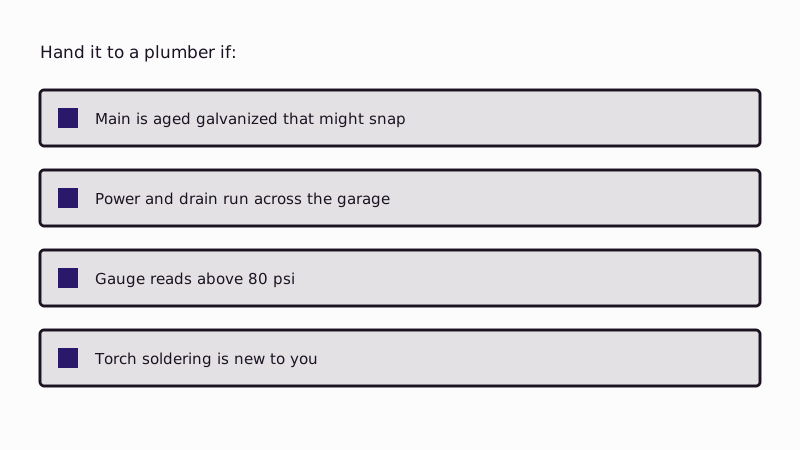
Pass the job on if the main is aged galvanized that might snap, when power and drain are across the garage, when your gauge reads above 80 psi, or when torch work is new to you. The person you hire can also handle a permit. California requires a contractor license for work of $1,000 or more in labor and materials, or any job that needs a permit.
Installation labor is usually the cheaper part, but we have no verified Westside price to quote here. Hooking up a softener you already own costs less than a finished system with equipment, and new pipe adds to either. Only a written estimate gives a real number. Details sit on the softener installation cost page, while a written estimate begins on the quote page.
What dissolves hard water scale already on my fixtures?
Plain vinegar handles most of it. Submerge aerators and showerheads for an hour and scrub with a toothbrush. Around a faucet base, wrap a soaked rag over the crust. Tank heaters collect sediment too, so flush one yearly. Soft water prevents new buildup but leaves the old crust alone, so clean fixtures first.
Vinegar etches marble and other natural stone, and mixing it with bleach releases toxic gas. Sediment-choked heaters last less time and use more fuel, a problem handled under water heater repair.
Common questions
Can I finish the install in one morning?
First-timers should clear most of the day. With some practice, and the main, power and drain within a few feet of each other, two to four hours is realistic. Soldering a joint, or running the drain hose a long distance, stretches that out further.
Is salt-free the same as a softener?
Salt-free conditioners alter how scale forms, but leave hardness minerals in the water, so spotting may continue. A true softener trades those minerals out through ion exchange. Ask the maker for independent test data, and confirm what your local rules permit.
What do I ask an installer first?
Note the contractor license number and look the holder up with the state board. Insist on equipment and labor as separate lines, learn which party applies for a permit when one is required, and hold any deposit to what California allows. Last, find out what the workmanship warranty actually covers.
Does a softener lower pressure at the taps?
A right-sized unit hardly changes pressure. When it does drop, suspect a fouled resin bed, a bypass left partly open or undersized piping. Read a gauge before and after. If it dropped, close the bypass and retest, and read about low pressure causes.
This guide is one of many on plumber in Santa Monica.
Sources used
Page updated