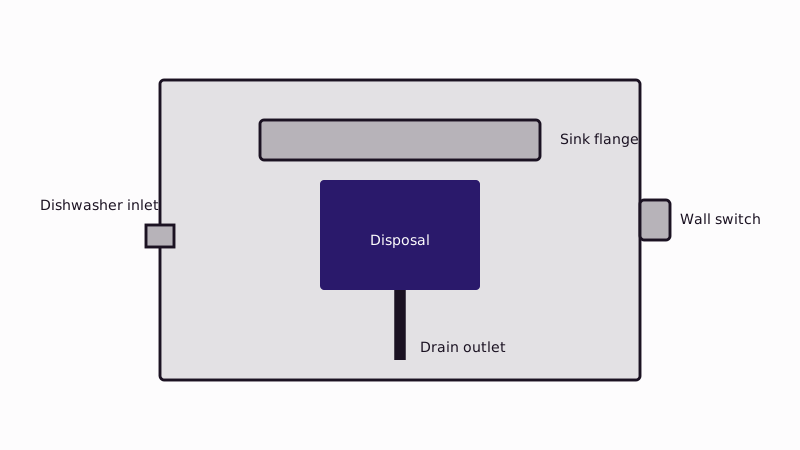
A disposal installation means removing the old unit if there is one, mounting the new one under the sink flange, connecting the drain and the dishwasher line, and powering it, either by a plug-in cord or by a hardwired connection. The published guide we checked puts a typical installed price at $300 to $600. The written quote sets your own figure, and the plumber travels to you. For repairs rather than replacement, see disposal and sink repair.
What does a disposal installation visit include?
Cutting power, disconnecting the old unit, clearing the sink flange and mounting the new disposal, then reconnecting the drain trap, the dishwasher hose and the electrical supply. A test run for leaks and a noise check finish the job. Taking the old unit away is sometimes billed separately; find out before the visit.
A first-ever install has extra steps: knocking out the dishwasher port plug if a dishwasher is connected, adding a power source, and sometimes modifying the trap. A plumber who arrives knowing the model, the sink type and the outlet situation works faster. Photos of the cabinet before the visit help the quote.
How much does disposal installation cost?
Fixr's guide gives a typical range of $300 to $600 installed, averaging about $500 for a half-horsepower stainless unit. Its low end is near $200 for a small third-horsepower unit with an outlet already present, and its high end near $750 for a three-quarter-horsepower batch-feed unit that needs a new outlet. This is a national guide and a local quote may differ.
| Item (Fixr guide) | Published figure |
|---|---|
| Typical installed price | $300 to $600 |
| Plumber hourly rate | $75 to $200 |
| Typical install time | about 3 hours |
| New outlet, if needed | $120 to $200 |
| Old unit removal | about $50 to $100 |
| Sink and disposal together | $700 to $1,600 |
Take the table as orientation, nothing more: the real price comes in writing after your sink has been looked at.
Which factors push a disposal quote up or down?
Horsepower, feed type, power connection, the sink and whatever else is found. Larger motors and batch-feed models cost more. Fixr lists corded installs at $300 to $450 and hardwired ones at $400 to $600. An undermount sink may need a return visit after the sealant cures, and an old trap or corroded drain adds work.
Unit price runs about $50 to $400 in the same guide, with stainless steel costing more than aluminum and lasting longer. Fixr suggests choosing the smallest unit that meets the household's needs. A larger household or heavy cooking may justify a bigger motor, though the extra noise and cost are not always worth it.
Do I need an electrician, or can the plumber connect the power?
It depends on the setup. A disposal on a cord plugs into an under-sink outlet, which a plumber can handle if the outlet exists. A hardwired unit or a new outlet is electrical work, and Fixr lists about $120 to $360 for an electrician where one is needed. The outlet should be on a proper circuit, and switched.
Have the quote say who handles the electrical part and whether a permit applies. Plumbing and electrical are separate license classes in California (plumbing is C-36), and the licensing line is $1,000 of work. A plain cord hookup normally sits under it; a new circuit may not.
Which disposal should I choose?
A half-horsepower stainless model suits most households, as the price guide implies. Choose by household size, how much you cook, the noise you will tolerate and the feed type: continuous feed turns on with a wall switch, batch feed runs when a stopper is twisted in place.
Match the mounting system to the sink: a three-bolt mount is common, and undermount or thin stainless sinks may need an adapter. If you have a septic tank, check the maker's guidance and ask the plumber before installing. Soft costs, such as a new flange, a trap kit or a dishwasher hose, are small but should be listed.
What should the plumber check on the visit?
The sink flange, the trap and drain slope, the dishwasher connection and a leak test under running water. The dishwasher line normally gets a high loop or an air gap so dirty water cannot run back, but the exact rule depends on local code, so check with the plumber which one your kitchen needs.
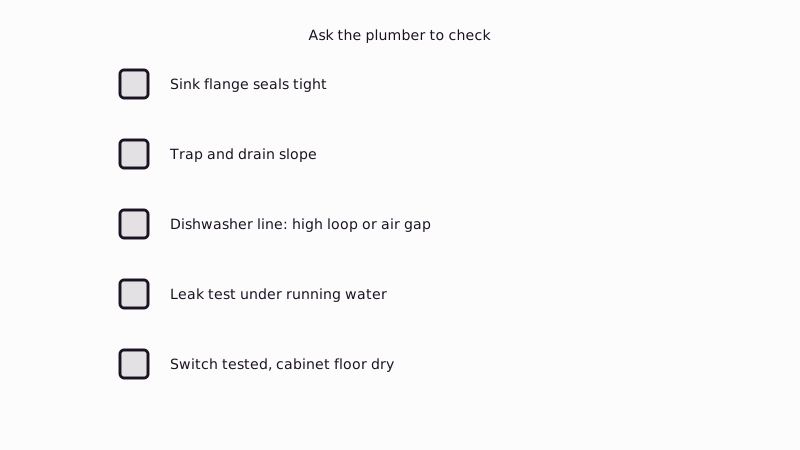
Then test the switch, run the unit with cold water, and check the cabinet floor for moisture after a few minutes. A slow drain after installation is the subject of unclogging a disposal drain, while a drip in the cabinet belongs on the under-sink leak page.
Can I install a disposal myself?
Many owners do, but the electrical connection and the leak risk are what trip people up. A hardwired connection, a new outlet or a modified trap is where a plumber or electrician earns the price. Swapping one unit on an existing outlet is a fair task for a handy owner, though a slow leak under the sink can cost a lot.
Doing it yourself? Kill the breaker, read the maker's instructions and test while water runs. EPA's household leak average is above 9,300 gallons yearly, which is reason enough for a careful leak test. Unsure at any point? Stop and request a written quote through the quote form.
Common questions
How long is the plumber at the house?
Fixr's guide says about one to two hours in ideal conditions and around three hours typically, which is also the figure behind its labor estimate. Plumbing changes, a new outlet or an undermount sink can add time. Other services are listed on the home page.
Does the quote cover taking out the old disposal?
Not always. Removal adds about $50 to $100 in Fixr's guide, and more if the pipes need replacing. Ask whether the quote includes disconnecting and hauling the old unit, patching any hole in the sink or cabinet, and cleaning up afterward.
Will a disposal fit my sink?
Most kitchen sinks have a standard drain opening that takes a disposal, and special mounts exist for odd cases. The faucet barely matters, but a thin or undermount sink, or a double sink with an unusual trap layout, may need adapter parts. A photo lets a plumber confirm.
Sources used
Page updated