Start by ruling out natural gas, because the utility adds an odorant that smells much like rotten eggs, and sewer gas smells alike. Unsure? Assume gas, get everyone outside, and ring SoCalGas, 1-800-427-2200, from out on the sidewalk. If it truly is sewer gas, expect a trap whose water has dried up, a worn toilet seal, a blocked vent or a damaged sewer line. More services sit on the home page.
The sections below sort the causes by where you smell it, since the location points to the source.
How do you tell sewer gas from a natural gas leak?
Sewer gas smells like rotten eggs, sometimes with a sharper, musty edge, and it is strongest near a drain or toilet. A natural gas leak peaks beside an appliance, the meter or a gas pipe, and running water does nothing to it. Doubt means gas: step outside first.
The ATSDR fact sheet on hydrogen sulfide describes the rotten egg odor and says sewers are one source, and that health effects can occur even at low levels. Sewer gas also contains other gases, and in an enclosed space it can be flammable, so do not use a flame to look for it.
Signs pointing to natural gas: hissing at a pipe, odor next to the cooktop, clothes dryer or heater, a brown patch of lawn above a buried pipe, or the strongest smell at the meter. Any of those means leaving, then calling the utility, with 911 for anyone at risk.
Which drain is the problem, by where you smell it?
The strongest spot for the smell usually names its source. Walk through the house, note which room or fixture reeks most, and compare it with the list below, because a single room often has a single cause and a quick test on that one fixture settles it before anyone pays for a camera.
| Where the smell is strongest | Most likely cause |
|---|---|
| One bathroom sink, tub or shower | Dry or dried P-trap |
| Garage or laundry floor drain | Dry trap in an unused drain |
| Around the base of a toilet | Worn wax seal or rocking bowl |
| Whole house, stronger upstairs | Blocked or broken vent |
| Whole house, plus slow drains or gurgling | Sewer line problem |
| Outdoors near the house or a cleanout | Cracked lateral or open cleanout |
| Comes and goes with weather | Vent pressure, wind, or fan depressurizing the house |
Getting rid of the odor afterward is covered in clearing a sewer smell, while sewer smell help leads to booking a visit.
Why does a dry trap let sewer gas in?
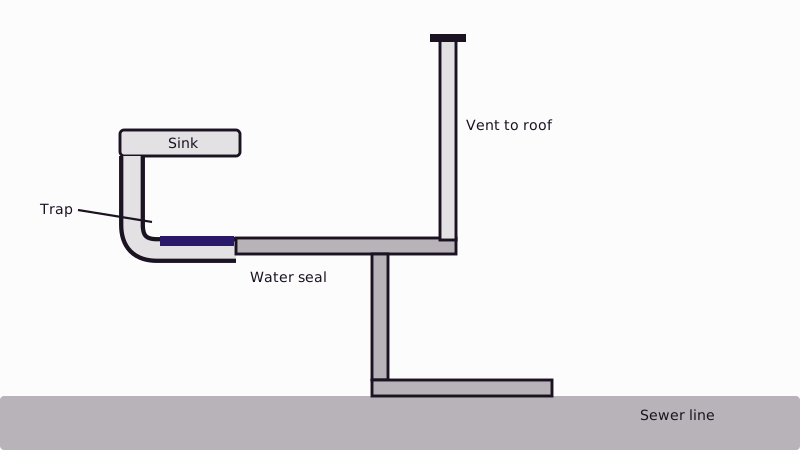
Under every sink, tub and floor drain sits a U-shaped bend that stays full of water, and that water blocks sewer gas from rising. Leave a fixture idle for weeks and the water evaporates, which opens the path. Of all the reasons for a sewer smell indoors, this one is the commonest.
The cure costs nothing. Pour water for roughly sixty seconds into every basin, bathtub and floor drain, spare bathroom and garage or laundry drain included. A smell that vanishes was the trap. In dry coastal weather and in homes that sit empty for weeks, floor drains dry out faster than people expect. Mineral oil, a spoonful floating on the water of a floor drain, slows evaporation. Odor back within two days means the trap loses water some other way, so look at the vents next.
Can a blocked or broken vent cause a smell in the whole house?
Yes. Vent pipes feed air in behind draining water so the traps keep their seals. Blocked by debris, a bird nest or a crushed section, a vent lets draining water pull the water plug out of a trap, and a crack inside an attic or wall releases gas into living space. The odor often grows upstairs or after heavy water use.
Clues include gurgling from drains, sluggish flow at multiple fixtures, and a stench that arrives when the washer or tub empties. Finding a cracked vent is a job for a smoke test or camera. A roof vent is a high-risk spot for a fall, so leave it to a professional.
When is the toilet the source?
When the odor hugs the floor around the bowl. A wax ring seals each toilet to the drain flange; if the bowl rocks, the ring dries out or the flange cracks, gas slips into the room and water may seep out too. Setting the toilet again on a fresh ring is a short job.
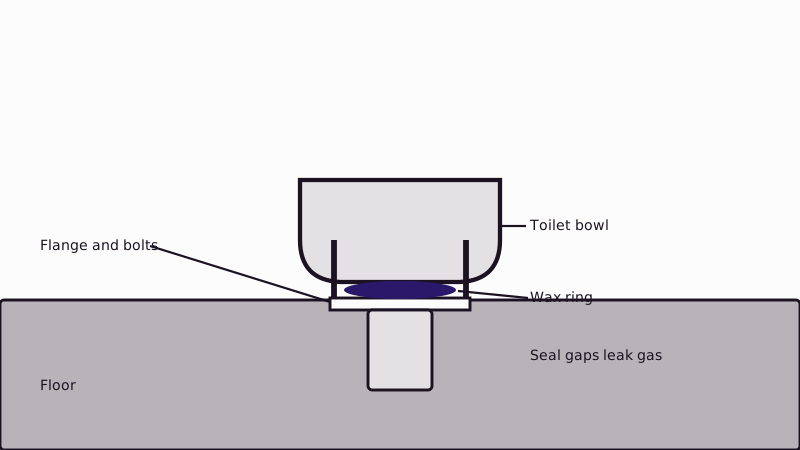
Nudge the bowl sideways to test for movement, and look for stains or spongy flooring nearby. Snug the bolts gently, since force cracks porcelain. Spongy flooring calls for a plumber, as the subfloor underneath may be rotting.
What if the problem is in the sewer line?
Gas, and sometimes sewage, escapes from a sewer line that has cracked, collapsed or filled with roots. Look for odors in several rooms, sluggish drains everywhere, gurgling toilets, wet or sunken yard patches, and backups. Running a camera down the pipe finds the break. Remedies range from fixing one spot to relining or replacing the pipe.
Clay laterals are common under older Westside houses, and roots work into the joints. A lateral under a 1920s or 1950s home can be to blame even when everything indoors looks fine. Footage from a plumber's camera shows the defect and its location before digging begins. Sewer line repair means excavation or trenchless work, and a permit may apply. See the repipe cost guide for how plumbing project prices are built, and the plumber inspection cost guide for a camera visit.
An open or cracked cleanout cap in the yard is also a cheap cause. Check that the cap is on tight.
Is sewer gas dangerous?
A faint whiff is usually a nuisance, though sewer gas carries hydrogen sulfide among other gases, and ATSDR says health effects can appear at low levels. Treat a strong, lasting or sudden odor, headaches, nausea, or any smell after a backup as grounds to ventilate and phone a plumber.
Open windows and doors; children and animals should stay out until the air clears. Stay out of heavy-smelling crawl spaces and garages. Anyone feeling unwell should get to fresh air and seek medical advice. Never pour two different chemical cleaners into one drain to hide the odor, since the mixture can give off toxic fumes.
Common questions
Will the smell fade by itself?
Sometimes. When a dry trap is the cause, water in the drain ends it until the drain sits idle again. A blocked vent can make odors come and go with wind or weather. Anything that keeps coming back signals an unresolved fault worth a plumber's inspection.
Whose job is the pipe running to the street?
That pipe, called the lateral, normally falls to the property owner as far as the connection with the main, which the city or sewer agency maintains. Rules differ by jurisdiction, so ask Santa Monica or Los Angeles Public Works, depending on your address, before ordering any repair.
Which questions belong on the booking call?
Ask about the search method (trap check, smoke test or camera), whether the diagnosis is priced inside the quote, and what a repair adds on top. Look up the contractor license with the state board, and have any large job priced on paper first.
Must I be there for the inspection?
Yes, or send someone you trust. Indoor fixtures need checking, and the yard, cleanout and roof may need access too, so someone has to open gates and doors. Describe when the smell shows up; a detail such as "after the laundry runs" saves time.
Sources used
Page updated